• Skip to main content
  • Skip to secondary navigation
  • Skip to primary sidebar
  • Skip to footer

Comics for Beginners

How to Write & Draw Comics

  • Contact
  • About
  • Faqs
  • Log In
  • Resources
  • Podcasts
  • Comics Crash Course
  • Blog
  • Videos

Pro Tips

Art tutorial: Tips for digitally coloring comics

by Palle Schmidt Leave a Comment

coloring-in-psd

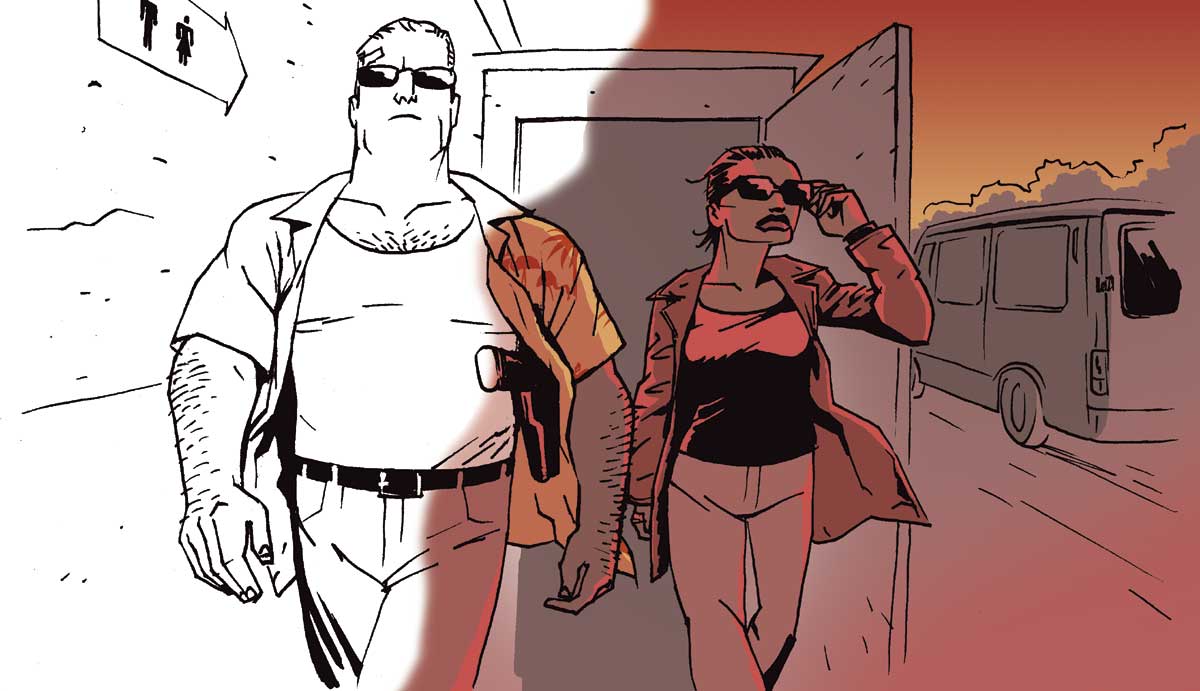
Coloring digitally in Photoshop or Manga Studio can save you some time and grief, and it is pretty easy to learn. Here are a few pro tips to make it even easier!

  • Start with the background color and the general flow of the page and save the best for last: coloring your characters.
  • Make a seperate layer for your characters and foreground objects, and flat them out first. This saves you time when coloring, because you can select the entire shape and not be afraid to paint outside the lines.
  • If you are coloring for print, please note that your screen is backlit, which means it looks a lot brighter there than it will on paper! Beware of colors that are too dark.
  • Convert the image to grayscale, to see if the color works. I know this sounds weird, but thinking of coloring in shades of grey can really help. It’s all about light and dark, and everything in between. By converting to grayscale, you will instantly spot where if it is all the same value, too dark or too muddled. You can always undo the conversion and get all your colors back!
  • Always put your line art on top, so you paint under the line art. Set the line art layer mode to multiply, that should work perfectly.
  • Colors should not compete with line art. Try not to have colors that are too dark. 80% black is probably too close to the black of the line art.
  • Use a seperate layer for the background color and another on top for people and objects etc. Experiment with the opacity of your regular color layer, to let the background color shine through.
  • Having a seperate layer for speech balloons and borders placed at the top of your color layers is also a good idea, as it prevents the risk of painting over your borders or into the whites of the balloons.

Related video:
Episode 8: Coloring in Photoshop
Filed Under: Pro Tips Tagged With: Art Tutorial, coloring, digital, digital painting, how to, making comics, painting, Photoshop, tips for making comics

ProFile: Jeremy Haun

by Palle Schmidt Leave a Comment

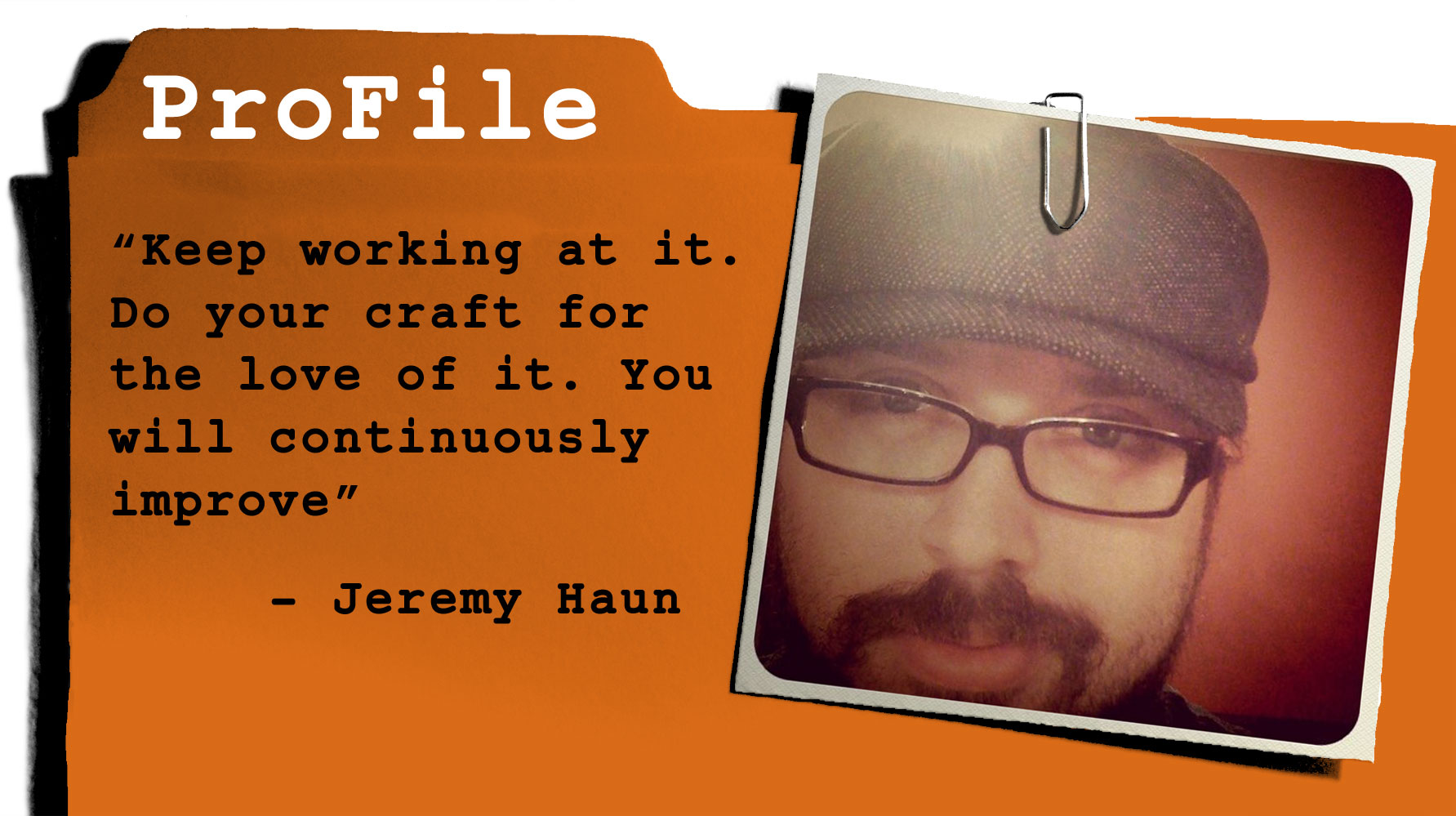
ProFile-Scott-Jeremy-HaunJeremy Haun is the current artist on Constantine. Wolf Moon, by Jeremy and Cullen Bunn, debuted in December from DC. He recently completed a run on Batwoman. Over the past decade plus, along
with wearing calluses on his fingers doing work for DC, Marvel, Image, and others, he has created and written several projects. Some you might know are graphic novel Narcoleptic Sunday, Leading Man, and The Beauty, soon to be out from Image. He is a part of the Bad Karma Creative group, whose Bad Karma Volume One debuted at NYCC 2013, thanks to Kickstarter funding. Jeremy resides in a crumbling mansion in Joplin, Missouri with his wife and two superheroes-in-training.

What made you decide to work in the medium of comics?

I’ve always been a huge comics fan.   I spent my childhood drawing and redrawing what I saw in comics and telling my versions of those stories.  It’s what I always wanted to do.

What part of the process is the most challenging or frustrating to you?

Doing the comics themselves is challenging, but probably the most consistently frustrating part is managing the time required to make comics.  While comics are perceived as a fun child-like medium, the time you are allotted to create a comic is about a month.  With the amount of time needed to put out the kind of finished product I’m happy with, makes for some long, long hours at the drawing table.

If you could give one piece of advice to an aspiring comics creator, what would that be?

Keep working at it.  Do your craft for the love of it.  You will continuously improve.  The industry is set up in such a way that it is difficult to get hired without having prior experience.  But keep at it and do your own thing if necessary.

You can support Jeremy’s Kickstarter for his new Dino-Day Art Book here.

Filed Under: Pro Tips, ProFile Tagged With: Bad Karma, Batwoman, career, collaboration, Comics conventions, comics industry, Constantine, creativity, Cullen Bunn, DC, Image Comics, improving as an artist, Jeremy Haun, Leading Man, learning, making comics, Marvel, Narcoleptic Sunday, The Beauty, Wolf Moon

The Dark Side – Comics for Beginners Podcast episode 28

by Palle Schmidt 3 Comments


No time is more approriate for a little self- examination than the beginning of a new year. Sparked by a rather painful personal relationship issue, I dig deep and look on the dark side – not just only my own less-than-perfect psyche but also the general emotions like envy, the need to vent or the need for recognition – and what happens if we are not mindful about the vibes we’re sending out. I go through ten lessons I have learned in the past few years that hopefully helped me become a more positive influence and a happier person to boot.

The ten lessons:

  1. Complaining is the first step. BUT NOT A STRATEGY FOR CHANGE
  2. If you keep doing the same thing, you can’t expect a different result
  3. Negativity is not helpful
  4. Just because I have high expectations of myself, doesn’t mean I should have them on behalf of everyone else
  5. You don’t know what lies behind a success
  6. When you’re envious of others, it’s because there’s something there that you want
  7. The grass is not greener
  8. The need for recognition is not a hole that can be filled
  9. Hurtful episodes can be turned into something positive
  10.  Being positive is just as annoying as being negative

Hopefully these painful lessons can be an inspriration and a wake up call to others.


Filed Under: Podcast, Pro Tips Tagged With: career, creativity, criticism, envy, mind hacks, mistakes, Mr. Grumpypants, negativity, Palle Schmidt, productivity, psychology, recognition, self-examination, social media

5 Ideas for New Year’s Resolutions

by Palle Schmidt 6 Comments

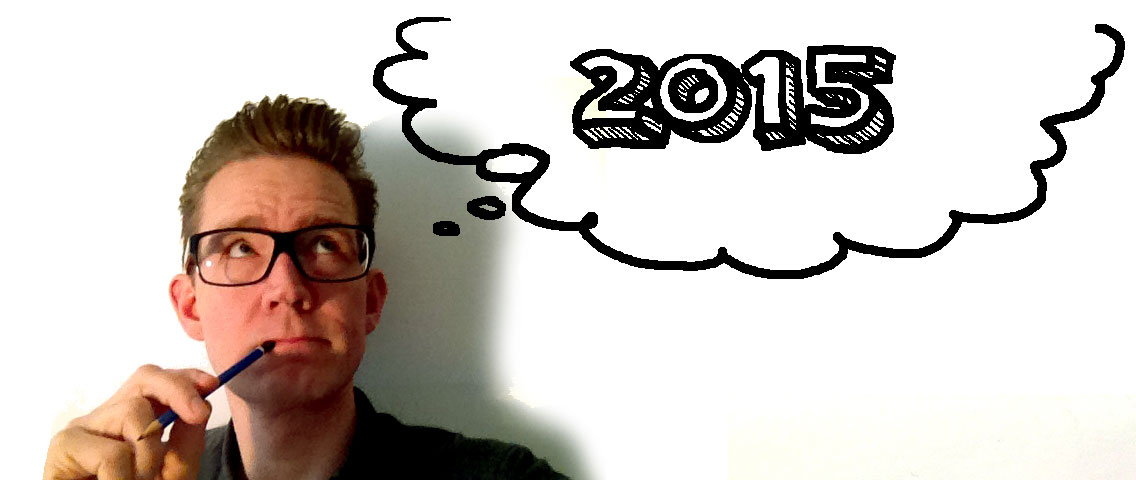
resolution-2015The great thing about the new year is it’s a chance to get some perspective and stop and think for a moment. Look back on the year that went by too quickly and evaluate. What worked and what would you like to change for the new year?

Rather than making some grand resolution like “draw 2 pages every day”, try setting small, achievable goals that build a habit. As my friend Kody Chamberlain put it:

I’ve found that small ongoing adjustments are more effective than attempting a major and sudden change. Try that if you need a ‪resolution.

I’ve made a habit of doing resolutions, not because december 31st is the only day you can make changes and take action – you can do that every day – but because people tend to ask me. And having to answer a question is a good excuse to think.

Maybe you’ve already made a plan for 2015 but in case you’re not sure, here are 5 ideas for New Year resolutions for artists and other creatives:

1: Spend an hour every week cleaning up the clutter around your drawing board and/or office. It’s really easy to get behind on simple things like these, and eventually it can bog down your workflow, having to look for tools or references or just having to work in a mess. Clearing physical clutter cleans out mental clutter as well.

2: Take at least one coffee meeting every month with someone you admire. This could be another artist, a writer or someone completely outside your industry. Someone you have a gut feeling there’s something to learn from. Prepare a few questions but try to be open and curious. Ask about their struggles, their strategies and their workflow.

3: Take a walk every day. Clear your head and get some movement into your joints. As artists and writers, we spend a lot of time sitting down and that hurts our bodies. You don’t have to go to the gym, just walking or doing 15 minutes of exercises and back stretching can really make a diffference.

 4: Get in the habit of asking yourself: Is this helpful? Whenever you’re asked to do something, evaluate if it’s helpful for your overall goal, whatever that is. And every time you get angsty, depressed or start to worry about your story, your craft or if people will like you, stop and think for a moment: Is this helpful? If the mood or your worrying is not helping you produce better art, stop it. Do something helpful instead, like sitting down and getting the work done.

 5: Quit one of your social media platforms. I know this one hurts. But think of the many hours a week you’re spending clicking links from Facebook, scrolling your Twitter feed or liking pictures of art (or cats!) on Instagram. You don’t have to shut down your account, just consider removing the app from your phone or simply don’t go in. We see it as a deserved break in our routine but more often than not, it’s a huge time suck. You’re better off looking out the window for 5 minutes and clearing your head.

This year my personal resolution is to spend the first hour of my work day, EVERY work day,  on my own business. Whether that’s this site, my own comics or that novel I’m working on. Every day I come in to work, I don’t answer the phone or check my email or put out that brush fire. It can wait an hour, surely.

I also believe in the power of commitment, of accountability. So now that I have told you, I guess I have to keep my promise to myself, right?

What’s your resolution? Please share! Maybe there’s an idea someone else can stael to make their 2015 the most productive and epic creative year ever.


Filed Under: News, Pro Tips Tagged With: 2015, career, comics, creativity, goal setting, improving as an artist, mind hacks, new year's resloutions, planning, pro tips, productivity, resolutions

Process, pixels and pitfalls – Comics for Beginners podcast episode 27

by Palle Schmidt Leave a Comment


I got an email from a VIP subscriber who had a bunch of questions regarding his process. What program or software do you suggest for paneling or arranging the images with boarders on a computer? How much bigger should I do my drawing than the actual panel size? Is It important that all my drawings be consistent with that rule? Should I draw out panels into the page and start working on that or draw separate images and put them together on the computer?

I try to answer these and other questions in this podcast.

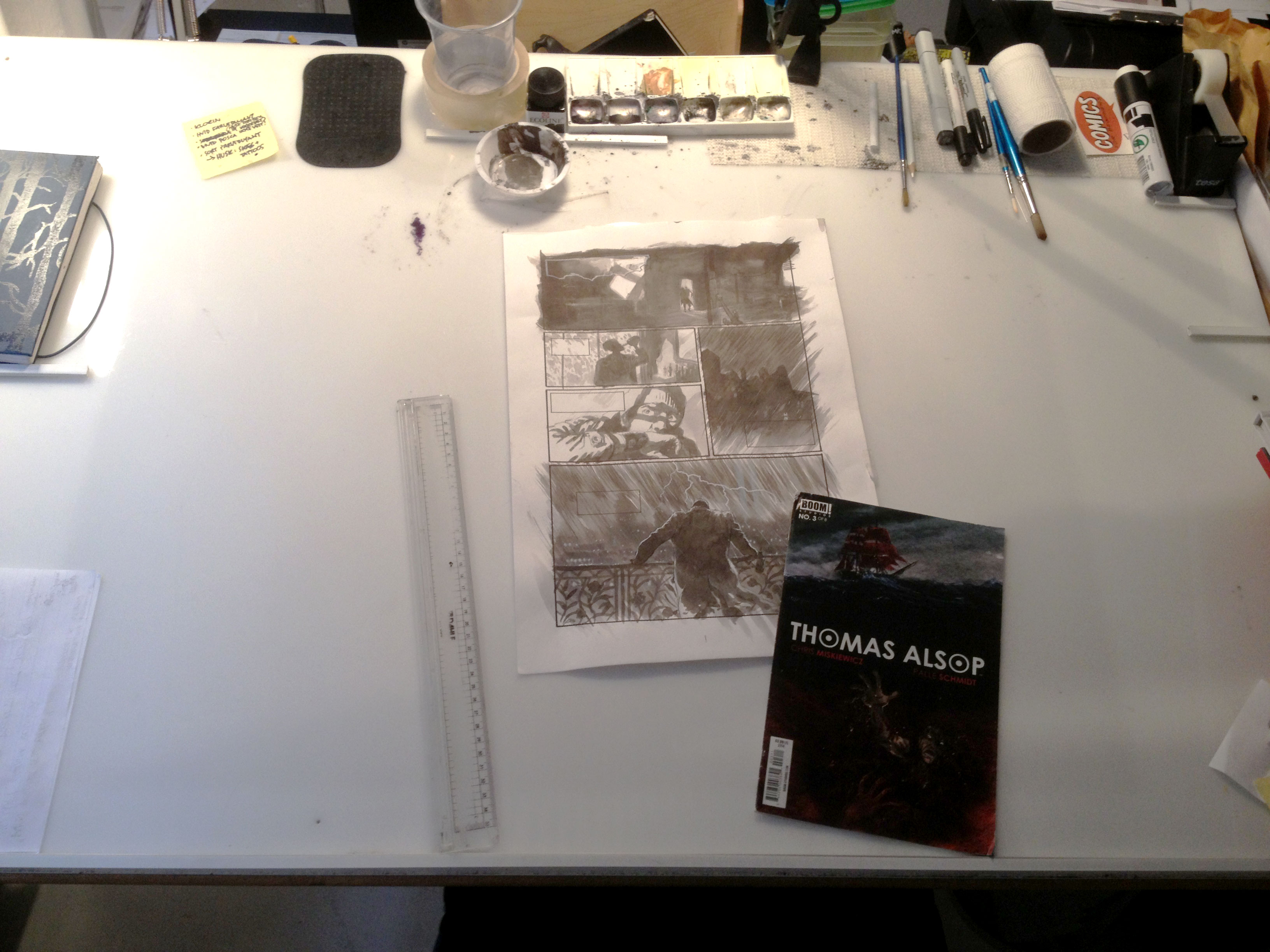
A shot of my desk, as requested by Joe!


Filed Under: Podcast, Pro Tips Tagged With: art hacks, artwork, creativity, drawing, how to, improving as an artist, inking, making comics, painted art, painting, Photoshop, pixelation, pro tips, process, scanning, test page, tips for making comics, workflow

Writing the first draft

by Palle Schmidt 2 Comments

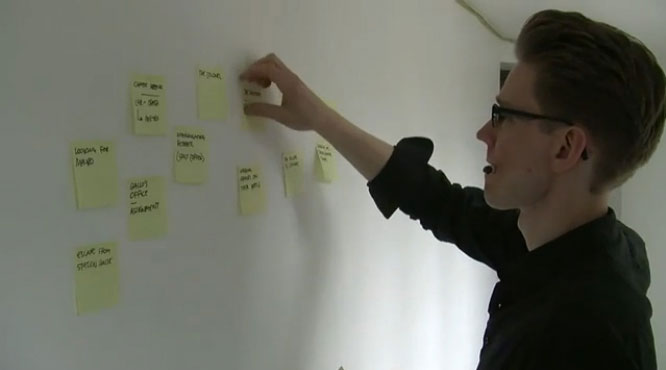
plan your story with post-its
Using post-it notes or index cards can be very helpful in planning your story

When you’re writing your script, it’s important to take the pressure off and ban your inner critic from meddling.

Writing a script for my comics was the lesson that took my process to the next level. And after I learned to write a script, the next most important lesson was to think of my script in terms of drafts. After all, if it’s a first draft, you don’t have to be Alan Moore right from the go!

Here are some pointers for getting that first draft done:

  • Empty your head as fast as you can. Get it on paper, beginning, middle and end. You can always change the particulars later.
  • Perfection is not what you’re going for. It’s a first draft and it will be edited later! Don’t worry about grammar or mull over character names or location description, just get the story beats down.
  • Resist the urge to show your writing to anyone before the first draft is finished. Stephen King talks about writing with the door closed or door open in his book On Writing (which I can highly recommend). This means the first draft is yours and yours alone. If you have people critizing or asking the wrong questions it can totally derail your process. Write your first draft with the door closed.
  • Think through scenes before you sit down to write them. Take notes or just run through the scene in your head. The good thing is you can do this anywhere, anytime. And it makes the actual writing SO much easier.
  • Break it down into manageable parts if you feel looking at your entire story is overwhelming. 1st act, 2nd act, 3rd, act, individual scenes. Decide how many scenes is necessary to get from point A to point B and deal with each scene as its own little story, with beginning, middle and end.
  • Always be moving forward. Force yourself to get to the end before you go back and change things in what you’ve already written. Take notes of what you want to change but save the editing for the second draft.
  • Know the ending before you write the beginning. No, you don’t need to know the particulars but have an idea, a destination. At least know if it ends on a happy note or if it’s a tragic journey you’re setting out on.
  • Bonus tip: When you DO get to the end and write that the way it’s supposed to be, go back and rewrite the beginning so you can put in little clues about the ending!

Now, as I say in episode 2 of the tutorial videos, it’s time to put your script in a drawer and forget about it!

Related video: Writing your script


Filed Under: News, Pro Tips Tagged With: Alan Moore, comics, creativity, critique, editing, first draft, how to, idea generation, index cards, inner critic, mind hacks, planning, productivity, Stephen King, storytelling, workflow, Writing, writing for comics

  • « Go to Previous Page
  • Page 1
  • Interim pages omitted …
  • Page 3
  • Page 4
  • Page 5
  • Page 6
  • Page 7
  • Interim pages omitted …
  • Page 17
  • Go to Next Page »

Primary Sidebar

Hours of Premium Content

ComicsCrashCourse

Try the FREE 7-day Comics Course

Creator Profiles

Interviews with Creators

The CFB Podcasts

Find them here.

Comic Creators eBook

The Comic Creators eBook

Footer

Check out more resources

Bundles of quality content available, check how to write comics and how to make your comic book artwork look great or find tips and tricks on the blog.

Latest from the blog

  • Video: How to get Story Ideas
  • Video: The Benefit of Being a Nobody
  • Video: Why Creatives Hear Voices
  • Digital Tools for 2021
  • The Most Badass Tools for Inking Comics
  • Why Creative Restrictions are Good for You!
  • How to Write a Great Story – and Stick the Landing

Contact us

If you have questions or issues please contact us.

Official mail: mail(at)comicsforbeginners.com

Feel free to connect on Twitter and/or Facebook.

Copyright © 2026 · ComicsForBeginners by Palle Schmidt Log in