• Skip to main content
  • Skip to secondary navigation
  • Skip to primary sidebar
  • Skip to footer

Comics for Beginners

How to Write & Draw Comics

  • Contact
  • About
  • Faqs
  • Log In
  • Resources
  • Podcasts
  • Comics Crash Course
  • Blog
  • Videos

Pro Tips

Comics for Beginners Podcast Episode 30 – Why We Quit

by Palle Schmidt 4 Comments

 
Making comics is fun – but also hard and lonely work! What do you do when you are dissatisfied with your story or your art? How do you stay motivated, when no one seems to care? How do you stay on track when you meet resistance from within? I offer some personal advice and insights in this episode.

Mentioned in this episode:

My graphic novel The Devil’s Concubine, which was almost abandoned
My crime noir graphic novel STILETTO finally available in English! Check it out at Thrillbent
Thomas Alsop vol. 1 trade paperback (collects issues 1-4)
Filed Under: Podcast, Pro Tips Tagged With: #makecomics, art, artwork, career, creativity, criticism, critique, dissatisfaction, how to, learning, mind hacks, mindset, mistakes, persistence, tips for making comics

How to Choose the Right Drawing Table

by Palle Schmidt 12 Comments

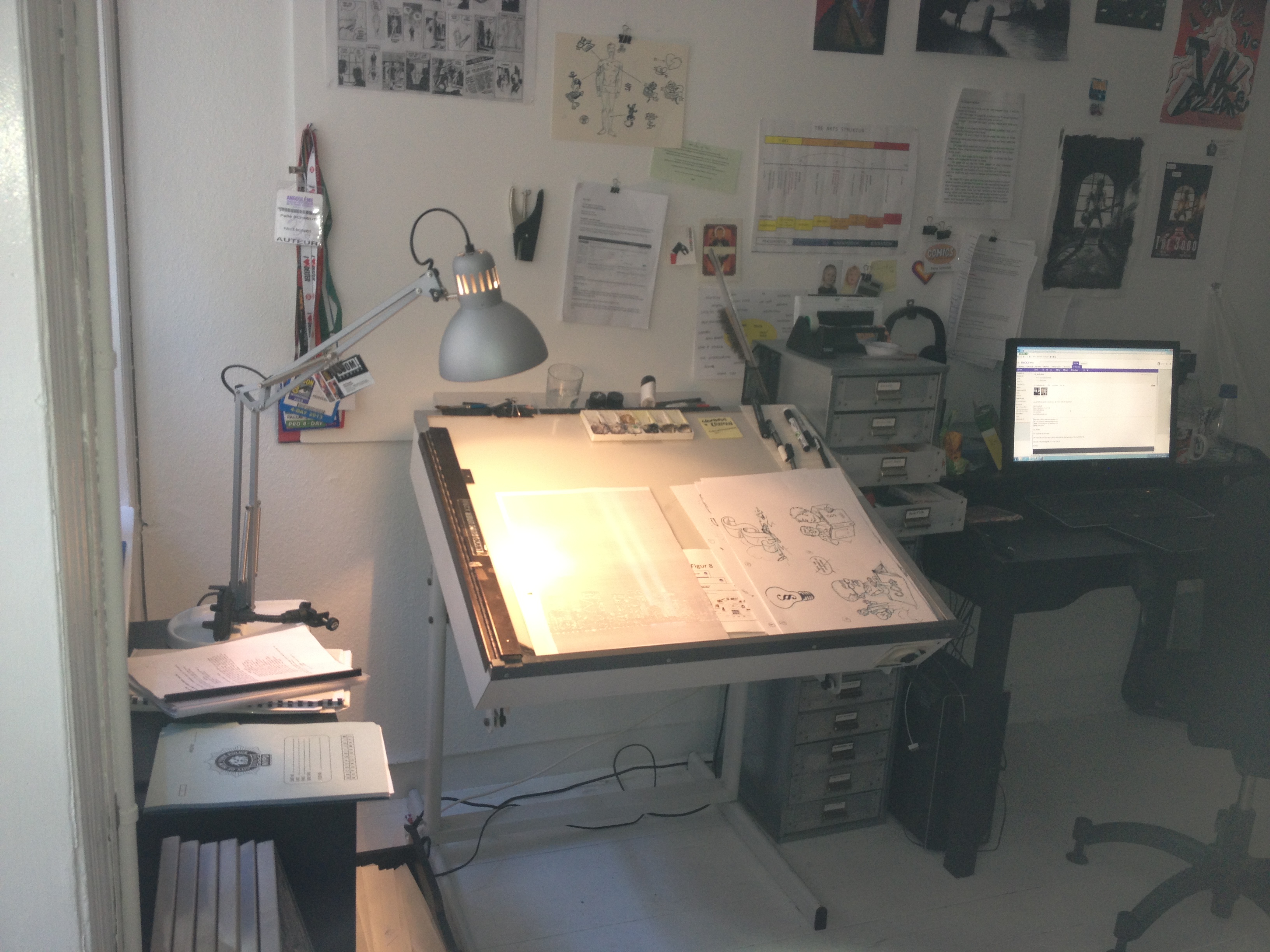
Photo 26-09-13 13.13.36If you are serious about your craft, having a workspace dedicated to your art is essential. Even if you’ve gone digital, you need somewhere to put your Cintiq and be comfortable, since you’re going to be stuck at that desk for a looong time. I’ve been through a bunch of tables myself and still haven’t found the PERFECT one. But I’m fine with what I have and ultimately it’s not the tools but what you do with them that matters. That said, you need something that does the job!

Here are a few things to consider when shopping for an art table:

  • You need a table that can be slanted, so you don’t have to crouch forward too much. A slanted table helps prevent back/neck trouble down the line.
  • Your table should be slanted just enough so you pencils roll off whenever you’re not looking. I’m KIDDING! How much/how little is all about what you’re comfortable with. Some people like standing up at their work table, others like to be on the couch. You decide. Whatever feels comfortable enough.
  • It should be possible to adjust the angle/how slanted the table is. Because you might find a 5 degree angle makes all the difference.
  • Besides the angled table, you will want to have either a part of the table with a regular, horizontal surface, or another table besides it to put your stuff. If you don’t have a “lay-away” table, your mess will go on the floor and you’ll have no place for your coffee cup. Which is a violation of work laws everywhere!
  • There are a number of hacks to prevent stuff from falling off your desk. Rubber matting/shelf liner is by far the easiest and least intrusive. If you have an old table you don’t care much about destroying, a few screws or nails in the top might be helpful (bonus tip: a binder clip on a nail can hold almost anything, from your reference books to your art). Or glue a pen holder on it. Only after months of working at your table, will you discover your own habits and needs.
  • You need a tape roll of not-too-adhesive tape for taping your artwork while working on it! Use Scotch tape or masking tape, anything you can easily remove again, without destroying your art or leaving sticky leftovers on your drawing board.
  • Anything under the table? If you’re going to spend long hours at your drawing board, you don’t want to constantly be banging your knees against a metal rod or whatever. Check underneath for possible annoyances before buying.
  • If you’re on a budget, consider just putting a wooden board big enough to fit your drawings (and then some) on a big “regular” table. A sturdy box underneath and a few screws to prevent the board from slipping and you’re off!  Or get something used, at least for starting out. Buying a $300 crafts table might sound great for your art prowess, but are you really just putting off working, imagining this will make you a better artist?
  • Obviously you also need to consider the space the table will go in. Too big or too small? Only you will know as it’s going in your work space.
  • Use a lightbox often? Consider getting a table where that is built in. I found that having to go to another table to adjust a drawing was annoying, so now I’m back to drawing on a big glass light table again.
  • Please note that the chair is almost as important as the table. I have a chair without wheels, because I tend to lean in quite a bit, causing the chair to slowly slide back if not completely steadfast. Which again cause me to subconsciously tighten my lower back muscles = pain!
  • You need work light that doesn’t hurt your eyes (anything but flourescent light!) and makes it easy for you to see your art. Be sure to place the desk lamp so your hand doesn’t block the light as you’re drawing. Right handed = lamp to the left, left handed = lamp to the right.

I always recommend people to use whatever tools fit their needs, not what other’s do, so please take all this advice with a grain of salt. I do hope you got some value from it.

What kind of art table do you have? Please share! I’d love to hear what’s working out for you.

If you want to know the tools I use, go to this page and watch the video about halfway down.


Sign up for my FREE  7-day Comics Crash Course

Filed Under: News, Pro Tips Tagged With: art, art hacks, art table, binder clip, budget, cintiq, crafts table, creativity, desk, learning, lightbox, making comics, productivity, Scotch tape, shelf liner, studio, tips for art tables, work space, workflow, working methods

ProFile: Ron Randall

by Palle Schmidt 1 Comment

ProFile-Ron-Randall

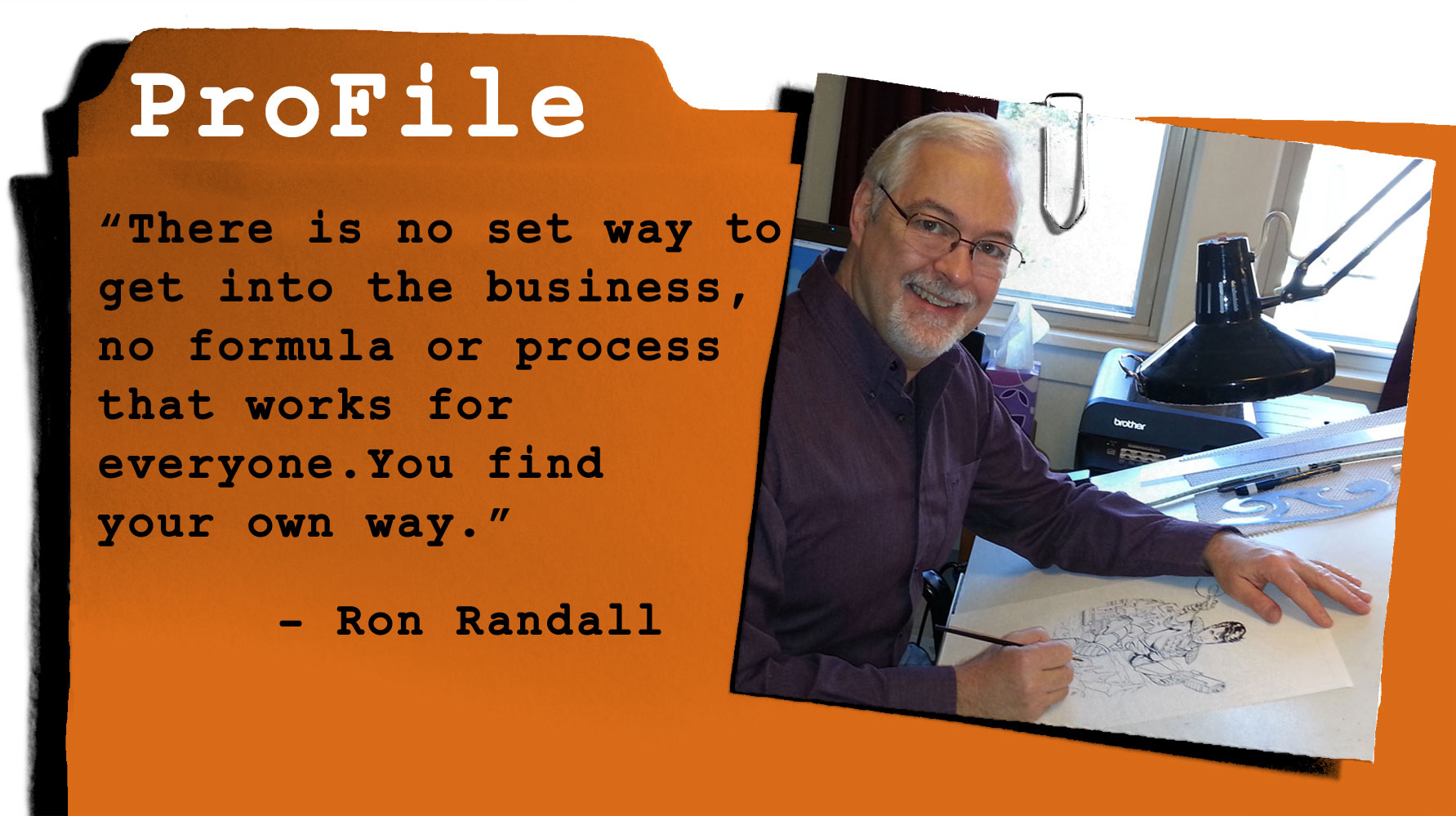
Ron Randall has been drawing comic books and graphic novels and storyboards for over thirty years. He has worked for all the major comics publishers in the United States, including Marvel Comics, DC Comics, Image, Dark Horse and IDW on properties as varied as Spider-man, Supergirl, Predator and Star Wars. His own science fiction adventure series Trekker is his signature project. Ron is busier than ever these days, producing new Trekker stories, serialized at www.trekkercomic.com and in print through Dark Horse Comics as well as serving as artist on several other comics projects and various commercial clients.

What made you decide to work in the medium of comics?

I read comics as a little kid, like everyone did back then. But when I met a buddy back in second grade who was already an active “fan”, who follows certain artists and books, I suddenly realized that people actually did this for a living. From then on it was on my short list of careers. It was comics artist or jet pilot. I started drawing my own characters and stories then and never stopped.

What part of the process is the most challenging or frustrating to you?

Hm. Right now, it’s the coloring on Trekker. Color is a whole new world for me. I have a pretty good sense, usually, of the feel I want the colors to have and the color choices. But I know there is so much I don’t know about color and digital techniques that I feel I could always to better and more with that step of the process.

If you could give one piece of advice to an aspiring comics creator, what would that be?

Keep drawing. There is no set way to get into the business, no formula or process that works for everyone. You find your own way. And the one thing that works is to keep at it.

Filed Under: Pro Tips, ProFile Tagged With: Dark Horse, DC comics, IDW, Image, Marvel Comics, Predator, Ron Randall, Spider-Man, Supergirl, Trekker

Drawing for a Living – Podcast episode 29

by Palle Schmidt 5 Comments


Inspired by an article Molly Crappable wrote on freelance life, I sat down and had a discussion with myself about what it takes to survive as a one-man army. If you’re a struggling freelancer or considering becoming one, this episode is for you!

Molly Crabapple’s 15 rules for creative success in the Internet age

Filed Under: Podcast, Pro Tips Tagged With: career, creativity, drawing, freelance, freelance life, mistakes, planning, pro tips, social media, studio, workflow

Why daily sketching doesn’t work

by Palle Schmidt 11 Comments

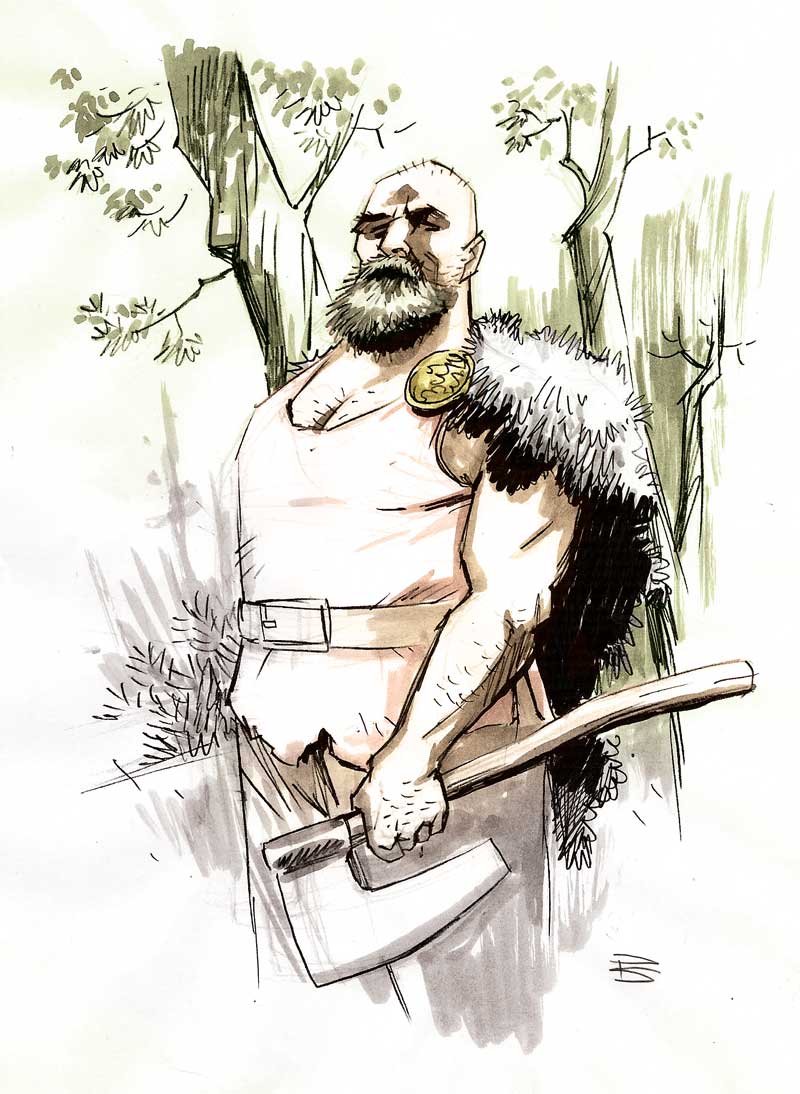
Woodsman_COLORYou know how important it is to draw every day, if you want to improve as an artist. But more importantly, you need to keep a forward momentum and draw the hard stuff.

A lot of artists share daily sketches on Twitter and Facebook. While that’s a perfectly valid thing to do, I see one common problem with most of these sketches – they are all very good! The problem here is that the artist has sat down with a blank piece of paper and drew whatever he felt like, whatever image he had in his mind.

Let’s imagine you were to do the same. Wonder what image would pop up?

I’ll take a wild guess: Character shot.

Whether it’s a macho superhero, a funny animal or a sexy robot, the problem with that image is exactly that it came from inside your head. And let’s face it: not much new comes from inside your head.

I used to only draw muscular guys with swords and dragons. While I did get slightly better at drawing guys with swords and dragons, this daily exercise didn’t help me get better at drawing. Not by a long shot.

What DID make me better, was being forced to draw stuff I didn’t already know how to draw, the “boring” stuff like flowers in a vase, and the hard stuff, like a street full of houses and cars and trees and people .

Unless you push yourself and draw from life, study and copy from photo reference and other artwork, you’ll only be maintaining your drawing muscle, not improving it. When it’s really hard and frustrating – THAT’S when you’re on your way to getting better.

Imagination is overrated. You need input to produce output – even original, fresh and innovative output!

Sketching daily only works if you push yourself to draw the stuff you can’t.

Filed Under: Pro Tips Tagged With: character shots, creativity, daily sketching, drawing, improving as an artist, learning, mistakes, reference, sketching, workflow

ProFile: Jason Brubaker

by Palle Schmidt Leave a Comment

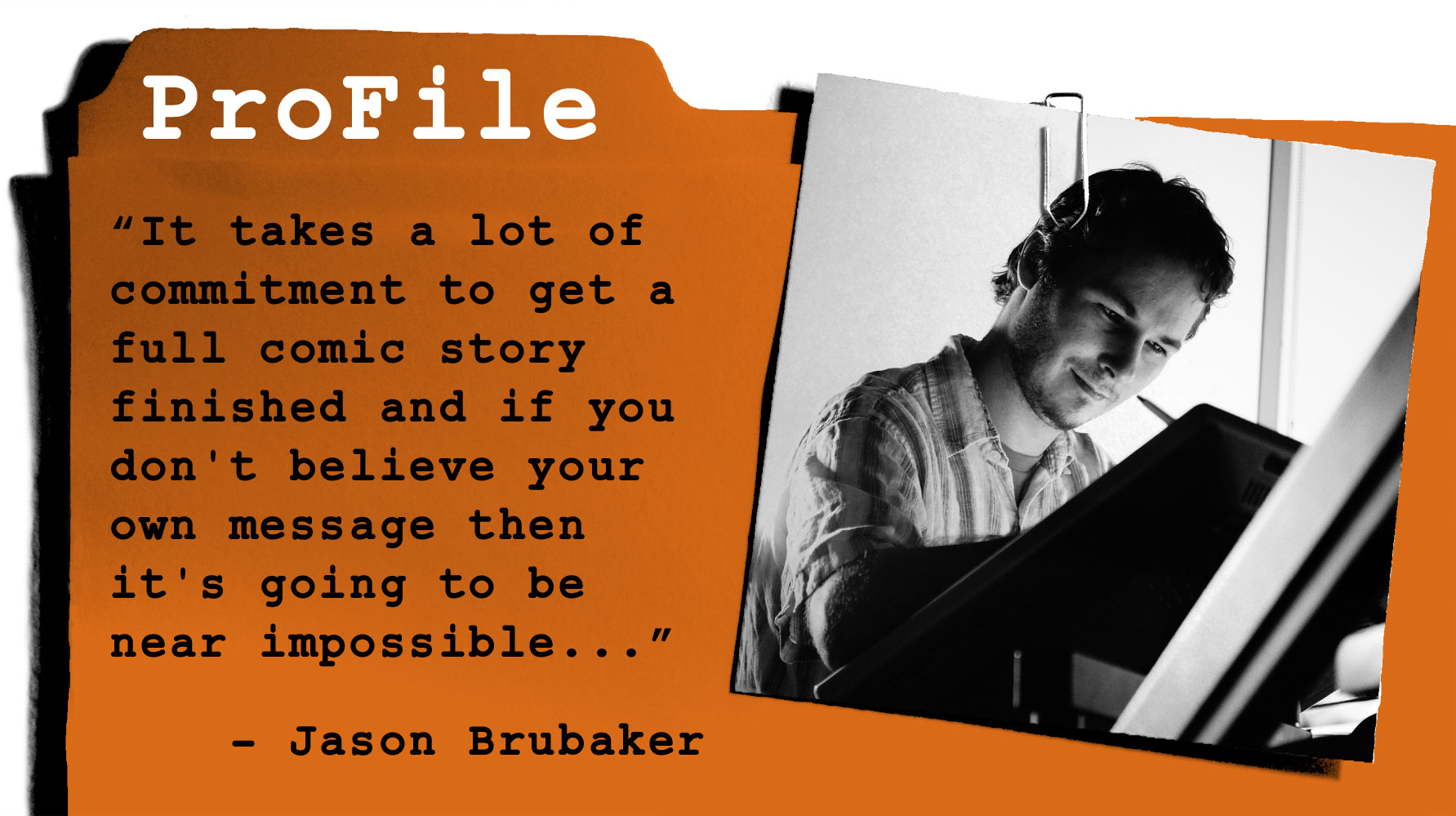
ProFile-Jason-BrubakerJason Brubaker began his career in graphic novels in 2011 with the Xeric Award winning reMIND which also got on the Great Graphic Novels for Teens list 2012. In 2014 he quit his full-time job as a Visual Development artist at Dreamworks Animation to pursue publishing his own comics. You can support Jason’s work here: patreon.com/jasonbrubaker

What made you decide to work in the medium of comics?

I grew up loving comics and always wanted to draw sequential art. But when I started working as a professional artist I put aside comics because I thought they were for kids. 10 years later I was convinced to give comics a try again and I’m glad I did because now I realize how powerful and effective they are at telling stories and getting a message across. I love comics because they are the perfect medium for solo artist/writers to tell their stories.

What part of the process is the most challenging or frustrating to you?

I think the most challenging part is the marketing part, or social media part. These are just so unnatural for me as an artist and sometimes I just want to ignore it all and just work on the books but at the end of the day I need to put my stuff out there in a social way to that others can see it and respond to it.

If you could give one piece of advice to an aspiring comics creator, what would that be?

Make sure you really believe in what you are trying to say in your story. It takes a lot of commitment to get a full comic story finished and if you don’t believe your own message then it’s going to be near impossible to put in all the work to finish it and it will also be hard to put your best work into it too.

Filed Under: Pro Tips, ProFile Tagged With: drawing, Dreamworks Animation, making comics, pro tips, reMIND, sequential art, social media, storytelling, writing for comics, Xeric Award

  • « Go to Previous Page
  • Page 1
  • Page 2
  • Page 3
  • Page 4
  • Page 5
  • Page 6
  • Interim pages omitted …
  • Page 17
  • Go to Next Page »

Primary Sidebar

Hours of Premium Content

ComicsCrashCourse

Try the FREE 7-day Comics Course

Creator Profiles

Interviews with Creators

The CFB Podcasts

Find them here.

Comic Creators eBook

The Comic Creators eBook

Footer

Check out more resources

Bundles of quality content available, check how to write comics and how to make your comic book artwork look great or find tips and tricks on the blog.

Latest from the blog

  • Video: How to get Story Ideas
  • Video: The Benefit of Being a Nobody
  • Video: Why Creatives Hear Voices
  • Digital Tools for 2021
  • The Most Badass Tools for Inking Comics
  • Why Creative Restrictions are Good for You!
  • How to Write a Great Story – and Stick the Landing

Contact us

If you have questions or issues please contact us.

Official mail: mail(at)comicsforbeginners.com

Feel free to connect on Twitter and/or Facebook.

Copyright © 2026 · ComicsForBeginners by Palle Schmidt Log in