• Skip to main content
  • Skip to secondary navigation
  • Skip to primary sidebar
  • Skip to footer

Comics for Beginners

How to Write & Draw Comics

  • Contact
  • About
  • Faqs
  • Log In
  • Resources
  • Podcasts
  • Comics Crash Course
  • Blog
  • Videos

Pro Tips

What Makes Me a Pro

by Palle Schmidt 5 Comments

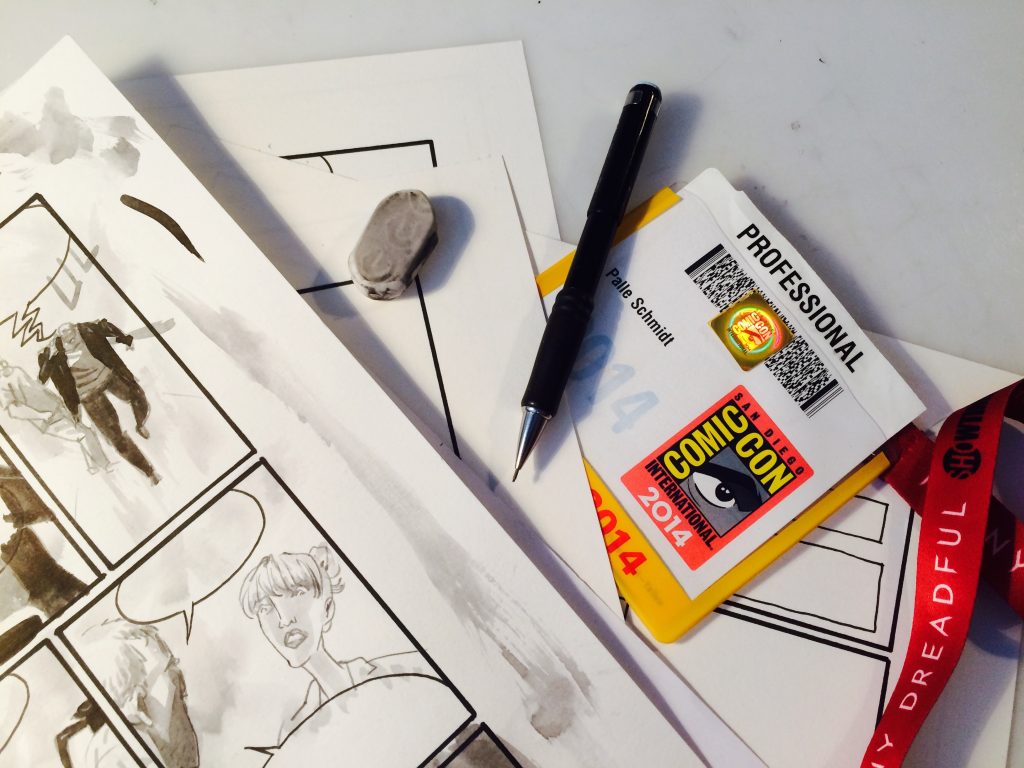
what-makes-me-a-proWe artists often have a very self-deprecating nature. So let me go against the grain here and try to describe what I find makes me a professional. It’s not that I’m a great artist or a great writer (my self-deprecating nature forbids me to describe myself that way). But at least I’m a pro!

The obvious answer to what makes me a pro is of course that I make a living from my artistic skills and have been for almost 20 years. I’m also very good at keeping my promises (aka. deadlines) which I think is probably the most important thing for a freelancer.

But I just realized that underneath these superficial traits are two very basic principles:

1:

I am aware of my own process enough that I am able to replicate it. That includes knowing how long each step will roughly take so I know what the time frame needs to be for me to deliver and also have an estimate of how much it should cost. This varies with each project depending very much on my own preferences. If it’s something I’m not passionate about, my price goes up. But that’s a whole other discussion.

2:

I am aware of the resistance (as Steven Pressfield calls it) – both internal and external – that may (and probably will) come up along the way. My many years of experiencing the same feelings of self-doubt and boredom, helps me recognize it for what it is: A part of my workflow. It also helps me with strategies to deal with the resistance. Not overcome it, but live with it.

For instance, I will jump to another part of the process if I feel stuck or simply walk away from it for a while, knowing that I will get back in the groove tomorrow or the next day. What I don’t do is start doubting my entire career and self-worth because I have an unproductive day where I feel like I can’t draw to save my life.

There is no set-in-stone answer to how to become a great artist. Everyone is unique in their approach. But for me I believe the above points are crucial. Hopefully it can serve as an inspiration or eye opener for your own artistic process.

If you are looking for more practical advice on delivering the goods as a pro artist, try giving this podcast episode a listen.
Filed Under: Pro Tips Tagged With: #makecomics, career, creativity, freelance artist, improving as an artist, learning, mind hacks, mindset, planning, pro tips, productivity

How to Catch an Artist

by Palle Schmidt Leave a Comment

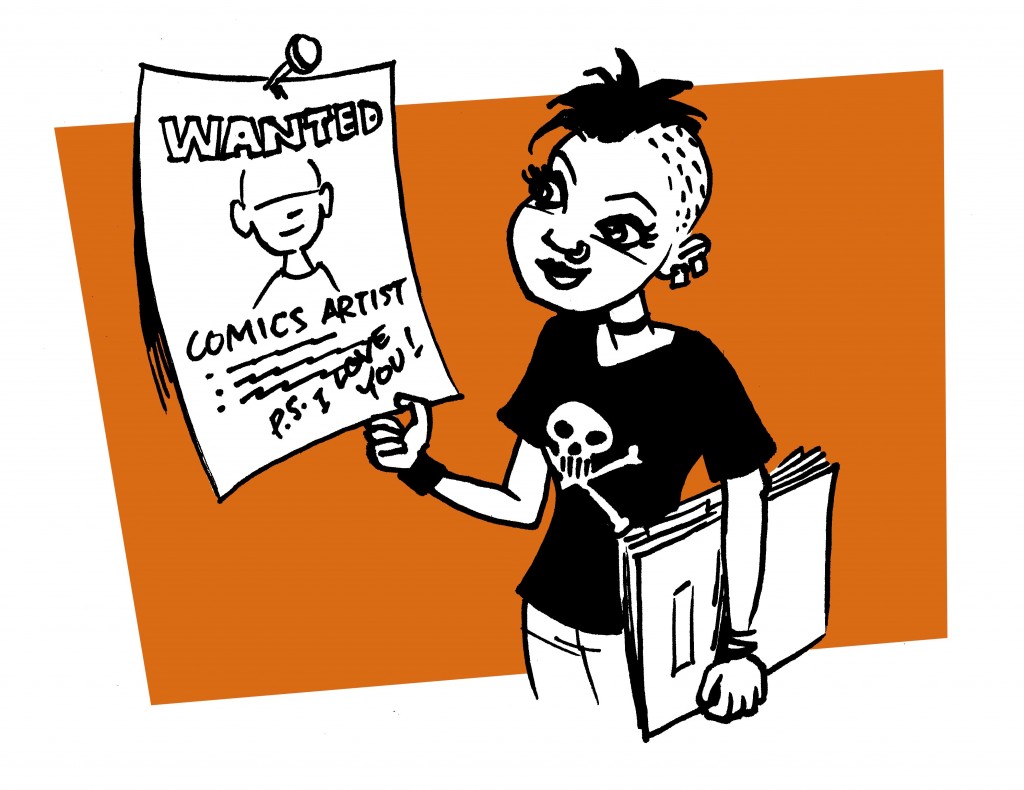
finding-a-comics-artistThis blog is focused on comics creation as a whole, rather than seeing writer and artist as two separate things. But what do you do if you have a great story written but don’t feel you have the drawing skills to pull it off?
It’s a big commitment for an artist to draw a comic book that someone else wrote.

Getting an artist on board on your big project is not going to be easy, unless you have the cash to pay for their time. And even then, you’re competing with other commitments and paid work.

Being both a writer and an artist, I can see things from both sides. And I know there are more people out there who can write than there are people who can draw. Time is another important factor. You can write five 22-page issues of something in the same time it takes an artist to draw just one. So how do you lure someone into spending weeks and months hunched over the drawing table working on your book?

Here’s what I think will help:

  • A script. I would never agree to draw something from a pitch or an idea. If a writer can’t show me any writing, all the alarm bells go off. And if I am expected to commit to a longer series, I need not only a script for the first ten pages, I need to know where it’s all going. I need to know the writer can write and has a plan.
  • A track record. Again, showing that you can produce something helps convince others to get on board. If you have other finished projects on your resume, you may be able to hook an artist with just a detailed outline with a beginning, middle and end. A few pages of script is still necessary, to show that you can write.
  • A smaller commitment. It’s much easier to agree to draw ten pages in black and white, than a six issue series or a fully painted graphic novel. As a writer, this also gives you a chance to see how the relationship works out. Just because an artist can show excellent work doesn’t mean they can produce it consistently, keep a schedule or be easy to work with. Doing a shorter story is mutually beneficial.
  • Money. Sure, we are all for sale. The more money you can put up front, the harder it is for an artist to say no. But like mentioned above, artists can be flaky, so doing a shorter thing together is a good idea before you pay an artist a huge sum for a book they may never deliver.
  • Ownership. If you offer to give the artist a creator credit, it helps sell the message that you are both in the same boat. If you do a pitch together (see this page for how to create a compelling pitch) to get a publisher, having split ownership of the property makes the artist invest more time and effort.
  • Trust. The cornerstone to any working relationship is reliability and trust. To get an artist to commit time and energy to your project, you need to trust them to do their thing without you looking over their shoulder. You need to trust their decisions and listen to their input – or at least pretend. But you also need to deliver on your promises and not be late with a script, feedback or payment.

Happy hunting!

PS: Even if you never plan to draw anything, it might be a good idea to at least have an idea of the process. So sign up for my 100% free 7-day crash course here.

Filed Under: Pro Tips Tagged With: artist, career, collaboration, comics, creativity, how to, making comics, pitch, pro tips, workflow, working with an artist, writing for comics

When in Rome – Comics for Beginners Podcast Episode 32

by Palle Schmidt Leave a Comment


In this podcast episode I talk to writer/artist Paolo Parisi in a crowded cafe in his home city of Rome. We touch on the Italian comics scene, festivals, underground comics, the relationship between music and comics and the flip side to freelance life as well as the upsides – one of them being the freedom to work from anywhere in the World. More about Paolo at www.paoloparisi.org

Filed Under: Podcast, Pro Tips Tagged With: #makecomics, advice, career, Coltrane, comics, comics industry, creativity, Europe, festivals, freelance life, location independence, making comics, Paolo Parisi, podcast, podcast interview, pro tips, Rome, travel, Underground

Are you a hack or a primadonna?

by Palle Schmidt 1 Comment

hack-or-primadonna

How do you decide when a script or drawing is finished? When is it good enough and when does it need more work?

At my old studio, we used to joke: When is a drawing really good? When it is done!

We sometimes continued to come up with alternatives, like: When the invoice is sent!

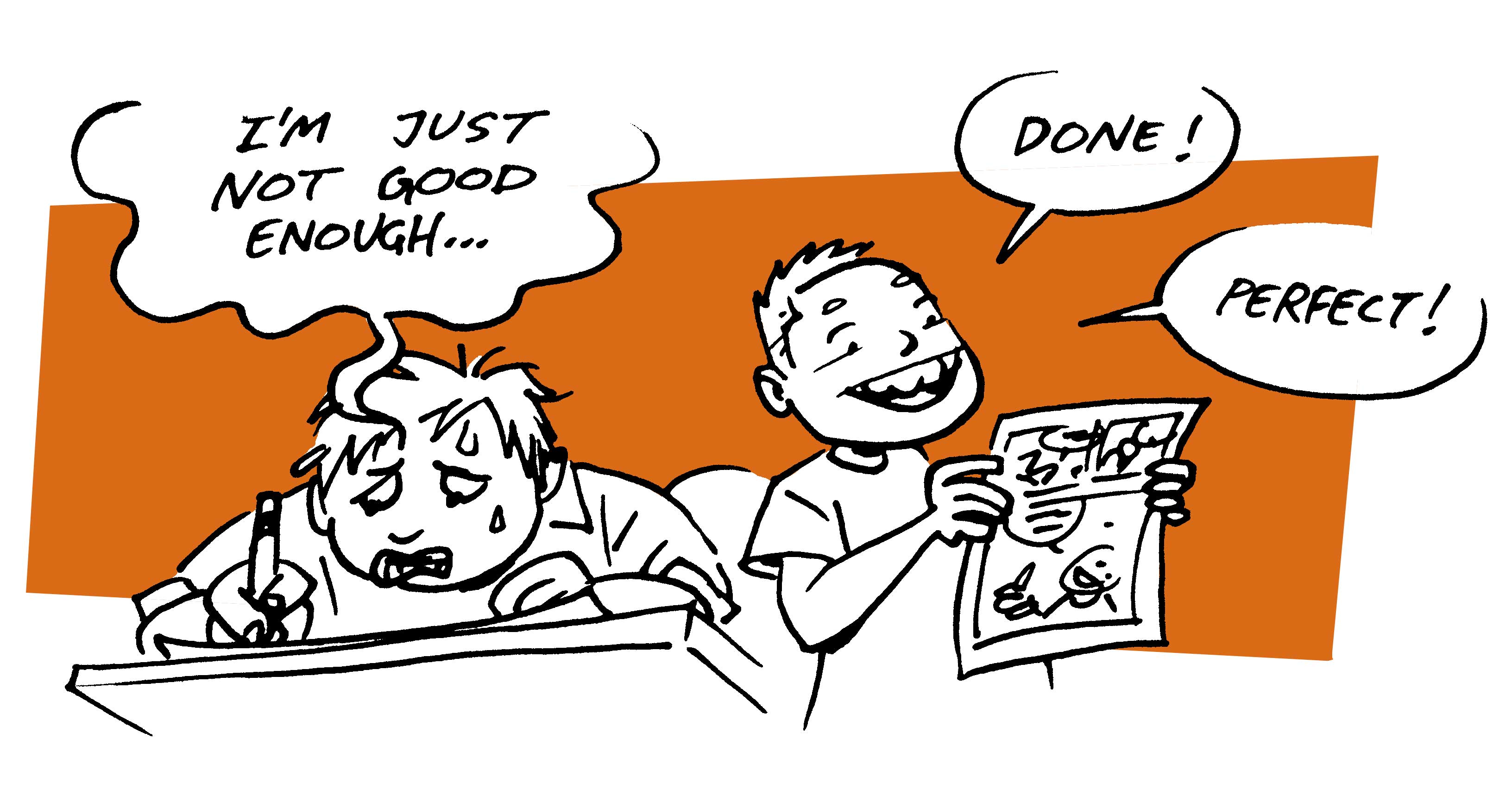
While it sounds like a shallow hack remark, there is a level of truth to it. Because just as you can do sloppy artwork just to get something “done”, there is also a great risk of spending to long on something and ruin it in the process. Besides, life is short. You want to get more than one drawing done, so you shouldn’t keep obsessing over one piece of art, trying to make it “perfect”!

The perfect drawing does not exist. Because you will change, however unnoticeable, as you are working on it, and that will change how you look at the drawing.

But how do we know when something is “done” or “good”?

That is a hard question to answer. Wether it be a piece of art or a manuscript, you just need to pass it on at some point. Get a second opinion. To judge something yourself, you need a bit of distance. You don’t always have the opportunity to put something in a drawer for a month or two. You might be on a deadline.

But there is a skill to deciding whether the thing you’re working on is good enough or needs some more work.

If it’s paid work, you also need to take money into consideration. What would be the hourly rate if it takes you ten hours to do an illustration? If the answer makes you cringe, perhaps you need to be spending five hours instead. It all depends on the situation.

A work of art should be judged not only by it’s artistic merit, but also by the circumstances under which it was made.

As artists, we walk a tightrope between being lazy hacks and overly self-critical, meticulous primadonnas. Too little self-critique and you stop growing as an artist. Too much self-critique and you might end up quitting art altogether. Because it’s just too damn hard.

Whenever you find yourself in a place where things are really, really hard, remind yourself that’s because you are growing, improving, learning.

Somewhere in you, between the hack and the primadonna, there is a humble, realistic and self-aware professional waiting to get things done. Stop getting in his way and let him go to work.

Filed Under: News, Pro Tips Tagged With: drawing, improving as an artist, mind hack, pro tip, self-critique, working methods

What’s my motivation – Comics for Beginners podcast episode 31

by Palle Schmidt 3 Comments


Why is it sometimes so hard to keep a schedule when creating content for the web? And how can we set a system in place to circumvent our fleeting motivation? That’s what I try to answer in this episode.

Filed Under: Podcast, Pro Tips Tagged With: creativity, idea generation, mind hacks, motivation, planning, pro tips, productivity, schedule, tips for making comics, workflow, writer's block

ProFile: Lukas Ketner

by Palle Schmidt Leave a Comment

Lukas-Ketner-ProFile

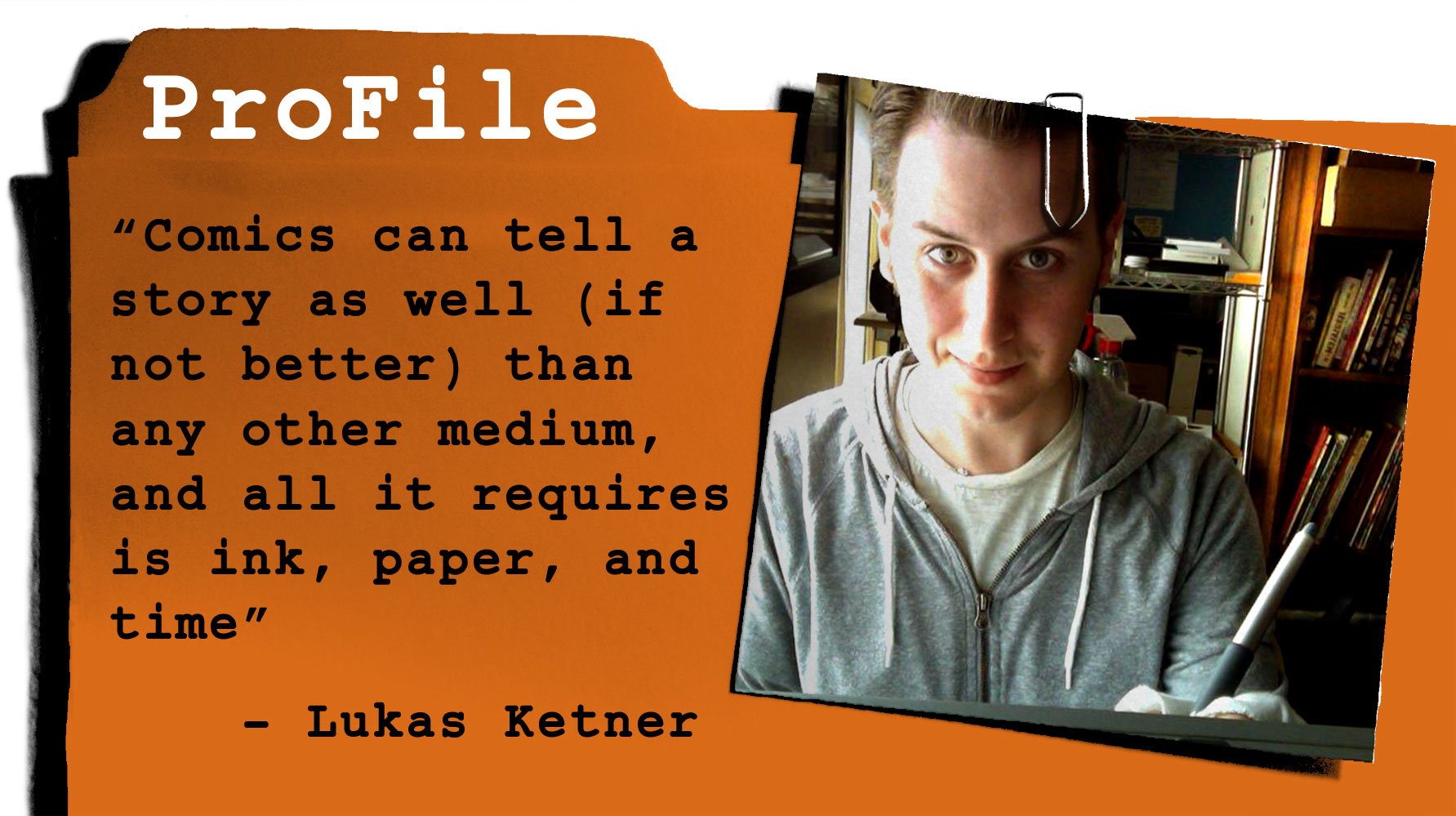
Lukas Ketner is the artist and co-creator of Witch Doctor, the hit launch title for Robert Kirkman’s Skybound imprint at Image Comics. He was a 2009 nominee for the Russ Manning Award for his Witch Doctor work, which has earned praise from fans and creators alike. Other work includes stories for Dark Horse Comics’ Creepy Comics and Supersized: Strange Tales From a Fast-Food Culture, along with covers for BOOM! Studios’ Hellraiser title. He has twice won entry into the Communication Arts Illustration Annual for his album artwork. He survived a successful full-body transplant from his hometown in Anchorage, AK to Portland, OR in 2000 where he currently resides. You can check out his work and drop him a line on Facebook.

What made you decide to work in the medium of comics?

For me, it was the realization that I could tell stories as well, if not better than prose and film — both of which I tried my hand at, and NO you may not see the results, they’re awful 😉 For me, comics can tell a story as well (if not better) than any other medium, and all it requires is ink, paper, and time. Sure, money helps, but that’s an obstacle that’s easier to overcome in the digital age to reach an audience.

What part of the process is the most challenging or frustrating to you?

Well, challenging and frustrating aren’t always the same thing, although they do overlap quite a bit 😉 For me story flow and lining up shots is very challenging and non-intuitive for me, but very fun and rewarding, much like solving a puzzle. It’s frustrating when I’m inking that same page and I can’t do it fast enough because I’ve added detail to areas that don’t need as much attention as I’ve given them. Then, that elegant puzzle I solved previously turns into a 2-3 day grind that’s totally unnecessary— comics pages shouldn’t take that long for a monthly horror book. It’s a mistake that I’m slowly making less and less, but it still happens. I really admire artists whose styles are more economical, but still great to look at. My studio-mates Jonathan Case and Steve Leiber come to mind, along with Sean Murphy. Murphy does have a very detailed style, but you’ll notice it’s rarely more detail than necessary to make the image really sing.

If you could give one piece of advice to an aspiring comics creator, what would that be?

A rule I learned in design school, “Very Little, Very Well Done.” If you’re trying to get noticed, do a “done-in-one”, the comics equivalent of a short film. Make it one issue tops to start with, and NO cliffhangers. It’s got to be a full story, start to finish, no “prologues” or “to be continued”. That doesn’t mean it can’t take place in a world that you’d like to explore further in the future, but it needs a satisfying conclusion, and maybe a hint that there’s more story to tell (if that’s relevant). Print it up! Put it online for free. Put it everywhere that people can see it. You can sell it at shows to try to recoup some expenses, but don’t expect to make a profit. It’s proof that you can do the work and do it well; that’s what’s important. Get some interest behind you, and as much feedback as you can possibly get from editors and other successful creators. Maybe do another, again, done-in-one applying what you’ve learned. Why such small bites? Because you don’t want your first work to be a 12-issue epic, and then find out via feedback that you’re doing it wrong story-wise after you’ve put out two issues of hard work, and editors need to see that you can complete a story in a satisfying manner. I guess that’s a bit long for ‘one piece of advice’, but there it is 🙂


Filed Under: Pro Tips, ProFile Tagged With: art, career, comics industry, Communication Arts Illustration Annual, creativity, Creepy Comics, Dark Horse Comics’ Creepy Comics, drawing, Image Comics, improving as an artist, Jonathan Case, learning, Lukas Ketner, making comics, Periscope Studio, Portland, pro tips, Russ Manning Award, Sean Murphy, Skybound, Steve Lieber, storytelling, studio, Witch Doctor, workflow

  • « Go to Previous Page
  • Page 1
  • Page 2
  • Page 3
  • Page 4
  • Page 5
  • Interim pages omitted …
  • Page 17
  • Go to Next Page »

Primary Sidebar

Hours of Premium Content

ComicsCrashCourse

Try the FREE 7-day Comics Course

Creator Profiles

Interviews with Creators

The CFB Podcasts

Find them here.

Comic Creators eBook

The Comic Creators eBook

Footer

Check out more resources

Bundles of quality content available, check how to write comics and how to make your comic book artwork look great or find tips and tricks on the blog.

Latest from the blog

  • Video: How to get Story Ideas
  • Video: The Benefit of Being a Nobody
  • Video: Why Creatives Hear Voices
  • Digital Tools for 2021
  • The Most Badass Tools for Inking Comics
  • Why Creative Restrictions are Good for You!
  • How to Write a Great Story – and Stick the Landing

Contact us

If you have questions or issues please contact us.

Official mail: mail(at)comicsforbeginners.com

Feel free to connect on Twitter and/or Facebook.

Copyright © 2026 · ComicsForBeginners by Palle Schmidt Log in