• Skip to main content
  • Skip to secondary navigation
  • Skip to primary sidebar
  • Skip to footer

Comics for Beginners

How to Write & Draw Comics

  • Contact
  • About
  • Faqs
  • Log In
  • Resources
  • Podcasts
  • Comics Crash Course
  • Blog
  • Videos

improving as an artist

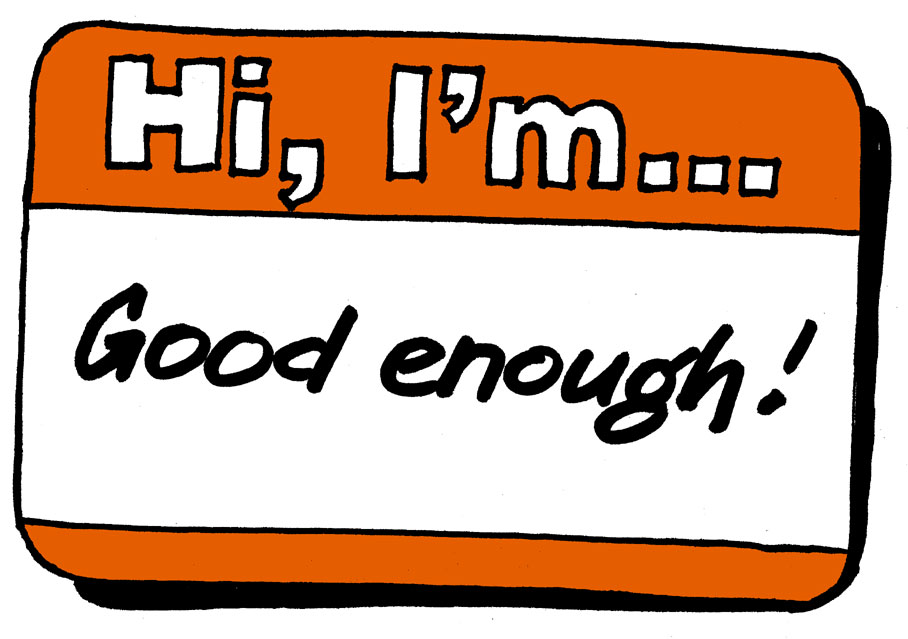
Are You Good Enough for a Career in Comics?

by Palle Schmidt 2 Comments

good-enough

We all look for approval, as people as well as artists. We want to be told we are great, that everything will work out for us. The truth is, no one can really give us that validation.

We might get lucky and meet some peers who can give us guidance, tell us where we need to improve or tell us not to worry so much. But we all worry. And I bet you we all ask the same question: Am I good enough? Do I have what it takes to make it as a comics artist?

No one can tell you for certain, if you have what it takes. A portfolio review only tells you if you have the basic talent for drawing. What goes on inside of you is far more important. Are you willing to put in the time and effort to get to the level you want? To confront your own shortcomings and tackle them head on? Are you prepared for the insecure lifestyle of a comic book artist? The solitude? The long hours? The lack of money and lack of respect from your friends and family?

Are you ready for critizism, fair and unfair? Can you muster up the guts to consistently put yourself out there and be judged? How do you handle taking notes and being told what to do? Do you freeze up when you have to perform under less-than-optimal circumstances? How well do you work under the pressure of a deadline? Do you get anything done if there’s NO deadline, or do you end up wasting your days playing World of Warcraft? Can you forgive yourself for producing less-than-perfect art? Do you endlessly beat yourself up if you’re not productive enough, good enough or succesful enough?

What does “making it” even mean for you?

Have you set a specific and measurable goal, and if not, how will you know if you get there? And have you set a time limit for when you want to have “made it”, knowing that it will probably take years longer than you expect?

And guess what – no one has ever “made it” in comics. Because you’re only as good as your last job. Because even the artist you admire the most judge their own success in a totally different way than you do. Because no matter how succesful you are, you still strive for more. There’s always room for improvement.

All this may sound like I’m trying to get you to give up, which is not at all true. The only thing I want you to give up, is asking the wrong questions. Whether you are good enough, time will tell. Time, effort, courage, persistance.

And you know when you are “making it”?

When you are making the most of the skills you have.
Filed Under: Pro Tips Tagged With: career, comics industry, creativity, deadlines, fear, improving as an artist, learning, mind hacks, mindset, planning, pro tips, procrastination, productivity, success, World of Warcraft, writer's block

What Makes Me a Pro

by Palle Schmidt 5 Comments

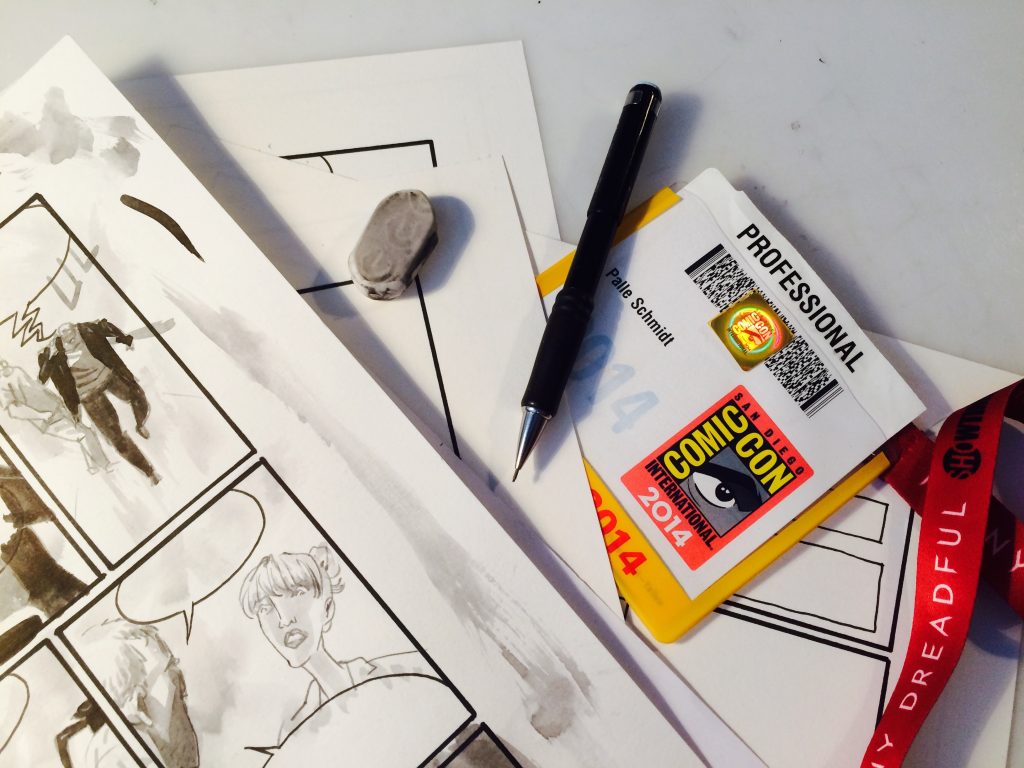
what-makes-me-a-proWe artists often have a very self-deprecating nature. So let me go against the grain here and try to describe what I find makes me a professional. It’s not that I’m a great artist or a great writer (my self-deprecating nature forbids me to describe myself that way). But at least I’m a pro!
The obvious answer to what makes me a pro is of course that I make a living from my artistic skills and have been for almost 20 years. I’m also very good at keeping my promises (aka. deadlines) which I think is probably the most important thing for a freelancer.

But I just realized that underneath these superficial traits are two very basic principles:

1:

I am aware of my own process enough that I am able to replicate it. That includes knowing how long each step will roughly take so I know what the time frame needs to be for me to deliver and also have an estimate of how much it should cost. This varies with each project depending very much on my own preferences. If it’s something I’m not passionate about, my price goes up. But that’s a whole other discussion.

2:

I am aware of the resistance (as Steven Pressfield calls it) – both internal and external – that may (and probably will) come up along the way. My many years of experiencing the same feelings of self-doubt and boredom, helps me recognize it for what it is: A part of my workflow. It also helps me with strategies to deal with the resistance. Not overcome it, but live with it.

For instance, I will jump to another part of the process if I feel stuck or simply walk away from it for a while, knowing that I will get back in the groove tomorrow or the next day. What I don’t do is start doubting my entire career and self-worth because I have an unproductive day where I feel like I can’t draw to save my life.

There is no set-in-stone answer to how to become a great artist. Everyone is unique in their approach. But for me I believe the above points are crucial. Hopefully it can serve as an inspiration or eye opener for your own artistic process.

If you are looking for more practical advice on delivering the goods as a pro artist, try giving this podcast episode a listen.

Filed Under: Pro Tips Tagged With: #makecomics, career, creativity, freelance artist, improving as an artist, learning, mind hacks, mindset, planning, pro tips, productivity

Are you a hack or a primadonna?

by Palle Schmidt 1 Comment

hack-or-primadonna

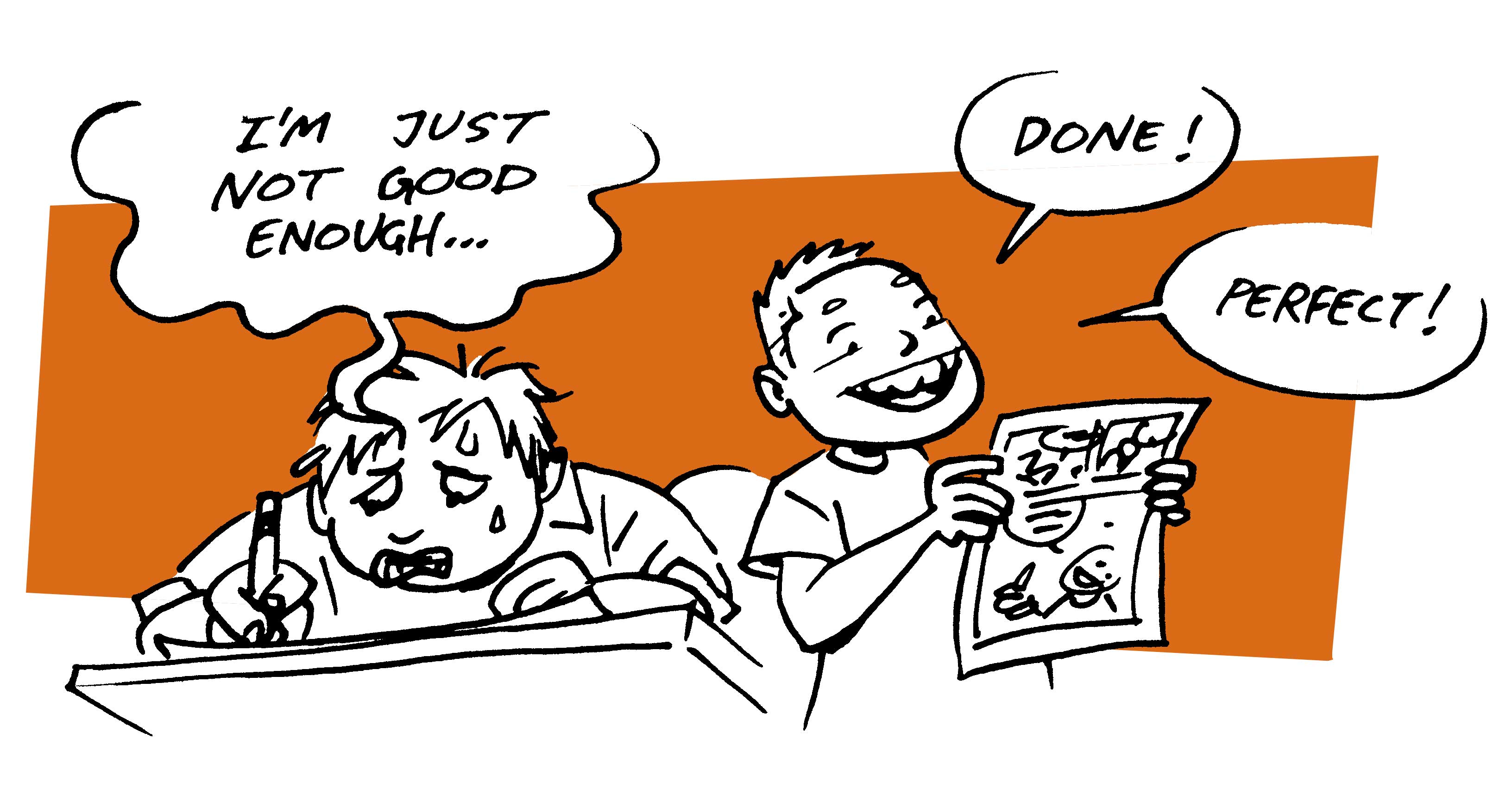
How do you decide when a script or drawing is finished? When is it good enough and when does it need more work?

At my old studio, we used to joke: When is a drawing really good? When it is done!

We sometimes continued to come up with alternatives, like: When the invoice is sent!

While it sounds like a shallow hack remark, there is a level of truth to it. Because just as you can do sloppy artwork just to get something “done”, there is also a great risk of spending to long on something and ruin it in the process. Besides, life is short. You want to get more than one drawing done, so you shouldn’t keep obsessing over one piece of art, trying to make it “perfect”!

The perfect drawing does not exist. Because you will change, however unnoticeable, as you are working on it, and that will change how you look at the drawing.

But how do we know when something is “done” or “good”?

That is a hard question to answer. Wether it be a piece of art or a manuscript, you just need to pass it on at some point. Get a second opinion. To judge something yourself, you need a bit of distance. You don’t always have the opportunity to put something in a drawer for a month or two. You might be on a deadline.

But there is a skill to deciding whether the thing you’re working on is good enough or needs some more work.

If it’s paid work, you also need to take money into consideration. What would be the hourly rate if it takes you ten hours to do an illustration? If the answer makes you cringe, perhaps you need to be spending five hours instead. It all depends on the situation.

A work of art should be judged not only by it’s artistic merit, but also by the circumstances under which it was made.

As artists, we walk a tightrope between being lazy hacks and overly self-critical, meticulous primadonnas. Too little self-critique and you stop growing as an artist. Too much self-critique and you might end up quitting art altogether. Because it’s just too damn hard.

Whenever you find yourself in a place where things are really, really hard, remind yourself that’s because you are growing, improving, learning.

Somewhere in you, between the hack and the primadonna, there is a humble, realistic and self-aware professional waiting to get things done. Stop getting in his way and let him go to work.

Filed Under: News, Pro Tips Tagged With: drawing, improving as an artist, mind hack, pro tip, self-critique, working methods

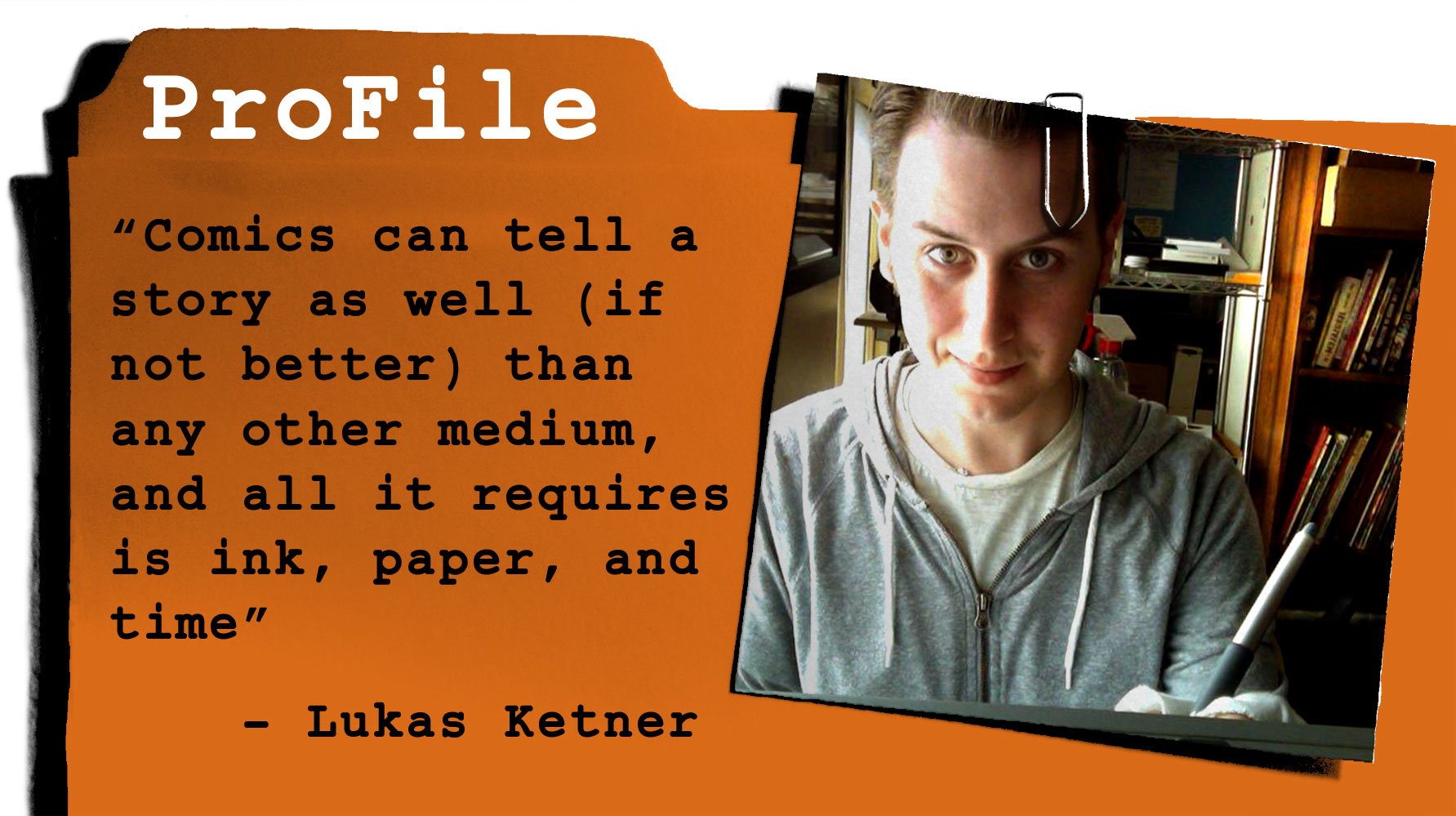
ProFile: Lukas Ketner

by Palle Schmidt Leave a Comment

Lukas-Ketner-ProFile

Lukas Ketner is the artist and co-creator of Witch Doctor, the hit launch title for Robert Kirkman’s Skybound imprint at Image Comics. He was a 2009 nominee for the Russ Manning Award for his Witch Doctor work, which has earned praise from fans and creators alike. Other work includes stories for Dark Horse Comics’ Creepy Comics and Supersized: Strange Tales From a Fast-Food Culture, along with covers for BOOM! Studios’ Hellraiser title. He has twice won entry into the Communication Arts Illustration Annual for his album artwork. He survived a successful full-body transplant from his hometown in Anchorage, AK to Portland, OR in 2000 where he currently resides. You can check out his work and drop him a line on Facebook.

What made you decide to work in the medium of comics?

For me, it was the realization that I could tell stories as well, if not better than prose and film — both of which I tried my hand at, and NO you may not see the results, they’re awful 😉 For me, comics can tell a story as well (if not better) than any other medium, and all it requires is ink, paper, and time. Sure, money helps, but that’s an obstacle that’s easier to overcome in the digital age to reach an audience.

What part of the process is the most challenging or frustrating to you?

Well, challenging and frustrating aren’t always the same thing, although they do overlap quite a bit 😉 For me story flow and lining up shots is very challenging and non-intuitive for me, but very fun and rewarding, much like solving a puzzle. It’s frustrating when I’m inking that same page and I can’t do it fast enough because I’ve added detail to areas that don’t need as much attention as I’ve given them. Then, that elegant puzzle I solved previously turns into a 2-3 day grind that’s totally unnecessary— comics pages shouldn’t take that long for a monthly horror book. It’s a mistake that I’m slowly making less and less, but it still happens. I really admire artists whose styles are more economical, but still great to look at. My studio-mates Jonathan Case and Steve Leiber come to mind, along with Sean Murphy. Murphy does have a very detailed style, but you’ll notice it’s rarely more detail than necessary to make the image really sing.

If you could give one piece of advice to an aspiring comics creator, what would that be?

A rule I learned in design school, “Very Little, Very Well Done.” If you’re trying to get noticed, do a “done-in-one”, the comics equivalent of a short film. Make it one issue tops to start with, and NO cliffhangers. It’s got to be a full story, start to finish, no “prologues” or “to be continued”. That doesn’t mean it can’t take place in a world that you’d like to explore further in the future, but it needs a satisfying conclusion, and maybe a hint that there’s more story to tell (if that’s relevant). Print it up! Put it online for free. Put it everywhere that people can see it. You can sell it at shows to try to recoup some expenses, but don’t expect to make a profit. It’s proof that you can do the work and do it well; that’s what’s important. Get some interest behind you, and as much feedback as you can possibly get from editors and other successful creators. Maybe do another, again, done-in-one applying what you’ve learned. Why such small bites? Because you don’t want your first work to be a 12-issue epic, and then find out via feedback that you’re doing it wrong story-wise after you’ve put out two issues of hard work, and editors need to see that you can complete a story in a satisfying manner. I guess that’s a bit long for ‘one piece of advice’, but there it is 🙂


Filed Under: Pro Tips, ProFile Tagged With: art, career, comics industry, Communication Arts Illustration Annual, creativity, Creepy Comics, Dark Horse Comics’ Creepy Comics, drawing, Image Comics, improving as an artist, Jonathan Case, learning, Lukas Ketner, making comics, Periscope Studio, Portland, pro tips, Russ Manning Award, Sean Murphy, Skybound, Steve Lieber, storytelling, studio, Witch Doctor, workflow

Why daily sketching doesn’t work

by Palle Schmidt 11 Comments

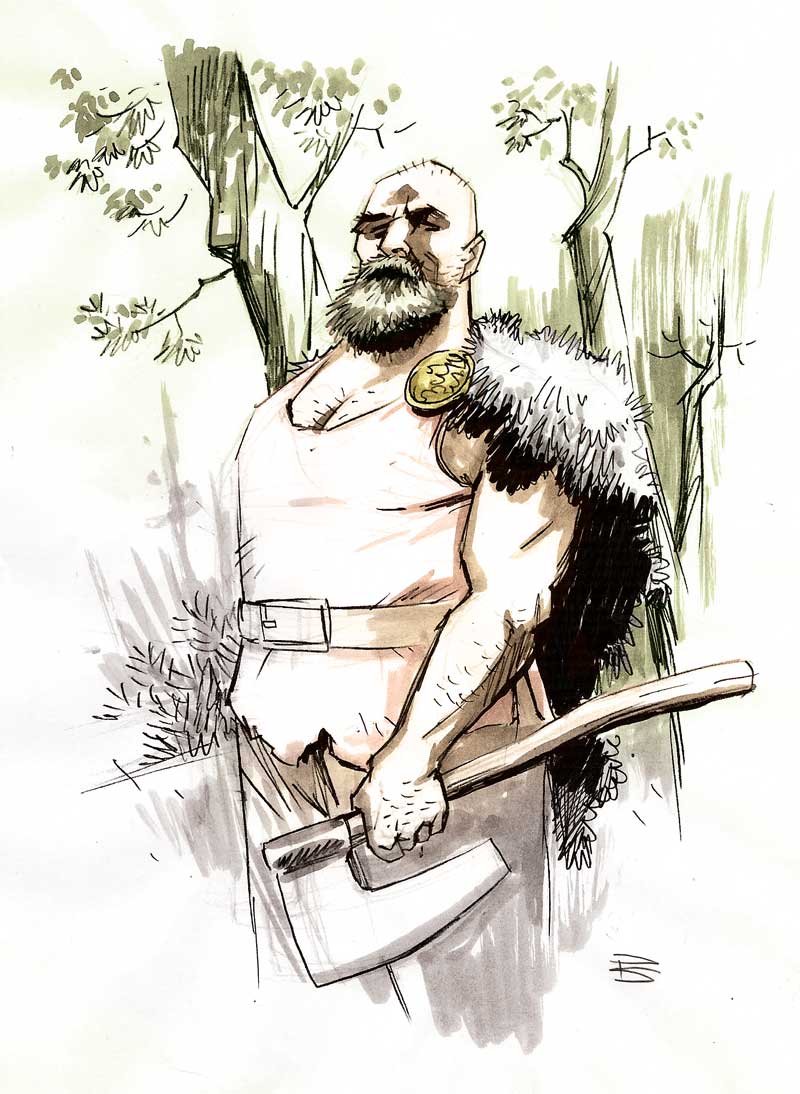
Woodsman_COLORYou know how important it is to draw every day, if you want to improve as an artist. But more importantly, you need to keep a forward momentum and draw the hard stuff.

A lot of artists share daily sketches on Twitter and Facebook. While that’s a perfectly valid thing to do, I see one common problem with most of these sketches – they are all very good! The problem here is that the artist has sat down with a blank piece of paper and drew whatever he felt like, whatever image he had in his mind.

Let’s imagine you were to do the same. Wonder what image would pop up?

I’ll take a wild guess: Character shot.

Whether it’s a macho superhero, a funny animal or a sexy robot, the problem with that image is exactly that it came from inside your head. And let’s face it: not much new comes from inside your head.

I used to only draw muscular guys with swords and dragons. While I did get slightly better at drawing guys with swords and dragons, this daily exercise didn’t help me get better at drawing. Not by a long shot.

What DID make me better, was being forced to draw stuff I didn’t already know how to draw, the “boring” stuff like flowers in a vase, and the hard stuff, like a street full of houses and cars and trees and people .

Unless you push yourself and draw from life, study and copy from photo reference and other artwork, you’ll only be maintaining your drawing muscle, not improving it. When it’s really hard and frustrating – THAT’S when you’re on your way to getting better.

Imagination is overrated. You need input to produce output – even original, fresh and innovative output!

Sketching daily only works if you push yourself to draw the stuff you can’t.

Filed Under: Pro Tips Tagged With: character shots, creativity, daily sketching, drawing, improving as an artist, learning, mistakes, reference, sketching, workflow

ProFile: Jeremy Haun

by Palle Schmidt Leave a Comment

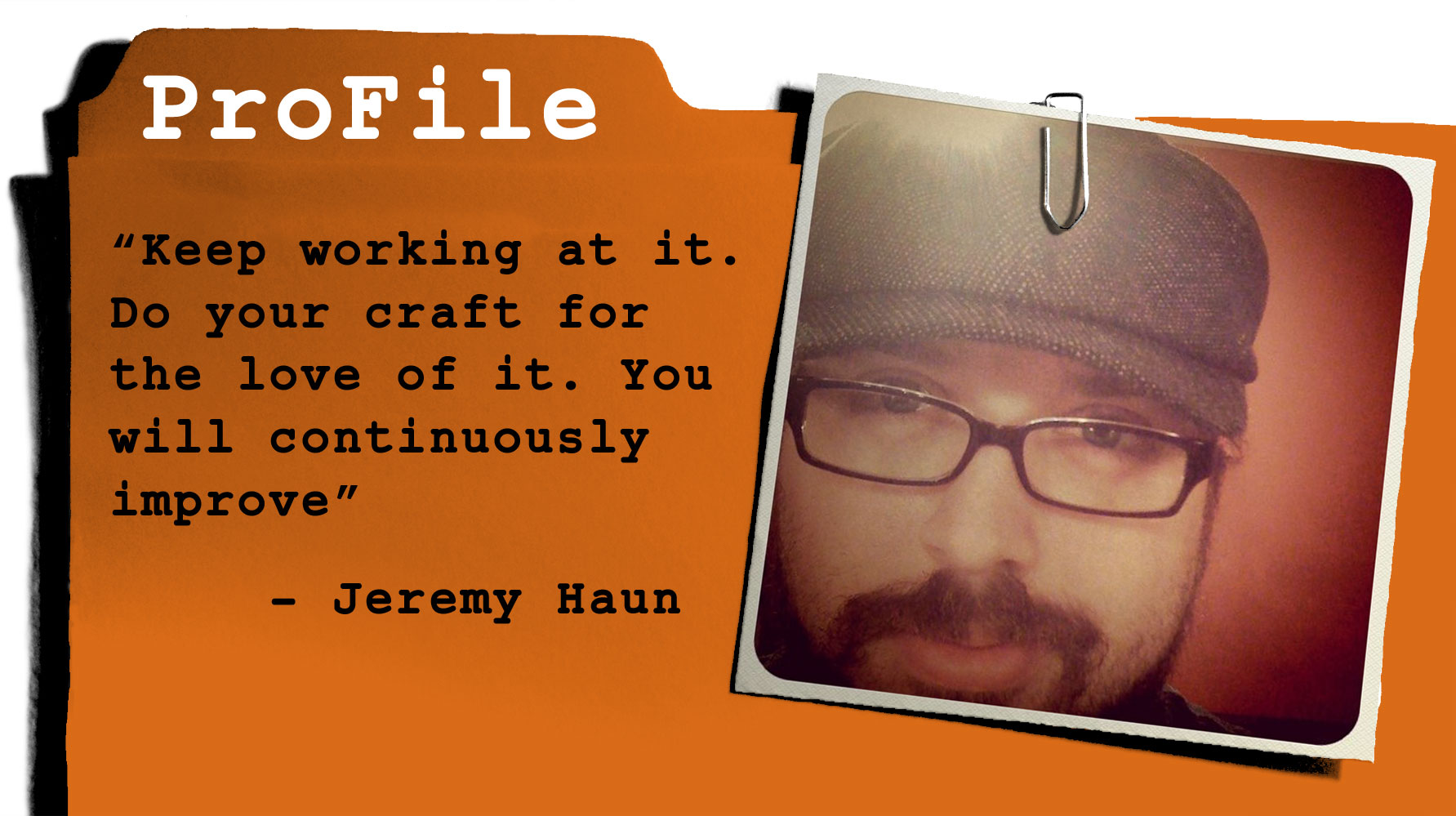
ProFile-Scott-Jeremy-HaunJeremy Haun is the current artist on Constantine. Wolf Moon, by Jeremy and Cullen Bunn, debuted in December from DC. He recently completed a run on Batwoman. Over the past decade plus, along
with wearing calluses on his fingers doing work for DC, Marvel, Image, and others, he has created and written several projects. Some you might know are graphic novel Narcoleptic Sunday, Leading Man, and The Beauty, soon to be out from Image. He is a part of the Bad Karma Creative group, whose Bad Karma Volume One debuted at NYCC 2013, thanks to Kickstarter funding. Jeremy resides in a crumbling mansion in Joplin, Missouri with his wife and two superheroes-in-training.

What made you decide to work in the medium of comics?

I’ve always been a huge comics fan.   I spent my childhood drawing and redrawing what I saw in comics and telling my versions of those stories.  It’s what I always wanted to do.

What part of the process is the most challenging or frustrating to you?

Doing the comics themselves is challenging, but probably the most consistently frustrating part is managing the time required to make comics.  While comics are perceived as a fun child-like medium, the time you are allotted to create a comic is about a month.  With the amount of time needed to put out the kind of finished product I’m happy with, makes for some long, long hours at the drawing table.

If you could give one piece of advice to an aspiring comics creator, what would that be?

Keep working at it.  Do your craft for the love of it.  You will continuously improve.  The industry is set up in such a way that it is difficult to get hired without having prior experience.  But keep at it and do your own thing if necessary.

You can support Jeremy’s Kickstarter for his new Dino-Day Art Book here.

Filed Under: Pro Tips, ProFile Tagged With: Bad Karma, Batwoman, career, collaboration, Comics conventions, comics industry, Constantine, creativity, Cullen Bunn, DC, Image Comics, improving as an artist, Jeremy Haun, Leading Man, learning, making comics, Marvel, Narcoleptic Sunday, The Beauty, Wolf Moon

  • « Go to Previous Page
  • Page 1
  • Page 2
  • Page 3
  • Page 4
  • Interim pages omitted …
  • Page 8
  • Go to Next Page »

Primary Sidebar

Hours of Premium Content

ComicsCrashCourse

Try the FREE 7-day Comics Course

Creator Profiles

Interviews with Creators

The CFB Podcasts

Find them here.

Comic Creators eBook

The Comic Creators eBook

Footer

Check out more resources

Bundles of quality content available, check how to write comics and how to make your comic book artwork look great or find tips and tricks on the blog.

Latest from the blog

  • Video: How to get Story Ideas
  • Video: The Benefit of Being a Nobody
  • Video: Why Creatives Hear Voices
  • Digital Tools for 2021
  • The Most Badass Tools for Inking Comics
  • Why Creative Restrictions are Good for You!
  • How to Write a Great Story – and Stick the Landing

Contact us

If you have questions or issues please contact us.

Official mail: mail(at)comicsforbeginners.com

Feel free to connect on Twitter and/or Facebook.

Copyright © 2026 · ComicsForBeginners by Palle Schmidt Log in