• Skip to main content
  • Skip to secondary navigation
  • Skip to primary sidebar
  • Skip to footer

Comics for Beginners

How to Write & Draw Comics

  • Contact
  • About
  • Faqs
  • Log In
  • Resources
  • Podcasts
  • Comics Crash Course
  • Blog
  • Videos

improving as an artist

8 Steps to Comics Success – Comics for Beginners podcast episode 24

by Palle Schmidt 14 Comments

As you may know, my first monthly book Thomas Alsop is out from BOOM! Studios and is doing very well. Hooray! But how do you get there? In the first episode of this podcast, I discussed the three biggest mistakes of my comics career. But it was a different time back then. In this episode I go into what I would do if I was starting out making comics today. Follow these 8 simple steps and your comics career is guaranteed! Er, no… But there are some good tips in this episode, that’s a promise.

Related podcast: The Three Biggest Mistakes of my Comics Career
 

Filed Under: Podcast, Pro Tips Tagged With: career, collaboration, comics, comics industry, creativity, how to, improving as an artist, instagram, making comics, mistakes, planning, PR, productivity, self promotion, social media, webcomics, workflow

Finding time to do comics

by Palle Schmidt 3 Comments

finding-time-to-do-comics

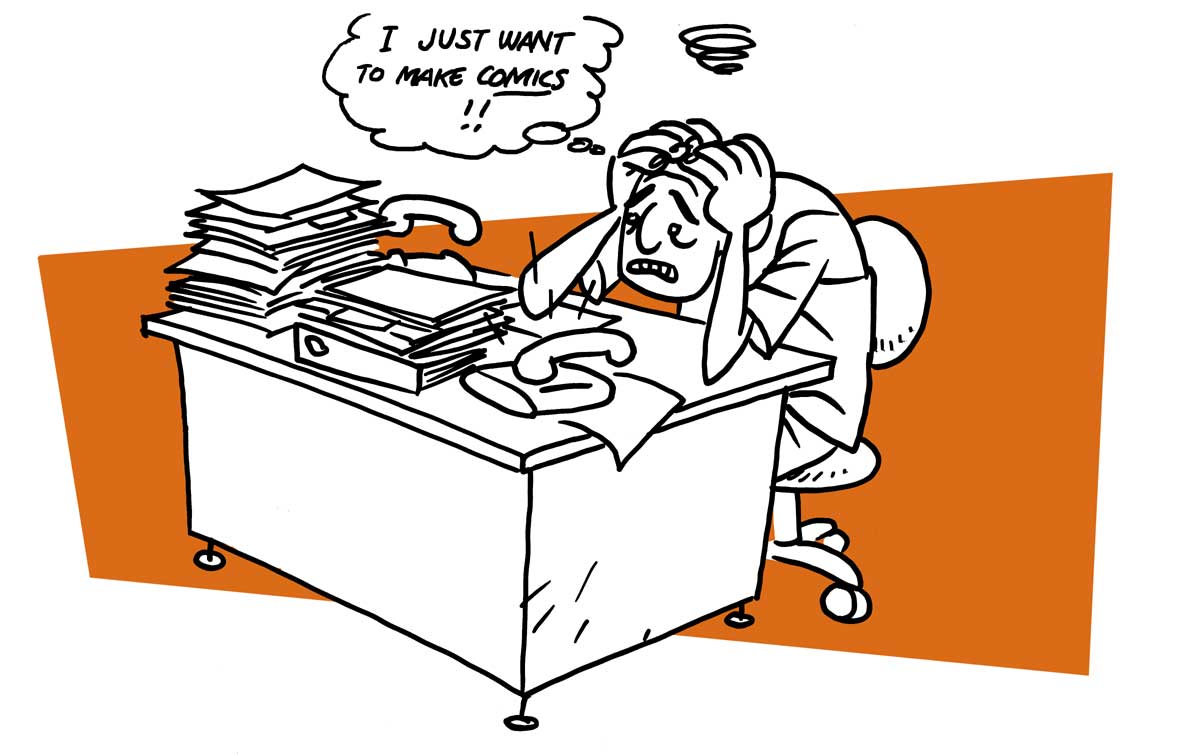
A lot of us struggle finding the time to make comics. There just aren’t enough hours in the day!

Though some of us are richer or more talented than others, there is one area were we are all equal: we all have the same 24 hours in day. Here are a few tips on how to make your comics hours count.

Get up earlier.
An hour a day can really make a world of difference. Small steps towards your goal is better than none.

Plan ahead.
Before you go to sleep at night, decide what piece of the big picture (page, panel, scene, character) you will be working on the next day – Or whenever you get a time slot. Oftentimes small breaks pop up during the day, which we end up wasting on Twitter or goofing around. Have something ready that you can just pick up and work on whenever the opportunity arises.

Focus on one little step at a time.
When we think of our comics as a whole, it’s easy to get overwhelmed by the amount of work that lies ahead; outlining, scripting, thumbnails, rough sketches, research, more sketches, character design, pencils, inks, color, lettering, promotion… Arrgh!

Stop, take a deep breath and focus. One thing at a time.

Just say no.
If we all have the same amount of hours in the day, how come some people get more done than others? My guess: They either have enough money that they don’t have to spend all their time shovelling coal. Or: they prioritize. If you really want to make comics, you will probably have to sacrifice some things to clear your schedule. If you can’t cut down on working hours, maybe cut down on the hours you spend playing videogames or watching tv.

What are your tips for making more of the time you have available? Please share!

Related podcast: Getting Stuff Done

Filed Under: Pro Tips Tagged With: creativity, how to, idea generation, improving as an artist, learning, making comics, mind hacks, planning, pro tips, productivity, time management, workflow

Art tutorial: 5 ways to add some life to your drawings

by Palle Schmidt 2 Comments

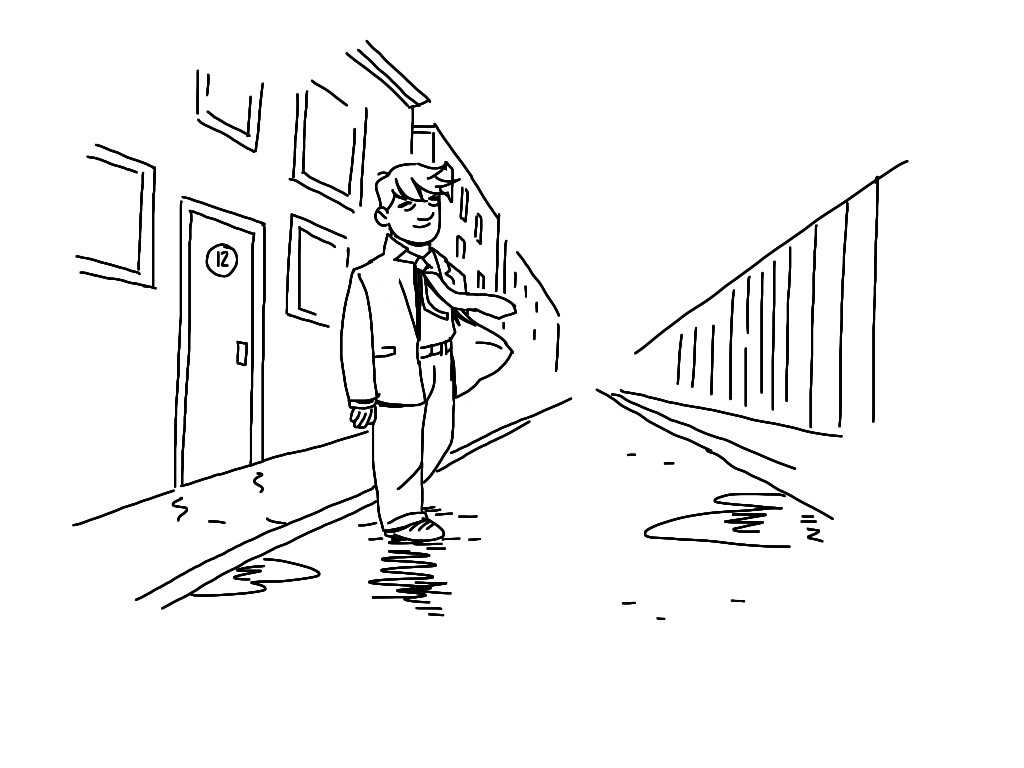
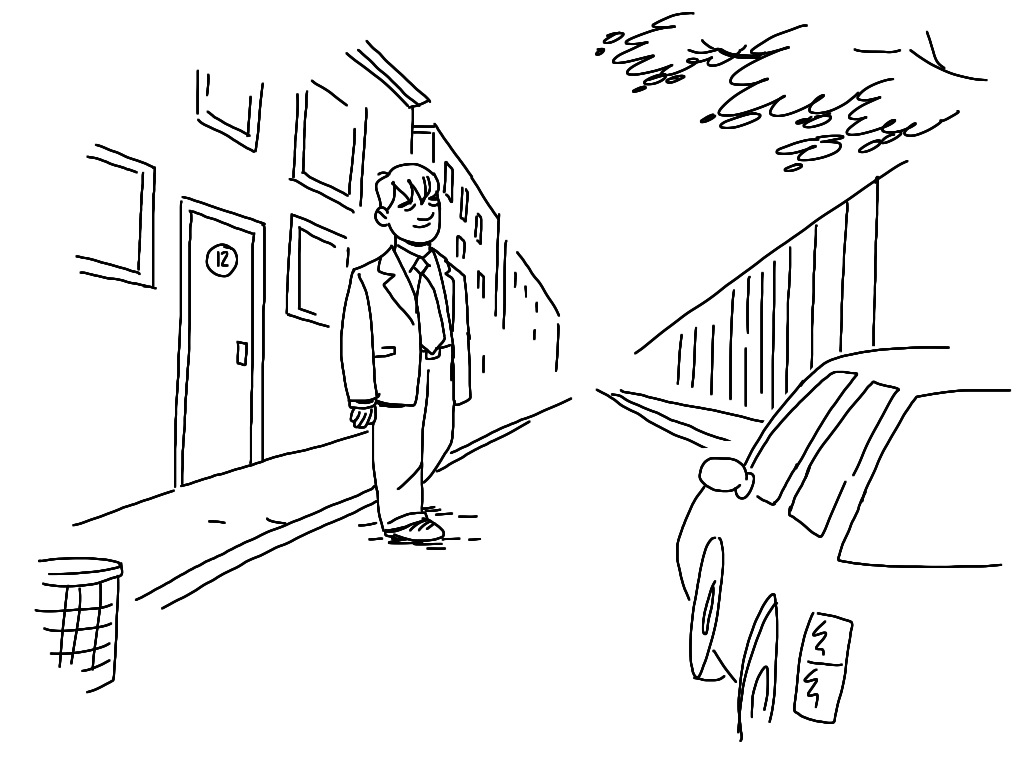
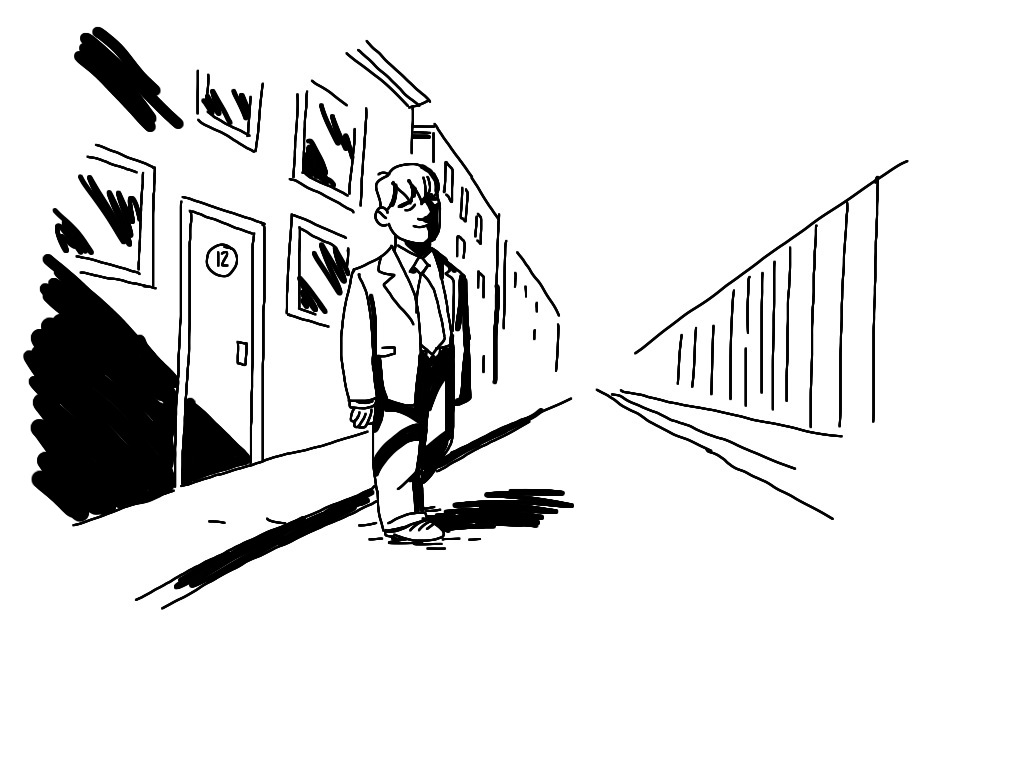
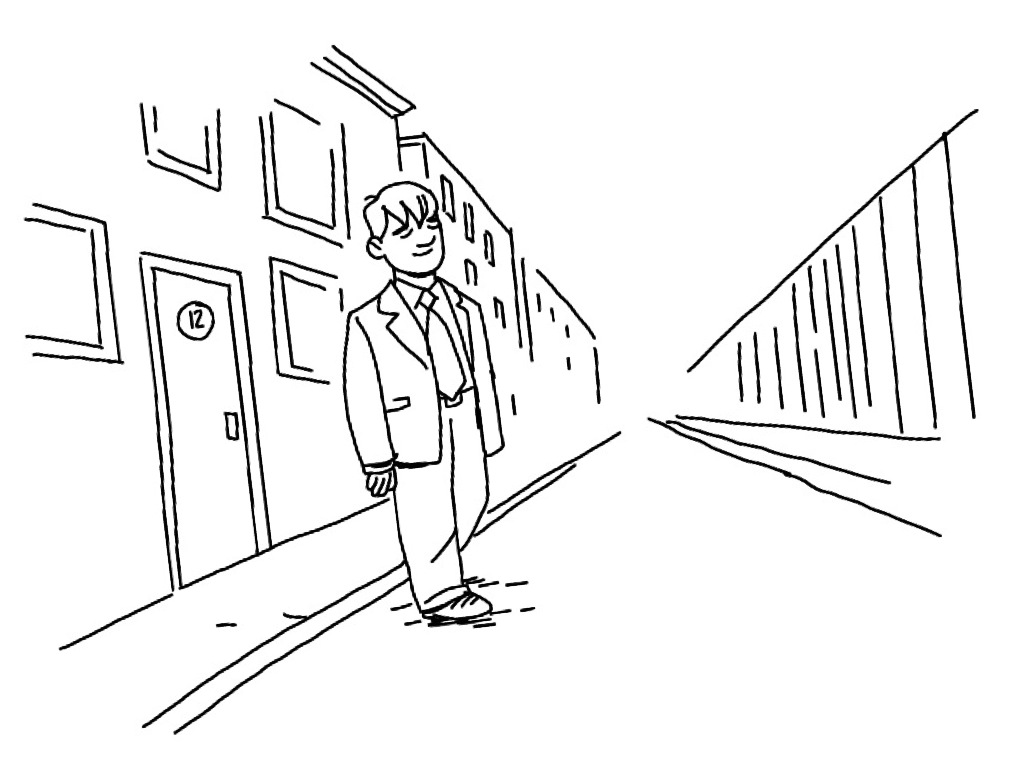
Do your comics panels lie flat on the page? Struggle to make your characters more dynamic and your backgrounds more authentic? Here are 5 quick tips to making your comics come alive!

1. Wind

Yes, wind! We often forget the weather when we are making comics, but this is just another case of a little going a long way. A puddle or a snowdrift can give off the same effect and help us determine where and when we are.

wind

2. Foreground

Put something in the foreground of your frame will make it look like there is an actual world around your characters.

foreground

3. Shadows

Same as with foreground, the shade of something that is NOT visible in the frame, will give off the illusion of a bigger environment.
shadow

4. Tilt

If all your lines run parallel with the borders, you run risk of confusing and/or boring your reader. Tilt the image, make it seem more dynamic.

tilt

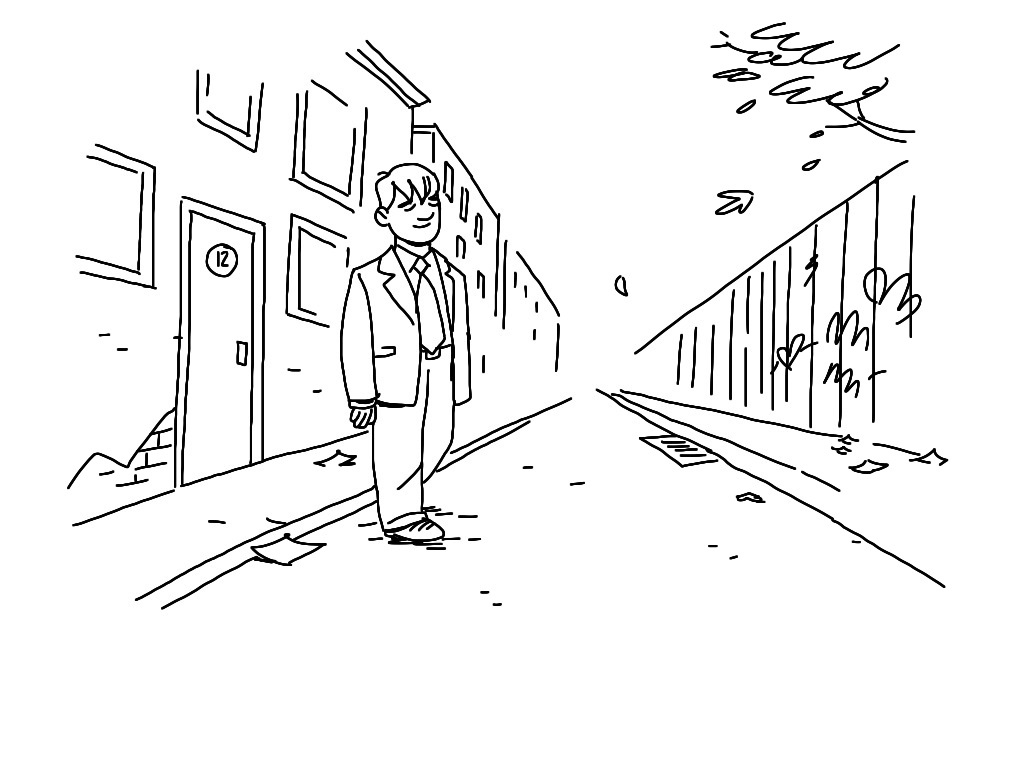
5. Trash

Put some paper scraps, dead leaves or cigarette butts in your frames to make them seem more lived in. A cracked pavement, a grafitti or some peeled paint gives the same feeling: The world exists outside this one, static image!

trash

For more quick tips and art hacks like this, sign up to our newsletter!

Filed Under: Pro Tips Tagged With: art hacks, Art Tutorial, comics, drawing, how to, improving as an artist, learning, life, pro tips, tips for making comics

Seeing the images before drawing them

by Palle Schmidt 1 Comment

I got a really good question in an email the other day. A subscriber in Nigeria (Hello, Africa!) asked me about conceptualizing: “How do you see each drawing before you actually put pen to paper?”

My gut response was: Well, it just pops into my head.

I realize that’s not very helpful – although it’s very close to the truth! The whole truth is of course more nuanced.

The reason why these images just pop into my head on a very intuitive level is because I’ve put them there. Not on purpose, not by design. But by watching a whole lotta stuff over the years. Comics, painting, movies, real life – all of the things I’ve seen with my eyes, my brain remembers. All right, maybe not ALL the things I’ve seen. But you get the idea. The more you look at images, the more likely you are able to remember and replicate an image.

But again that’s not the whole truth.

Drawing these images vastly improves your ability to remember and replicate them. The more life drawing, the more copying you do, the more images you solidify in your subconsciousness.

The images that pop into my head probably do so, because I’ve seen them or drawn them before. Not that exact image, but something similar.

A few exercises:

  1. Watch movies. Pause the dvd, draw the image on the screen. As fast as you can. Study the composition, the lighting. Save your sketch for later. Steal from yourself.
  2. Read comics. No, in fact just pick a few comic books off the shelf and flip through them before you start your work. Put some images in your head (but don’t copy them!)
  3. Sketch. A lot. Try out several versions of the same image, different angles. Do thumbnail versions of your pages and be conscious about varying the sizes of the panels, shift between close ups, tilted shots, silhouettes – whatever you can do to shake things up.

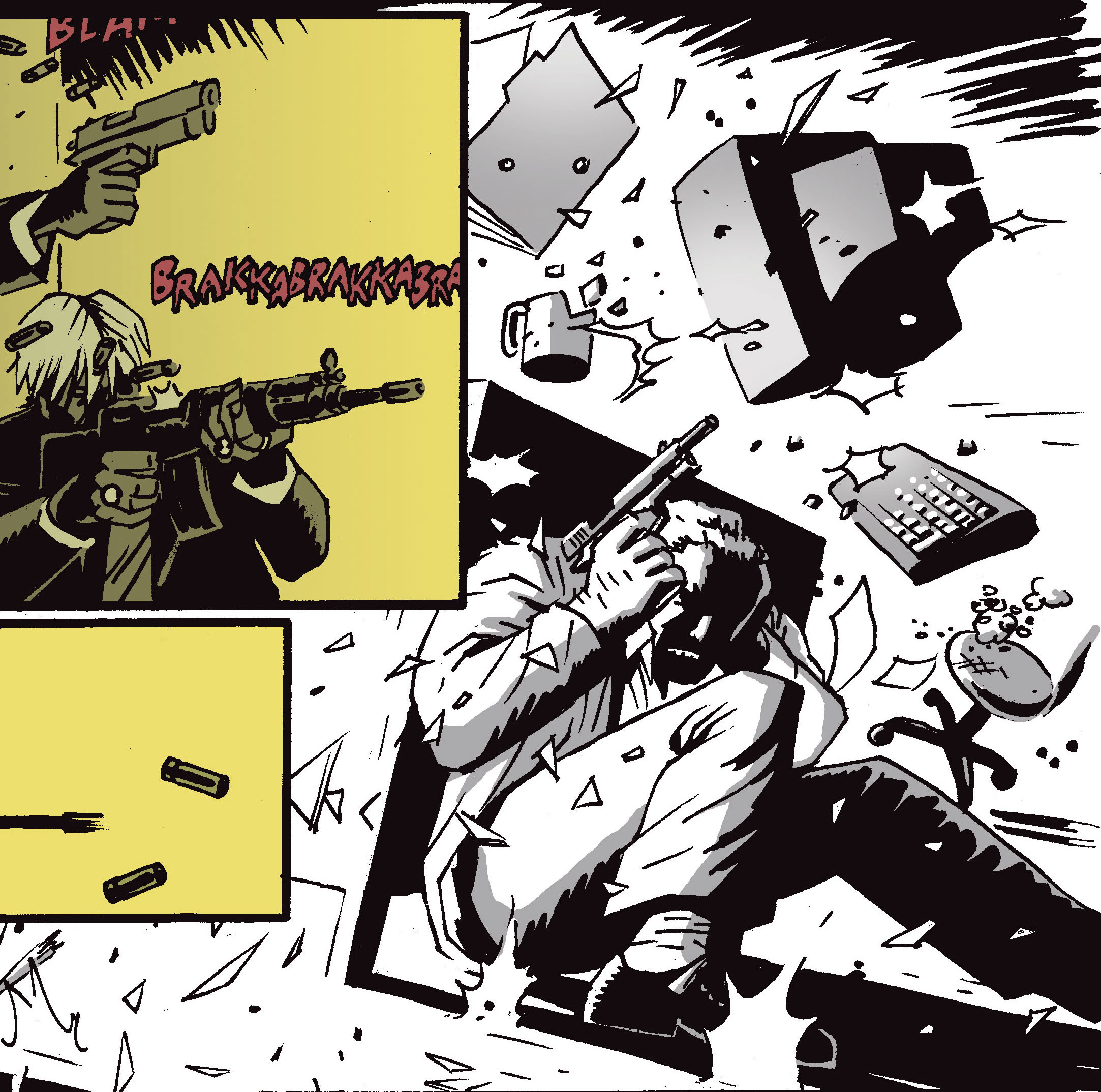
The image the Nigerian subscriber mentioned as a reference was this one.:

DC-excerpt

I can see why it looks seducingly easy, like I’m some comics genius. But I probably made half dozen versions of this image before landing on this one. At least in my head. That’s where the images usually come from, as I’m writing the script.

It’s not easy. But it get’s easier. The more images I see, the more images I draw, the more I have to replicate from.

And you know that feeling of having an image inside your head and not being able to get it down on paper? Yeah, I get that too. But I’ve learned to ignore it. The image in my head washes away and is replaced with whatever is on the page, and that’s OK. It’s just one drawing out of hundreds, thousands. I get less attached the more I draw. I feel like that’s the secret to making comics in some weird way. Not caring so much for the individual image but caring about the flow of the story.

Hope the longer answer is more helpful!

Related podcast: Drawing Every Day

Filed Under: News, Pro Tips Tagged With: career, creativity, critique, drawing, how to, idea generation, improving as an artist, learning, making comics, mind hacks, mindhacks, The Devil's Concubine, tips for making comics, workflow

ProFile: Kevin Colden

by Palle Schmidt Leave a Comment

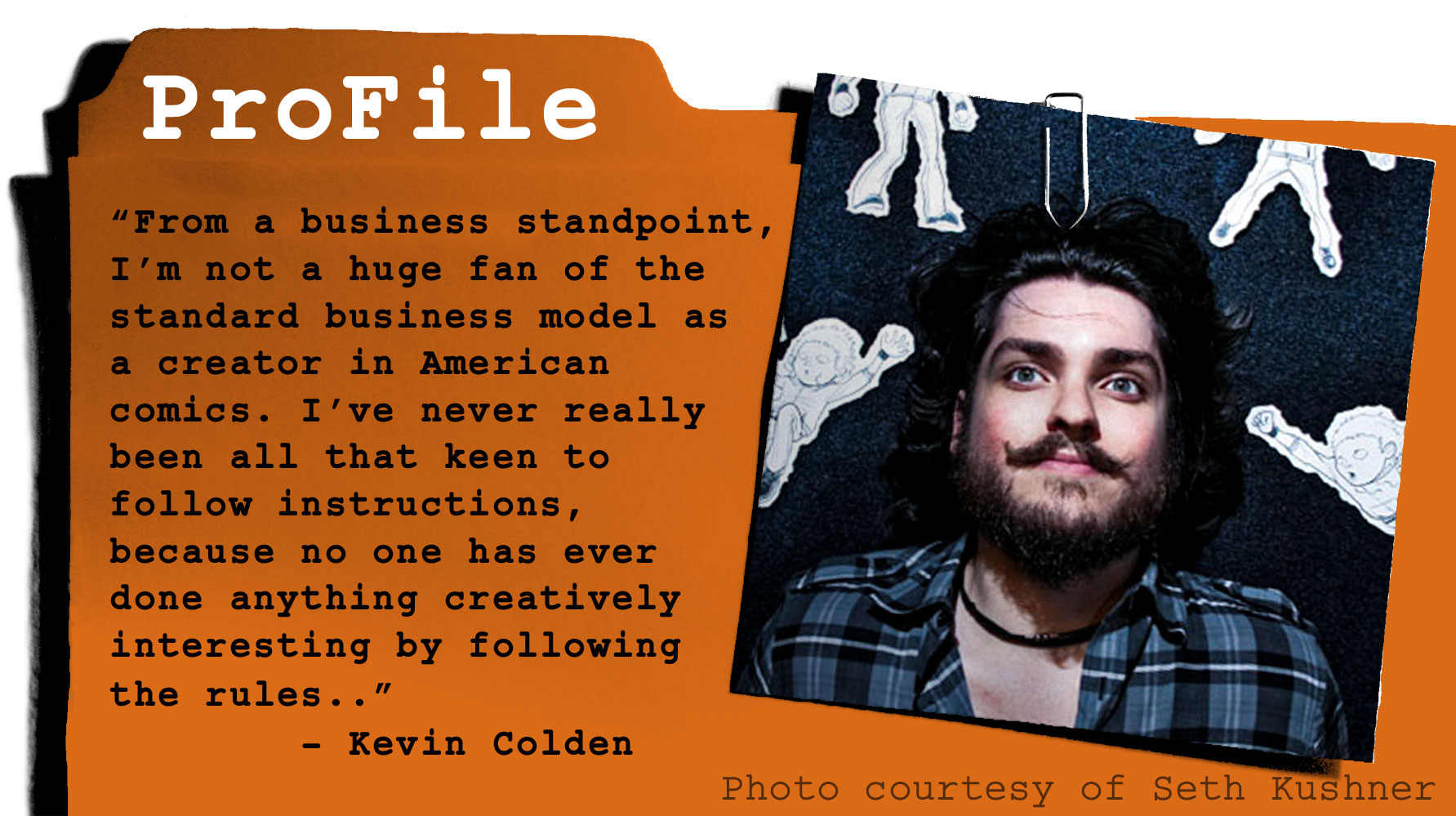
ProFile-Kevin-ColdenKevin Colden has written, drawn, colored, and lettered all sorts of comics over the last decade including Fishtown, I Rule the Night, Yours Truly Jack the Ripper (with writers Joe R. Lansdale and John L. Lansdale), and helped IDW Publishing relaunch James O’Barr’s The Crow in 2012 with writer John Shirley. His most recent work includes a digital one-shot adaptation of Robert Bloch’s Pumpkin with writer Steve Niles and colors for Dynamite’s GRIMM digital series, as well as his own upcoming series Ἀντιόχεια (Antioch). He lives in New York with his wife and their three-year-old son/personal assistant.

What made you decide to work in the medium of comics?

Comics have been a part of my life since I can remember, and until I was about twelve or thirteen years old, the only thing I wanted to do for a living when I grew up was write and draw comics. When I was a teenager I got very serious about music and theater, but I came back to comics when I decided not to pursue acting. My reasoning was that if I went to school for visual art I could always find work as a graphic designer if nothing else, but if I went to school for acting I would end up working as waiter or a clown at children’s birthday parties or something like that. I also hate auditioning, so I picked the fallback career that I liked more. As it turns out, that was a good idea, because it took me about eight years after graduating to be able to make any kind of living wage from comics. The reason why I picked comics as opposed to illustration, animation or design work probably comes from the fact that I like writing and telling stories as much as I like drawing. What I love most is when I’m able able to craft a complete piece of work from beginning to end and have people engage with it directly from me to them, with as little as possible in between. You can’t really do that with film or animation because there are so many other people involved. You can’t even do that with most comics if you want to make a living. So I guess it’s a little bit of an ego thing after having tried a few other disciplines that were more collaborative.

What part of the process is the most challenging or frustrating to you?

From a creative standpoint, I find the amount of time involved in drawing to be very frustrating. For a long time I was known as a guy who could do good work really fast, but that was mainly because I’m a little impatient, possibly a little ADHD. Nowadays I take a lot more time with the work, but it can be excruciating to realize that it’s taken me a month to do ten pages – until I realize that I’m doing full grayscale hatching and coloring it as well. Still it’s hard to accept that the reader is only going to spend a minute with a page that took three days to create. From a business standpoint, I’m not a huge fan of the standard business model as a creator in American comics. I’ve never really been all that keen to follow instructions, because no one has ever done anything creatively interesting by following the rules. I like to know those rules, for sure, but – as an example – if I’m making my own comic and need to promote it, where is the money coming from to go to six or seven conventions a year? Breaking even at a con is nearly impossible even if you’re very popular or are able to charge a lot for sketches. That’s not sound business to my eyes. So I prefer to find fun ways to work outside the system and then let everyone else run to where lightning just struck.

If you could give one piece of advice to an aspiring comics creator, what would that be?

Spend a lot of time trying different genres and styles, and when you find something you love and that you’re good at, focus on it. If you start hating it, start all over again.

Filed Under: News, ProFile Tagged With: Antioch, career, collaboration, comics, comics industry, creativity, Dynamite, Fishtown, GRIMM, I Rule the Night, IDW, improving as an artist, James O'Barr, Joe R. Lansdale, John L. Lansdale, Kevin Colden, making comics, New York, pro tips, Robert Bloch’s Pumpkin, storytelling, The Crow, tips for making comics, Writing, Yours Truly Jack the Ripper, Ἀντιόχεια

Why you can’t learn from success

by Palle Schmidt Leave a Comment

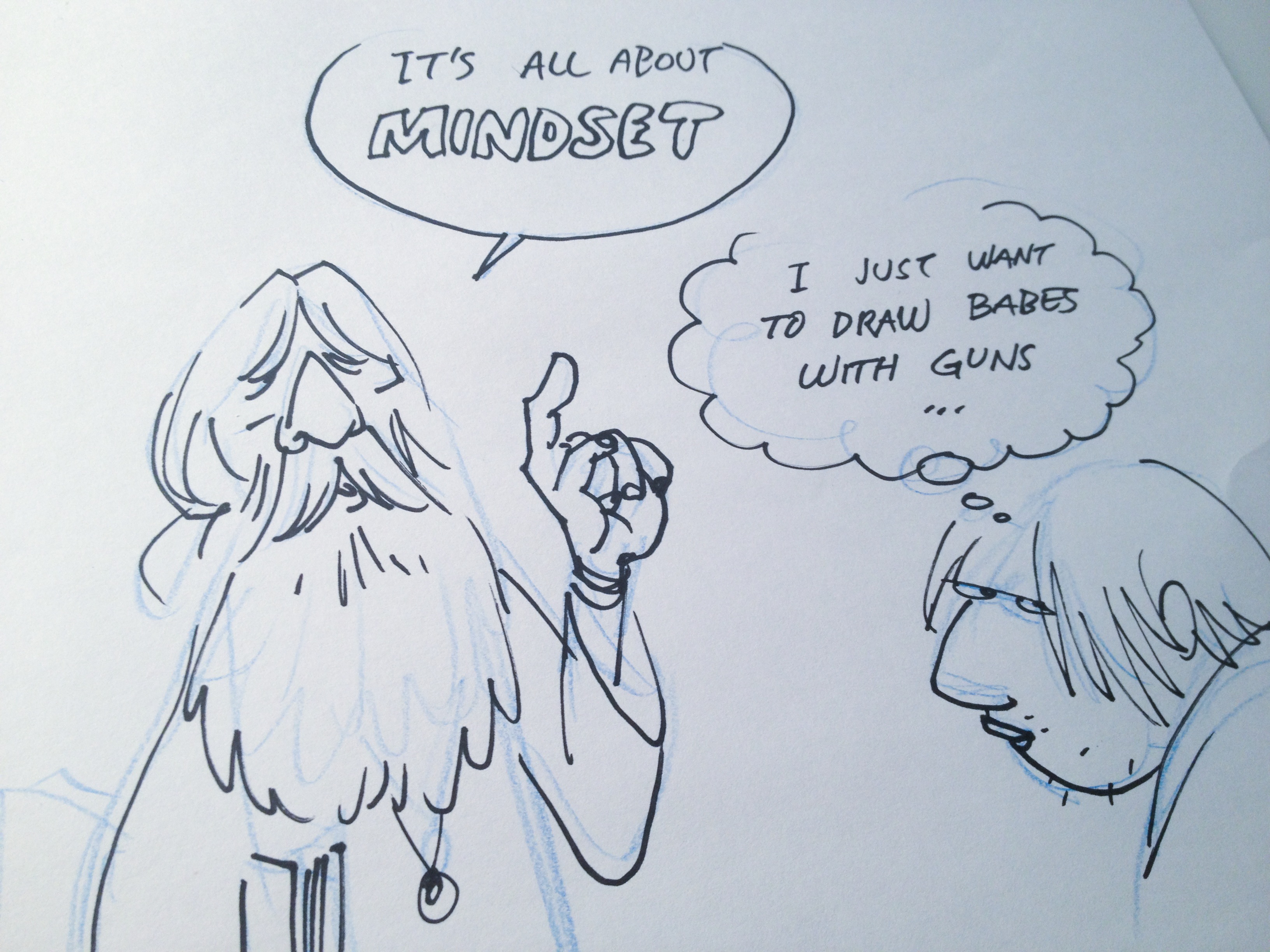
mindsetWe all want to be succesful  in some way or another. But is success in comics a recipe you can follow? Secret ingredients? Or is it actually better to burn your fingers on the stove? At least you can learn from that experience!

My motto is: “You can’t learn from success”

This quote in a comment on my podcast episode The 3 biggest mistakes of my comics career, got me thinking about this topic.

Looking at people who succeed and copying their strategy would seem like a good idea. And there definitely is a a lot to be said for looking at peers and seeing what works for them. But can you really learn from the success of other artists or duplicate the success you had with a previous project?

Here’s why I think you can’t learn from success:

  • What works for another artist is not necessarily going to work for you. They have a different background, a different skill set, maybe a different home life or financial situation putting them in a better position than you.
  • Success is personal. You might perceive another creator as hugely successful while they see their career as less than perfect – most likely that’s how they feel!
  • You can’t measure success. We as artists have an embedded dissatisfaction with where we are. That’s what motivates us to get going! So the feeling of success we might have quickly fades and gives way to new dissatisfaction.
  • No one mulls over success. The more time you spend thinking about something, the bigger the chance of learning from that experience, right? But who lies awake thinking of their successes? Not comics artists, for sure! We’re much more prone to miring over what went wrong, how we’re not good enough. Let’s use that in a constructive way and at least learn something from those self-doubts.
  •  What worked for you once is not necessarily going to work again! The world is constantly changing and so are you. The circumstances that made a success could have shifted or the artistic side of you refuses to repeat the process.
  • The learning you could subtract from a previous success is usually hidden somewhere in the big picture. What you think made the success and what actually made it happen is probably not the same thing.
  • Success is 80% timing. Okay, I have no scientific evidence for this, but I do believe a lot of what makes a success is out of our control. It’s not just meeting the right peers or editors, being up for the task when opportunity arises. Any work of art needs to hit home with an audience and the market is constantly shifting. Serial killers or cute ponies might be in vogue this year, but next year we couldn’t be bothered.
  • To be really successful in art, you cannot just be replicating what you did last! You need to be constantly pushing yourself.
  • Success is outside of your comfort zone. If you are any good at what you do, you will constantly be introducing new methods, new tools and new influences on your work. See how the list of ingredients is constantly changing? You can’t repeat the recipe, it’s just impossible!
  • No one succeeds from day one! So if you want to learn from success you have to wait a loooong time. Failure happens all the time, especially in the beginning. Great learning possibilities!

So as you can see, learning from failure is a much better strategy than trying to copy your own success or the success of others. And luckily, failure is bound to happen on a regular basis. 

Agree with this perspective? Or think I missed an important point? Comment below!

Filed Under: Pro Tips Tagged With: career, creative decisions, creativity, failure, improving as an artist, learning, mind hacks, mindset, mistakes, pro tips, success, workflow

  • « Go to Previous Page
  • Page 1
  • Page 2
  • Page 3
  • Page 4
  • Page 5
  • Page 6
  • Interim pages omitted …
  • Page 8
  • Go to Next Page »

Primary Sidebar

Hours of Premium Content

ComicsCrashCourse

Try the FREE 7-day Comics Course

Creator Profiles

Interviews with Creators

The CFB Podcasts

Find them here.

Comic Creators eBook

The Comic Creators eBook

Footer

Check out more resources

Bundles of quality content available, check how to write comics and how to make your comic book artwork look great or find tips and tricks on the blog.

Latest from the blog

  • Video: How to get Story Ideas
  • Video: The Benefit of Being a Nobody
  • Video: Why Creatives Hear Voices
  • Digital Tools for 2021
  • The Most Badass Tools for Inking Comics
  • Why Creative Restrictions are Good for You!
  • How to Write a Great Story – and Stick the Landing

Contact us

If you have questions or issues please contact us.

Official mail: mail(at)comicsforbeginners.com

Feel free to connect on Twitter and/or Facebook.

Copyright © 2026 · ComicsForBeginners by Palle Schmidt Log in