• Skip to main content
  • Skip to secondary navigation
  • Skip to primary sidebar
  • Skip to footer

Comics for Beginners

How to Write & Draw Comics

  • Contact
  • About
  • Faqs
  • Log In
  • Resources
  • Podcasts
  • Comics Crash Course
  • Blog
  • Videos

Pro Tips

Seth Kushner and Nathan Schreiber – Comics for Beginners podcast episode 18

by Palle Schmidt Leave a Comment

Seth Kushner (http://www.sethkushner.com/) is a photographer and writer, known for his awesome portraits in Leaping Tall Buildings: The Origins of American Comics and his Schmuck series and photocomics on Trip City. Nathan Schreiber (http://www.nathanschreiber.com/) is an Eisner and Harvey Awards nominated artist, whose own book Power Out won a Xeric award in 2009.

I talked to both Seth and Nathan about the art and craft while I was in New York this fall, only later realizing what a great double feature the two interviews would make, as they worked together on Seth Kushners Schmuck! Their collaboration on the Schmuck series can be found at http://welcometotripcity.com/2013/10/schmuck-14-size-11/
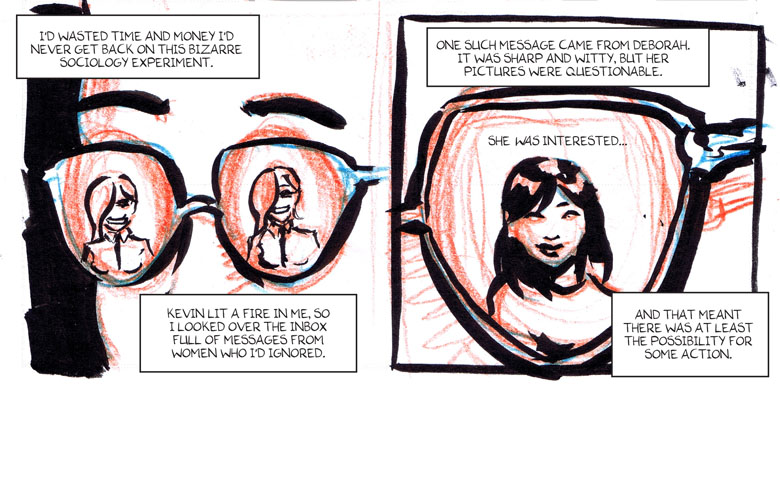
Seth Kushner and Nathan Schreiber's collaboration on Schmuck : Size 11
Seth Kushner and Nathan Schreiber’s collaboration on Schmuck : Size 11

Filed Under: Podcast, Pro Tips Tagged With: Brooklyn, career, collaboration, comics, comics industry, creativity, Dean Haspiel, drawing, Frank Santoro, Hang Dai Editions, Hang Dai Studios, how to, improving as an artist, Leaping Tall Buildings: The Origins of American Comics, learning, making comics, Nathan Schreiber, obscure, photocomics, pro tips, Schmuck, Seth Kushner, storytelling, Trip City, workflow, Writing, writing for comics

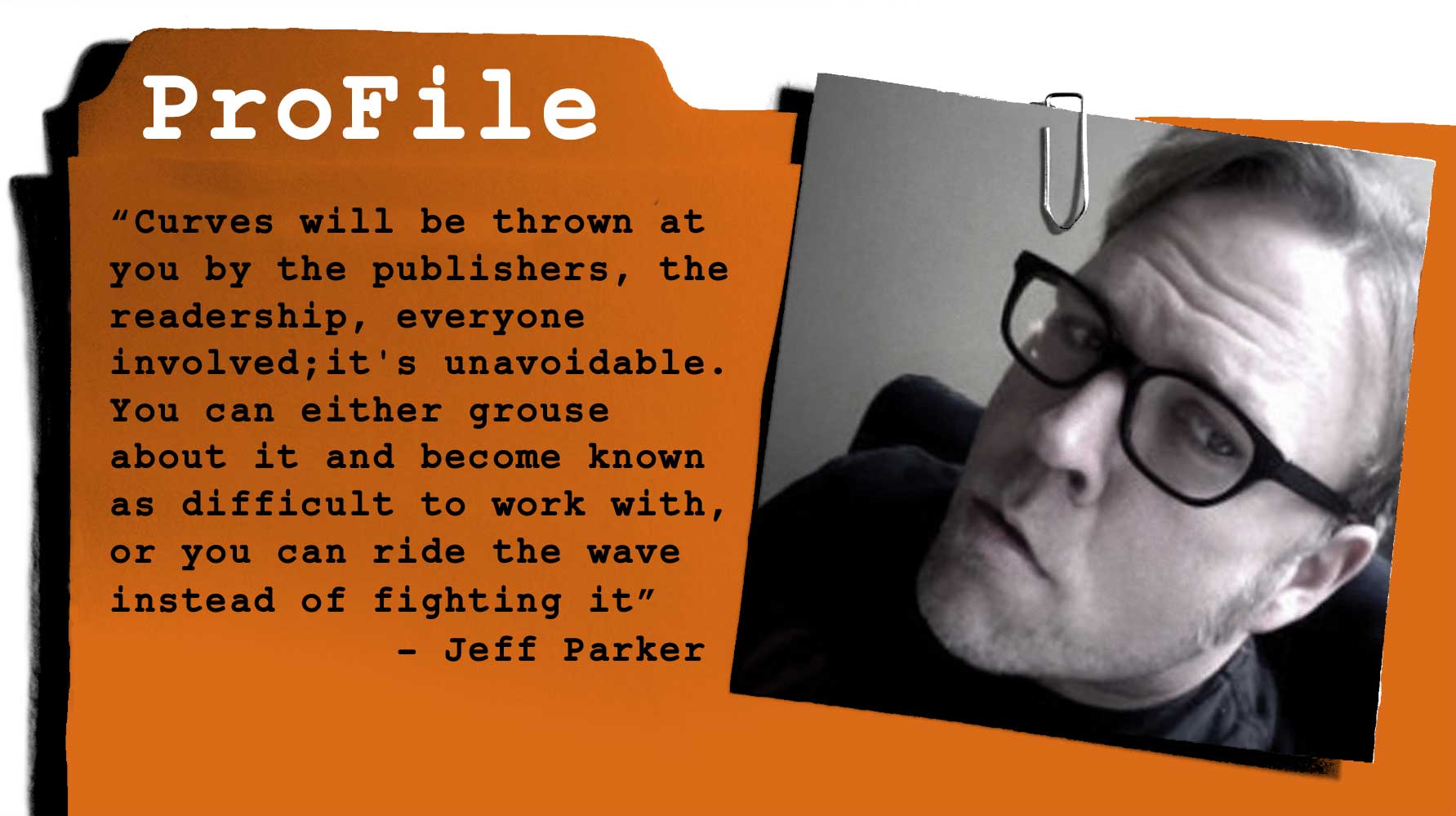
ProFile: Jeff Parker

by Palle Schmidt Leave a Comment

ProFile-Jeff-Parker

Jeff Parker is a writer for comics currently on titles Batman ’66 and Aquaman for DC Comics, as well as Rovio’s Angry Birds. The past decade he worked mostly at Marvel, with acclaimed runs on Hulk, Thunderbolts, Agents of Atlas, and X-Men: First Class. Jeff drew comics for several years and worked in television animation (The Big Guy and Rusty The Boy Robot) and live storyboarding, ultimately returning to comics with his graphic novel adventure The Interman.  Among his other original creations are the cave thriller Underground with Steve Lieber, the supernatural Mysterius the Unfathomable, and the webcomic Bucko with Erika Moen. He is a member of Periscope Studio and lives in Portland, Oregon.

What made you decide to work in the medium of comics?

I liked writing and drawing, and nothing else brings those disciplines together better for storytelling than comics. Ultimately it’s telling stories that I like to do, and comics lets me tell a lot of them where other media would limit that amount.

What part of the process is the most challenging or frustrating to you?

Good names or series titles are tougher than you’d think, at least for me. I’d rather build a whole story around a good name than start with the concept, it’s actually easier.

I don’t find much about building a story hard, it mainly requires enough time and I’ll get there. What’s much harder is raising awareness of a new project and bringing readers to that. Creating a book and selling it are two different things altogether.

If you could give one piece of advice to an aspiring comics creator, what would that be?

My advice would be, if you want to be employable on a number of projects and have longevity, adopt a very zen approach to your assignments. Curves will be thrown at you by the publishers, the readership, everyone involved; it’s unavoidable. You can either grouse about it and become known as difficult to work with, or you can ride the wave instead of fighting it. I usually take it as a challenge that I can make almost any editorial note or change work and still get a good story from it.

There have been cases when the requested changes seem arbitrary and start coming way too often to make the job profitable, and I’ve had to bow out, so it’s not like I can always zen my way through. But I give it my best try before I resort to that.

Can I only give one piece of advice? I would also say to do whatever you can to make your collaborators’ jobs easier. If they’re happy with the process, it will just reflect well on you and make the story work that much better. Like, don’t ask for crowd scenes repeatedly, for instance. Do a lot of the visual research for the artist already and save that creator some time by including reference. Don’t try to push them to be other artists that they aren’t, work with who they are. As the saying goes, you go into battle with the army you have.

More at parkerspace.com

Filed Under: Pro Tips, ProFile Tagged With: Agents of Atlas, Angry Birds, Batman, Batman '66, Bucko, collaboration, comics, creativity, Hulk, Interman, Jeff Parker, Marvel, Mysterius the Unfathomable, Periscope Studio, Portland, Rusty The Boy Robot, Steve Lieber, The Big Guy, Thunderbolts, Underground, X-Men: First Class

How to become a better artist

by Palle Schmidt 6 Comments

getting-better-as-an-artist

Do you think top athletes just decide one day to go and win the olympics? Well, maybe they do, but they don’t get there without a lot of work.

Getting to be good at anything, requires a lot of training. Ideally, you should do it every day.

It’s hard to give advice on how to get better at drawing or writing. But there are exercises, just as in sports, that you can use to develop the skillset and dicipline you need in your work.

My first tip is to set achievable goals. Don’t set out to write 5 pages a day, set out to write one. Just one. You increase your chance of succeeding, and thereby building confidence. Chances are you will even write more than you plan for, adding an extra feeling of success to your daily routine.

Getting in the habit of doing something every day can take some time, but it can be done. Start by just doing SOMETHING on your comic every day. Even if it’s just pencilling one panel.

Slow still get’s you there.

Find a peer group that can hold you accountable and help up your game. Playing against someone better than you, makes you a better player.

If there’s no one in you immediate circles who you can count on for inspiration and encouragement, use the internet as a way of connecting to peers. All it takes is a couple of people who are remotely interested in your progress, and you’re a lot more likely to improve your skills.

Putting up a daily strip or a weekly page can be a motivation – as long as you see it as a learning process and not a career. Careers tend to bring in some money and one cannot live on Facebook likes alone.

If you want to improve your drawing skills, take some lessons or draw from life. Be sure to force yourself to draw the stuff you are NOT good at. Over and over and over again. Also be sure to keep the drawings you make on file, however horrible they seem to you! It can be very hard to see progress when you’re in the middle of it. Looking back at earlier works will show you have improved, urging you to go further, get even better.

And to get better, you need to do it every day.

Filed Under: Pro Tips Tagged With: career, critique, drawing, how to, improving as an artist, mindhacks, pro tips, productivity, tips for making comics, Writing

5 great apps for freelance artists

by Palle Schmidt Leave a Comment

Apps

Life as an artist is not always easy. But parts of it have gotten way easier, with the arrival of mobile technology. Here are 5 awesome iPhone apps that will boost your workflow, all free and super easy to use.

Instagram

Sharing your artwork on social media has never been easier. Take a shot of whatever is on your art table, hashtag it or write a sentence describing it and click share. You can even hook it up with your Facebook and Twitter, and get a wider reach instantly.

Learning curve: 5 minutes. 10 out of 10.

Tripit

Go to conventions often? Get the free version of Tripit and keep all your travel info in one place. Go to Tripit.com to set up your account. Book your flight however you choose and ust forward your ticket email to plans@tripit.com and your info will be in the easily accesible app in mere seconds. SO much cooler than print outs or scrooling through your inbox for a flight number.

Learning curve: None. 8 out of 10.

Dropbox

This is hardly news, but the Dropbox app is absolutely awesome and essential for artists. Save all the documents you need, like your portfolio, a pdf of your graphic novel or sample pages and have access to them everywhere, anytime. The app allows for easy sharing, so you can email a link to files of any size to people you meet – on the spot. Another great feature is the photo upload that you can enable for on-the-go back up of your photo library, so you can clear more space on your phone without plugging in to anything. The free version of Dropbox gives you 2 GB of storage, the pricing for more is reasonable not to mention tax deductable.

Learning curve: 2 minutes. 10 out of 10.

PocketCasts

Why not get smarter while you’re working on your art? Drawing usually only requires a part of your brain to pay attention, you can easily listen to podcasts while you’re sketching and inking. PocketCasts allows you to add your favorite podcasts and stream or download episodes individually. The free version let’s you only add a handful of podcasts, so get the paid one, it’s cheap.

Learning curve: 3 minutes. 7 out of 10.

WordPress

If you have a blog, it’s probably WordPress. But did you know they have an awesome app that let’s you manage several blogs, write posts and add pictures on the go, approve and reply to comments without ever opening a browser? Well, you know now.

Learning curve: 8-10 minutes. 9 out of 10.

—

Hope these tips help you get more done on the road and makes life easier for you! Got any apps I should know about? Please comment below!

Filed Under: Pro Tips Tagged With: apps, comics, Dropbox, easy, Facebook, freelance, instagram, Iphone apps, mobile, on-the-go, PocketCasts, pro tips, productivity, social media, technology, Tripit, Twitter, Wordpress, workflow

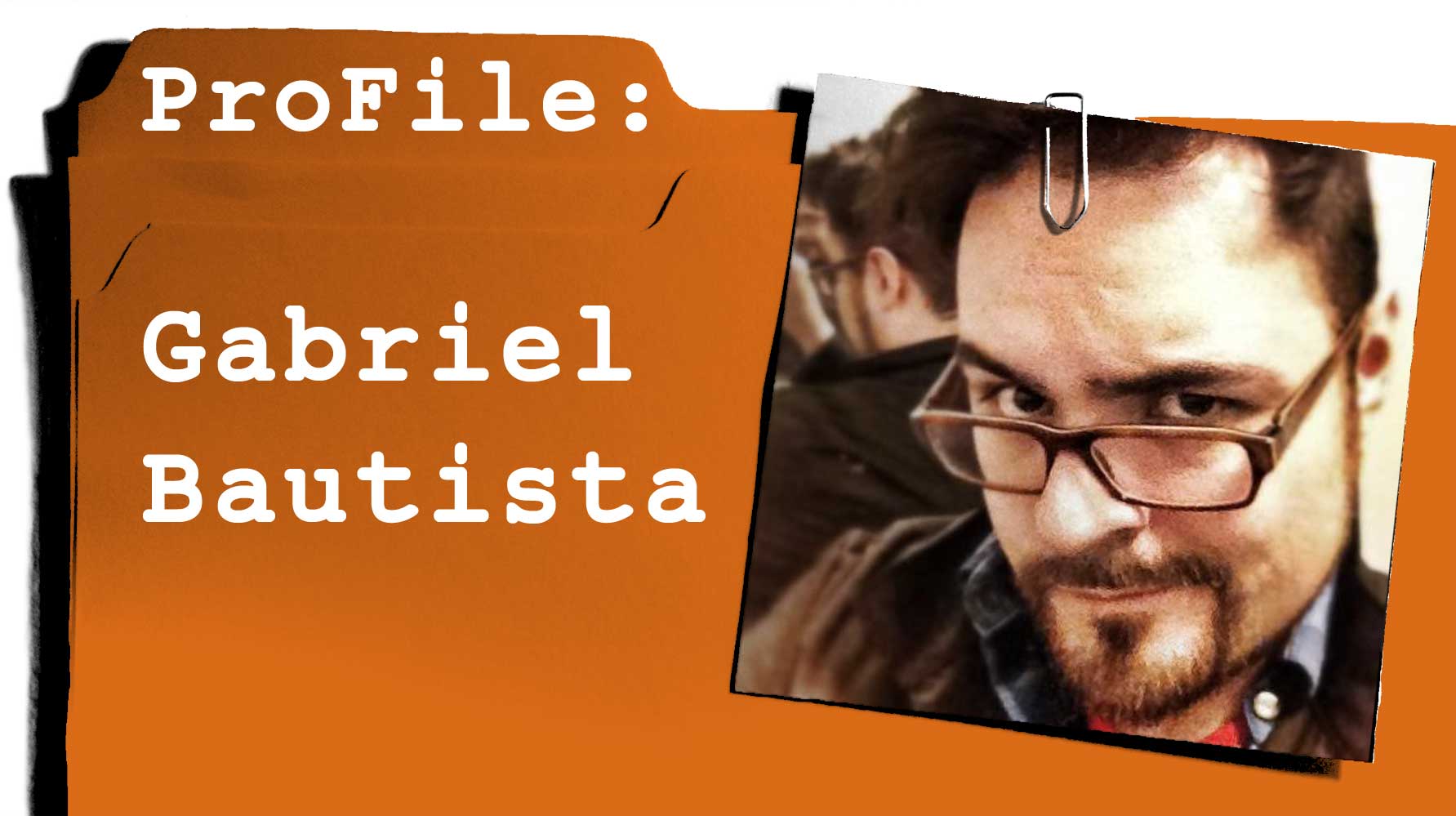
ProFile: Gabriel Bautista

by Palle Schmidt Leave a Comment

ProFile-Gabriel-Bautista

GABO is an illustrator based out of Chicago. He’s worked for DC Comics, Image Comics, Oni Press and Thrillbent. He is an Eisner and Harvey Award winning colorist. http://yogabogabo.com

What made you decide to work in the medium of comics?

Speed. I’ve always loved telling stories, building new worlds with only a pencil, paper and the thoughts in my head. I had always imagined myself working in animation, creating cartoons to tell the stories I wanted to share, but as I got older I started to realize that animation, even though it’s an amazing medium, it was just way too time consuming. The idea that I could sit in a cramped corner of my little room and just draw an entire story in just a few days on paper was sheer brilliance to me, and then being able to share this new world with others by making photocopies of each, well I was sold.

What part of the process is the most challenging or frustrating to you?

FRUSTRATION = FLATTING. GOD I HATE FLATTING. (Flatting for those who don’t know is the first step in coloring where you lay down the basic colors on the page before adding shadows, tones, lighting, effects etc.) It is so time consuming, and well you know how much I love speed – I just need this thing to be done so I can present it to the world! So when I can, I find someone to do that for me.

The most challenging part of comics I feel is layouts. Figuring out how to put down on paper what the writer wants to see, and doing it in fresh and innovative ways. Layouts are the foundation of any comic. There have been times when I don’t draw them out first, but they still exist in my mind, you can’t get away from it!

If you could give one piece of advice to an aspiring comics creator, what would that be?

You can’t be a comic book artist if you don’t make comics. And you WILL NOT GET BETTER if you don’t do them. Learn to live with your work, the things you draw in 5-10 years will look so much better than most of the work you do now, so just have fun! LET GO OF PERFECTION. JUST DO.

Filed Under: Pro Tips, ProFile Tagged With: animation, career, coloring, creativity, DC comics, drawing, Eisner awards, Elephantmen, flatting, Gabo, Gabriel Bautista, Harvey Awards, illustartion, Image Comics, improving as an artist, layouts, Oni Press, storytelling, Thrillbent, tips for making comics, workflow

ProFile: Ed Brisson

by Palle Schmidt 2 Comments

ProFile-Ed-Brisson

Ed Brisson is a comic book writer who’s has been published by Image, Marvel, BOOM! and IDW. Before getting being published by others, Ed spent nearly two decades creating and self-publishing his own comics.

What made you decide to work in the medium of comics?

I don’t remember a time where I didn’t want to work in comics. I’ve been reading comics since I could read and probably started drawing my own not long after. It’s just something I’ve always wanted to do.

Initially I wanted to be a comic artist and only started writing them because I didn’t know anyone else who could. This was before the internet was around, so I didn’t have access to scripts either. Slowly, and over a long period of time, I realized that I enjoyed the writing more than I did the illustrating and gave up the latter to focus in solely on writing.

What part of the process is the most challenging or frustrating to you?

I’m not sure. I tend to be pretty scatter brained and have a lot of trouble focusing in when the time comes. I takes a lot of effort and is thoroughly exhausting. I need a nap after I’ve written four or five pages.

Another thing I have trouble with, something that I rarely hear people talking about to aspiring creators, is making sure that I have downtime. I mean, you work hard for a long time to “break into” comics, to have people notice you and when they finally do, the offers will come flooding in and you have to be aware of how much you can handle and making sure that you leave some time for you. Otherwise you’re going to burn out.

I *try* to leave my weekends free for me time (which means mostly spending time with my wife and daughter), but still generally end up working through them. I’m working on it though.

If you could give one piece of advice to an aspiring comics creator, what would that be?

My advice would be to jump in, head first, and just start creating comics. Stop talking and start doing. I know too many people who have a “great” story they want to do, but never put rubber to road. Just start. Now. Start with 5-10 page stories. Build to single issues and then focus on doing longer stories once you have that down – once you’ve discovered your voice. Scrap your idea for a 200 issue epic. Start small and grow.

Follow Ed’s work at http://edbrisson.com/

Filed Under: Pro Tips, ProFile Tagged With: career, creativity, drawing, IDW Publishing, Image Comics, lettering, making comics, Marvel Comics, Murder Book, pro tips, productivity, self-publishing, storytelling, workflow, Writing, writing for comics

  • « Go to Previous Page
  • Page 1
  • Interim pages omitted …
  • Page 11
  • Page 12
  • Page 13
  • Page 14
  • Page 15
  • Interim pages omitted …
  • Page 17
  • Go to Next Page »

Primary Sidebar

Hours of Premium Content

ComicsCrashCourse

Try the FREE 7-day Comics Course

Creator Profiles

Interviews with Creators

The CFB Podcasts

Find them here.

Comic Creators eBook

The Comic Creators eBook

Footer

Check out more resources

Bundles of quality content available, check how to write comics and how to make your comic book artwork look great or find tips and tricks on the blog.

Latest from the blog

  • Video: How to get Story Ideas
  • Video: The Benefit of Being a Nobody
  • Video: Why Creatives Hear Voices
  • Digital Tools for 2021
  • The Most Badass Tools for Inking Comics
  • Why Creative Restrictions are Good for You!
  • How to Write a Great Story – and Stick the Landing

Contact us

If you have questions or issues please contact us.

Official mail: mail(at)comicsforbeginners.com

Feel free to connect on Twitter and/or Facebook.

Copyright © 2026 · ComicsForBeginners by Palle Schmidt Log in