• Skip to main content
  • Skip to secondary navigation
  • Skip to primary sidebar
  • Skip to footer

Comics for Beginners

How to Write & Draw Comics

  • Contact
  • About
  • Faqs
  • Log In
  • Resources
  • Podcasts
  • Comics Crash Course
  • Blog
  • Videos

Pro Tips

ProFile: Justin Jordan

by Palle Schmidt Leave a Comment

ProFile-Justin-Jordan

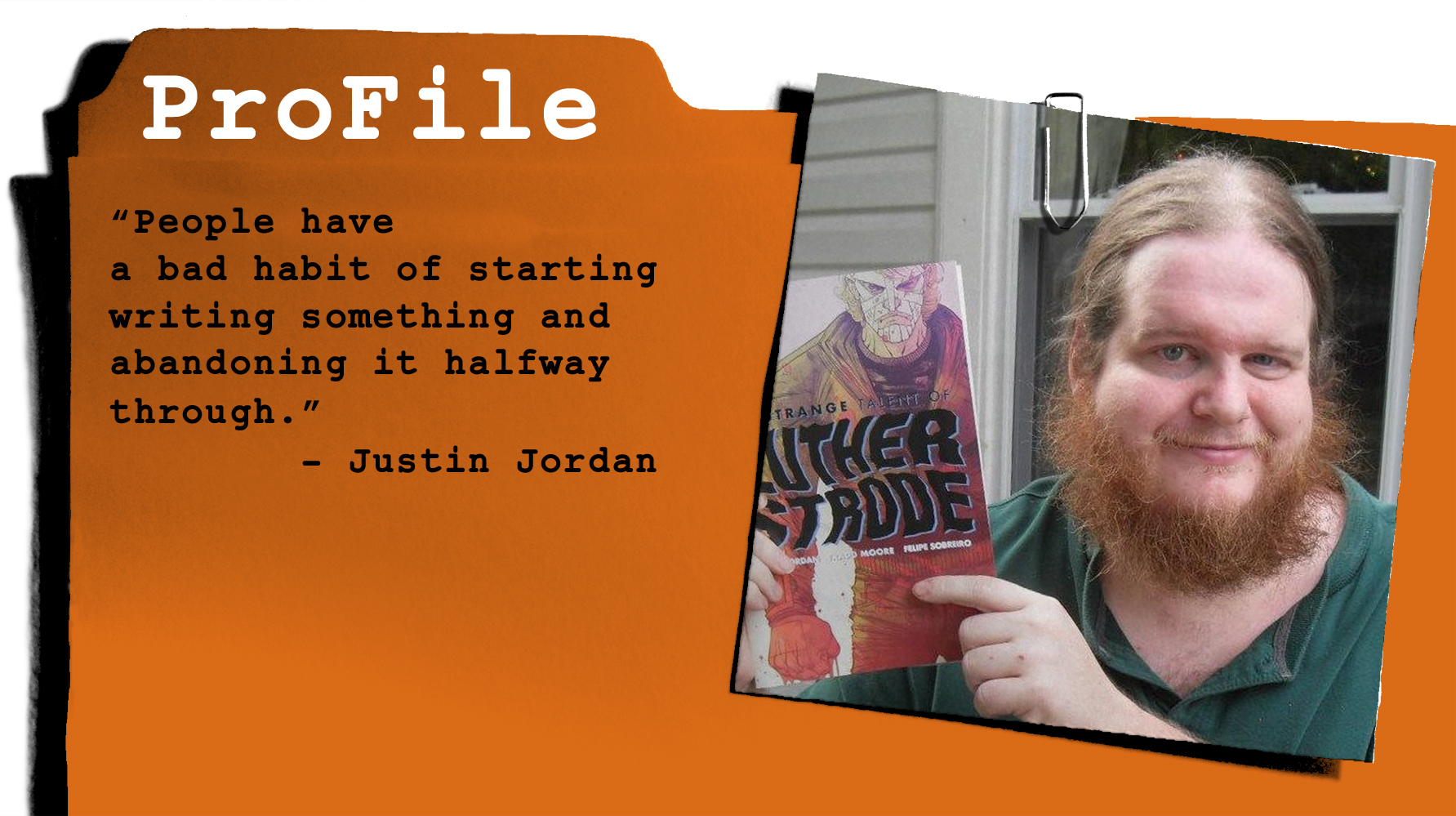
Justin Jordan is the writer and creator of The Strange Talent of Luther Strode. He has also worked on Shadowman, Deathstroke and Green Lantern for DC comics.

What made you decide to work in the medium of comics?

I’d always loved comics. And I really do mean always; my earliest memory is reading a Popeye comic when I was maybe three years old. Well, looking at it, anyway.

And I’ve always loved telling stories, so it became a pretty natural fit for me.

What part of the process is the most challenging or frustrating to you?

Probably getting everything to work to my satisfaction within a 20 pages per issue format. I’ve not yet done an OGN, so I have to make sure that each of the however many issues I am using to tell a story each have their own narrative arc and are satisfying in themselves.

Telling a story for me is a relatively easy, telling a story in six chunks with each chunk being something people want to read is a lot more challenging, kind of like writing poetry.

If you could give one piece of advice to an aspiring comics creator, what would that be?

Finish stuff. People have a bad habit of starting writing something and abandoning it halfway through. Heck, I do this. I have at least ten novels in various stages that I have never finished.

Finishing what you start obviously isn’t enough to build a career, but it IS something you need to be able to do.
Filed Under: Pro Tips, ProFile Tagged With: career, comics, comics format, comics industry, DC comics, Deathstroke, Green Lantern, Justin Jordan, making comics, Shadowman, storytelling, The Strange Talent of Luther Strode, tips for making comics, Writing, writing for comics

The Monthly Grind – Comics for Beginners podcast episode 21

by Palle Schmidt Leave a Comment


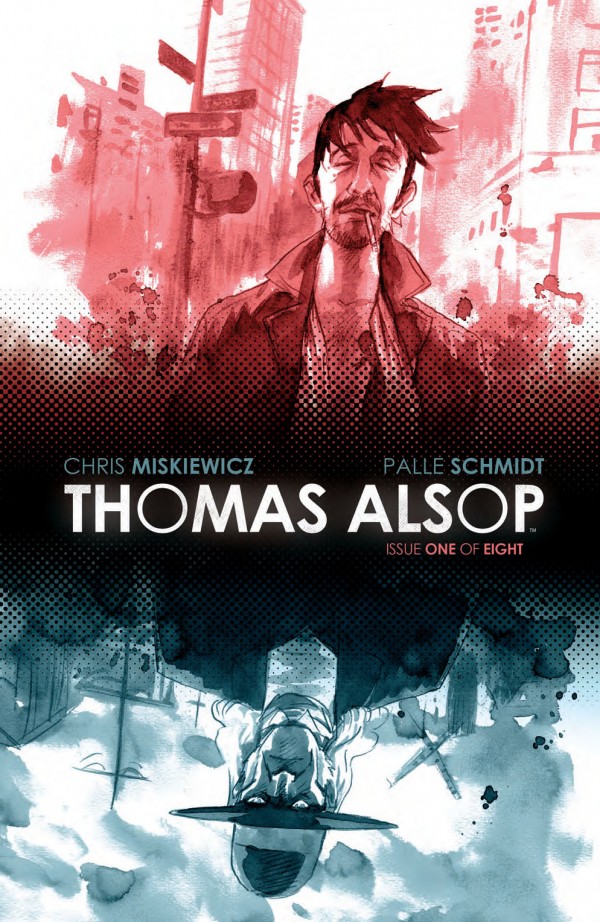
The rabbit is out of the hat! BOOM! Studios is releasing the first issue of creator-owned book Thomas Alsop in June 2014, an occult New York story, written by Chris Miskiewicz and drawn by yours truly. Bleeding Cool did a nice little write up here: http://www.bleedingcool.com/2014/03/12/are-you-missing-hellblazer-here-comes-thomas-alsop/. I’ve obviously known about this for a while, even recorded an interview with my friend and mentor Peter Snejbjerg (http://www.snejbjerg.com) on the topic of working on a monthly book. Listen for more details.

You can read a 12-page short featuring Thomas Alsop here: http://welcometotripcity.com/2013/05/thomas-alsop-the-case-of-dead-uncle/ and watch the live action promo at http://welcometotripcity.com/2013/05/thomas-alsop-the-hand-of-the-island-official-trailer/

Thomas_Alsop_Cover-600x922

Filed Under: News, Podcast, Pro Tips Tagged With: artist, BOOM! Studios, breaking news, career, Chris Miskiewicz, collaboration, comics, comics industry, comics market, creator-owned, improving as an artist, making comics, monthly, Palle Schmidt, Peter Snejbjerg, planning, podcast, pro tips, productivity, Saint-Malo, Thomas Alsop, US

Going off the grid

by Palle Schmidt Leave a Comment

20140218-151818.jpg

The grid. Is it keeping the artist from expressing himself or are guidelines helpful? Let’s talk about the pros and cons!

First let’s talk about what a “grid” is: The grid is the arrangement of panels on the page in a predictable and similar manner. For instance, sticking to three rows of panels per page or even having the same number of panels, like the popular 9-panel grid.

While you don’t have to follow the exact same grid on every page, it’s certainly helpful to have some sort of guidelines – especially if you want to experiment on some pages! Tilted panels, A panel with no frame or a double-page spread has little effect if ALL of the comic is experimental.

The upsides to following a grid are many. The hard part of the storytelling is already done for you, the reading order is obvious. But as long as readers can find their way from one panel to the next in the right order, there is lots of room for experimenting with the page layouts in comics. Just remember, characters and objects sticking out of panels, borderless panels or big, fancy page layouts can be a lot more challenging to read, let alone create!

Even if you have an overall grid you use for a particular project, breaking it up can be a good idea. Keep those readers awake! The use of larger panels for emphasis can be a good variation. Just be aware, that larger panels tend to slow things down and smaller panels give off a more hectic feel. You can also experiment with panels that bleed all the way to the edge of the page or perhaps a figure in a panel with no frame. Variation in size and borders can be done without deviating too far from the underlying grid – but it should always be rooted in the story, in what you are trying to get across.

You may feel like you should be coming up with new and exciting ways to tell your story, but deviating to far away from the grid requires a mastery of the craft and may in fact hurt the storytelling. If people have to stop and think about reading order or what is going on, you’re not doing your story any favors.

If you’re unsure of wether the page reads right, try drawing the balloons and panels on a seperate sheet, see if the reading order makes sense without any pictures. Sometimes you can fix any problems just by moving a balloon to the top or bottom of a panel, to make the reading order perfectly clear. No need to redraw the entire page because of it!

My advice: Experiment within the grid and steer clear of wild panel arrangements until you know how to tell a story in a simple layout. Have faith in your story and focus on telling that story. Don’t try to impress readers with flashy, cool page layouts if it makes for a confusing read. Communication is key.


Filed Under: Pro Tips Tagged With: drawing, grid, how to, layouts, making comics, panel layout, reading order, storytelling, tips for making comics, writing for comics

ProFile: Kody Chamberlain

by Palle Schmidt 2 Comments

ProFile-Kody-Chamberlain

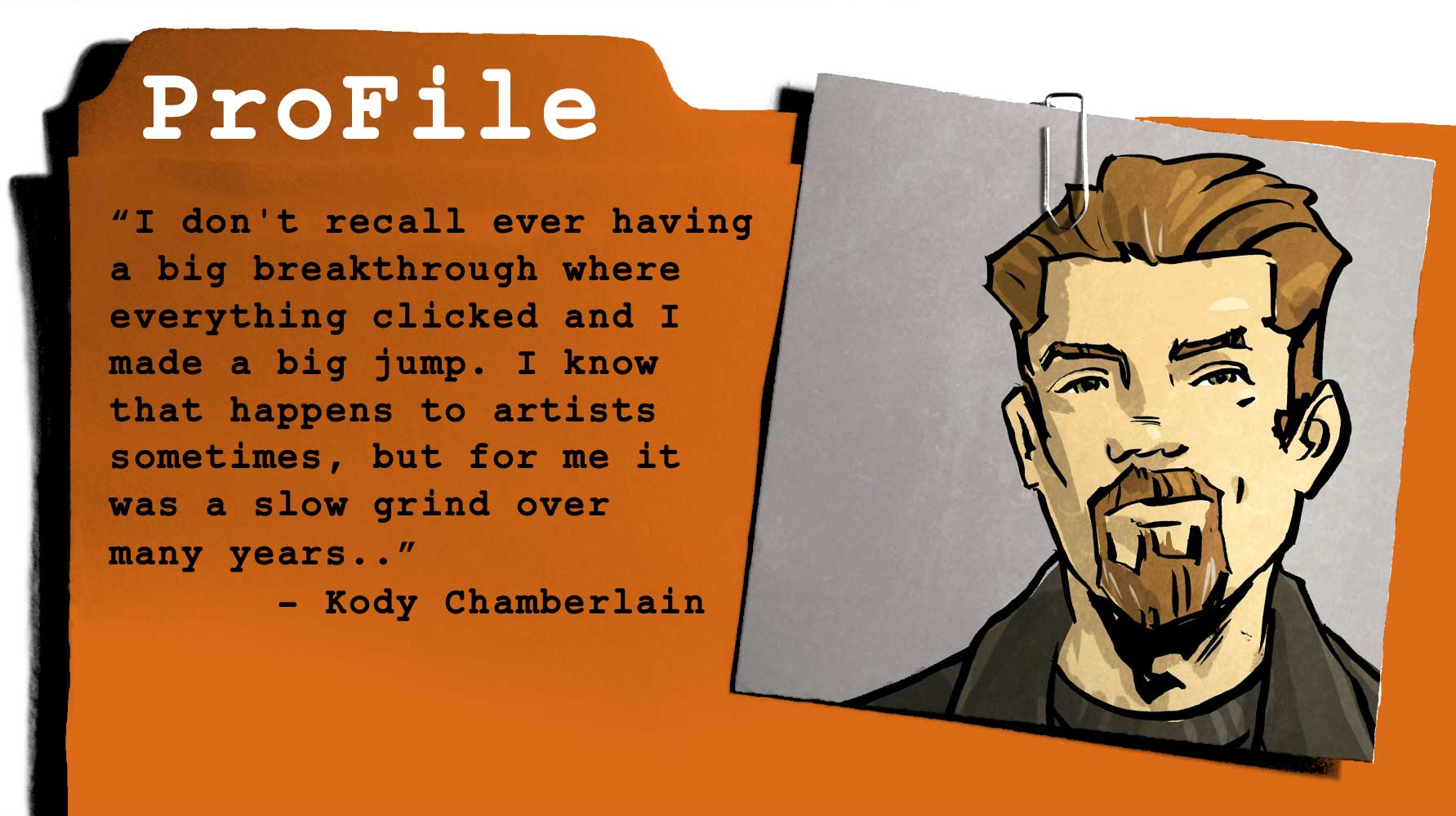
Kody Chamberlain spends most of his time creating comic books and graphic novels, but also works in film, animation, video games, and television. Credits include DC Comics, HarperCollins, IDW Publishing, Image Comics, LucasArts, Marvel Comics, MTV, MTV Comics, Mulholland Books, Sony Pictures, 12 Gauge Comics, Universal Pictures, and Warner Bros. In addition to his work in entertainment, Kody also an inspirational keynote speaker and consultant on the subject of creativity. Credits include CTN Animation Expo, HOW Design Live, INNOV8, Modbook, Macworld, iFest, Wizard World Comic Con, as well as AdFed groups and major universities throughout the United States.

You can find out more about Kody at his website: http://kodychamberlain.com.

His latest book SWEETS: A New Orleans Crime Story:

Print edition: http://tinyurl.com/amazonsweets

Digital edition: http://tinyurl.com/digitalsweets

What made you decide to work in the medium of comics?

As high school was wrapping up, I had no plan on what to do next. I was interested in a few different things but no real goals so I decided to go to college and figure it out along the way. I thought I might try engineering because I was doing very well in math so I signed up for an advanced math class that was part of the engineering program. I also signed up for a lot of the usual classes you have to take early in college including basic art classes. I was already doodling a bit here and there, so I thought the drawing classes would be fun.

I quickly realized that I hated the math class, and really enjoyed the drawing class. It was a dilemma because I was good at math and bad at drawing. I discovered graphic design somewhere along the way, thinking it might be a nice combination of the two and I picked it as my focus. After a few months in, I started hanging around with a few guys that were serious about comics and that’s what got me hooked.

I was also writing a bit, and thought it’d be fun to try getting into comics. I sucked for a lot of years but I was making slight improvements here and there, and slowly, things got better. I don’t recall ever having a big breakthrough where everything clicked and I made a big jump. I know that happens to artists sometimes, but for me it was a slow grind over many years. I was having a lot of fun and I knew if I kept pushing forward I’d eventually get to a professional level, so I stuck with it.

I started drawing around 1990 or 1991 and started sending out submissions around 1994. In 2002 and 2003 I started to get favorable replies from publishers and editors and I got my first paid work in 2004. Basically, it took me about 15 years of practice to get paid work.

What part of the process is the most challenging or frustrating to you?

The toughest part for me is letting go. I have to constantly remind myself to stop and move on to the next thing. I’ve talked with enough people to know that it’s a very common problem, and I think it’s one of the main reasons many aspiring creators never actually become professionals. I know plenty of people that have been talking about a project for years and claim to have something done on it, but I have yet to actually see anything from it. They’re stuck in the “loop” of reworking material and they never get out. I’m able to work past it, but I’m always a little grumpy when I have to let something go. In reality, if I were to keep reworking it I know I would kill it. Letting go is a daily struggle, but after an issue of a comic hits the shelf, I always feel good about the work. A little distance solves most problems.

If you could give one piece of advice to an aspiring comics creator, what would that be?

Stop sending out scripts, drawing sample pages, and mailing out submissions. Make a comic. You don’t need a team or a publisher, just make it. Write it, create some artwork, letter it, and then put it out. Then do it again. Even if you don’t end up doing every job when you get into the industry, you’ll have a detailed understanding of the process, and that’s an asset. You don’t need permission from anyone to make a comic, and you don’t need much money. The cost of making comics versus film, animation, etc is incredibly low. Once you’ve made a comic you are now a comic book creator, not an aspiring comic creator. You’ll find the industry treats you differently.

Filed Under: Pro Tips, ProFile Tagged With: 12 Gauge Comics, comics, comics industry, creativity, criticism, CTN Animation Expo, DC comics, drawing, goals, HarperCollins, HOW Design Live, how to, IDW Publishing, iFest, Image Comics, improving as an artist, INNOV8, Kody Chamberlain, learning, LucasArts, Macworld, making comics, Marvel Comics, math, Modbook, MTV, MTV Comics, Mulholland Books, pro tips, Sony Pictures, Sweets: A New Orleans Crime Story, Universal Pictures, Warner Bros, Wizard World Comic Con, Writing

Colorful sex with Jason Little – Comics for Beginners Podcast episode 20

by Palle Schmidt Leave a Comment

Jason Little is a Brooklyn-based indie comics creator, most famous for his Bee books, such as Shutterbug Follies. Although his style is colorful and uses clean lines, the books are NOT for kids – something the US audience seems to disagree with. Besides having the most impressive sideburns I’ve ever seen, Jason is extremely talented and eloquent speaking. Take a listen and see if you agree, and check out Jason’s work at http://www.beecomix.com and on his blog http://beecomix.blogspot.com.

Also in this podcast: news and more news! For tutorial videos and more on how to write and draw comics, go to https://www.comicsforbeginners.com/

bee-jason-little

Filed Under: News, Podcast, Pro Tips Tagged With: art, career, comic books, comics, comics artist, creativity, how to, improving as an artist, Jason Little, making comics, storytelling, writing for comics

Video: Tools of the Trade

by Palle Schmidt Leave a Comment

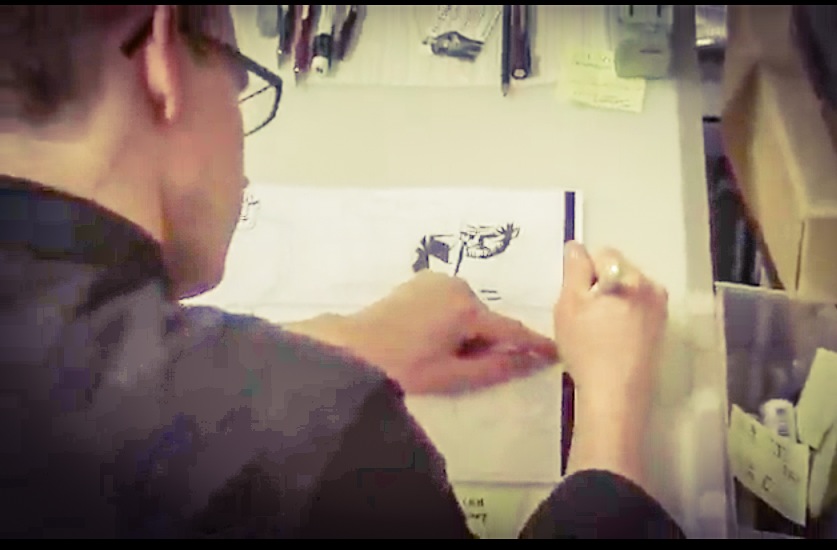
What are the “right” tools for making comics? Luckily there is no answer set in stone, you can use whatever tools you feel most comfortable with! In this video I demonstrate some of what I use – see if you can get some inspiration from that.Photo 07-02-14 21.07.32

Filed Under: Pro Tips, Video Tagged With: acrylic markers, art hacks, creativity, how to, inking, light box, making comics, mistakes, pencilling, pro tips, productivity, studio, tips for making comics

  • « Go to Previous Page
  • Page 1
  • Interim pages omitted …
  • Page 9
  • Page 10
  • Page 11
  • Page 12
  • Page 13
  • Interim pages omitted …
  • Page 17
  • Go to Next Page »

Primary Sidebar

Hours of Premium Content

ComicsCrashCourse

Try the FREE 7-day Comics Course

Creator Profiles

Interviews with Creators

The CFB Podcasts

Find them here.

Comic Creators eBook

The Comic Creators eBook

Footer

Check out more resources

Bundles of quality content available, check how to write comics and how to make your comic book artwork look great or find tips and tricks on the blog.

Latest from the blog

  • Video: How to get Story Ideas
  • Video: The Benefit of Being a Nobody
  • Video: Why Creatives Hear Voices
  • Digital Tools for 2021
  • The Most Badass Tools for Inking Comics
  • Why Creative Restrictions are Good for You!
  • How to Write a Great Story – and Stick the Landing

Contact us

If you have questions or issues please contact us.

Official mail: mail(at)comicsforbeginners.com

Feel free to connect on Twitter and/or Facebook.

Copyright © 2026 · ComicsForBeginners by Palle Schmidt Log in