• Skip to main content
  • Skip to secondary navigation
  • Skip to primary sidebar
  • Skip to footer

Comics for Beginners

How to Write & Draw Comics

  • Contact
  • About
  • Faqs
  • Log In
  • Resources
  • Podcasts
  • Comics Crash Course
  • Blog
  • Videos

creativity

Writing the first draft

by Palle Schmidt 2 Comments

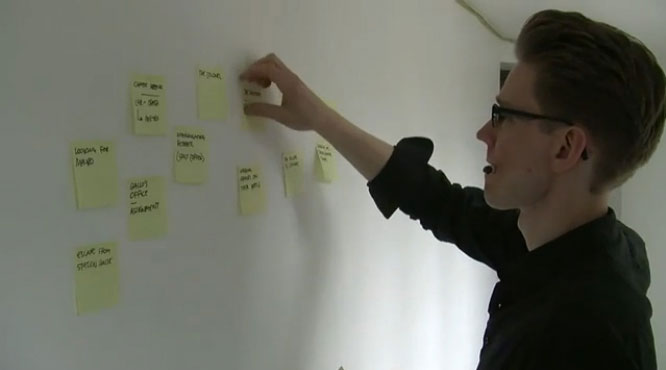
plan your story with post-its
Using post-it notes or index cards can be very helpful in planning your story

When you’re writing your script, it’s important to take the pressure off and ban your inner critic from meddling.

Writing a script for my comics was the lesson that took my process to the next level. And after I learned to write a script, the next most important lesson was to think of my script in terms of drafts. After all, if it’s a first draft, you don’t have to be Alan Moore right from the go!

Here are some pointers for getting that first draft done:

  • Empty your head as fast as you can. Get it on paper, beginning, middle and end. You can always change the particulars later.
  • Perfection is not what you’re going for. It’s a first draft and it will be edited later! Don’t worry about grammar or mull over character names or location description, just get the story beats down.
  • Resist the urge to show your writing to anyone before the first draft is finished. Stephen King talks about writing with the door closed or door open in his book On Writing (which I can highly recommend). This means the first draft is yours and yours alone. If you have people critizing or asking the wrong questions it can totally derail your process. Write your first draft with the door closed.
  • Think through scenes before you sit down to write them. Take notes or just run through the scene in your head. The good thing is you can do this anywhere, anytime. And it makes the actual writing SO much easier.
  • Break it down into manageable parts if you feel looking at your entire story is overwhelming. 1st act, 2nd act, 3rd, act, individual scenes. Decide how many scenes is necessary to get from point A to point B and deal with each scene as its own little story, with beginning, middle and end.
  • Always be moving forward. Force yourself to get to the end before you go back and change things in what you’ve already written. Take notes of what you want to change but save the editing for the second draft.
  • Know the ending before you write the beginning. No, you don’t need to know the particulars but have an idea, a destination. At least know if it ends on a happy note or if it’s a tragic journey you’re setting out on.
  • Bonus tip: When you DO get to the end and write that the way it’s supposed to be, go back and rewrite the beginning so you can put in little clues about the ending!

Now, as I say in episode 2 of the tutorial videos, it’s time to put your script in a drawer and forget about it!

Related video: Writing your script


Filed Under: News, Pro Tips Tagged With: Alan Moore, comics, creativity, critique, editing, first draft, how to, idea generation, index cards, inner critic, mind hacks, planning, productivity, Stephen King, storytelling, workflow, Writing, writing for comics

Video: Lessons from Thomas Alsop

by Palle Schmidt 7 Comments

I’ve just finished my work on the monthly book from BOOM!, Thomas Alsop. This video is about some of the lessons I learned working on that book – hopefully there is some value in it for you too!

Filed Under: Pro Tips, Video Tagged With: art hacks, Art Tutorial, bonus video, BOOM! Studios, career, Chris Miskiewicz, collaboration, creativity, drawing, improving as an artist, inking, learning, lessons, mind hacks, mistakes, painting, process, productivity, reference, Thomas Alsop, tips for making comics, video, watercolor, workflow

Money for nothing with Ben Dewey – Comics for Beginners podcast episode 25

by Palle Schmidt 2 Comments

“Think about things in terms of story. Anything else is just flourish and self-promotion”

I talk to artist Ben Dewey about art, music and the Faustian aspect of working crappy jobs while pursuing a carreer in comics creation. Besides being the artist and writer of his own Tragedy Series (http://www.tradegyseries.tumblr.com), he is the artist on Tooth and Claw with writer Kurt Busiek, released this week from Image Comics. Luckily Ben is not just incredibly talented but also very articulate about the craft and the life of a creative person. Really good advice in this episode!

For a preview of Tooth and Claw, go here.

Related podcast: Episode 25 – Periscope Studio with Steve Lieber

Filed Under: Podcast, Pro Tips Tagged With: art, Benjamin Dewey, career, comics industry, crappy jobs, creativity, criticism, Faust, Image Comics, Kurt Busiek, Mark Knopfler, music, Periscope Studio, podcast, Portland, storytelling, Tooth and Claw, Tragedy Series, Writing

Bonus Vid – How To Hold a Pencil

by Palle Schmidt 12 Comments

Is there a right way to hold a pen or a pencil when you draw?

One of my YouTube chanel followers seems to think so. And it’s NOT how I hold a pencil!

Sign up for my FREE  7-day Comics Crash Course

Filed Under: Pro Tips, Video Tagged With: career, creativity, criticism, drawing, how to, inking, making comics, mistakes, pencil, pro tips

ProFile: Richard Starkings

by Palle Schmidt Leave a Comment

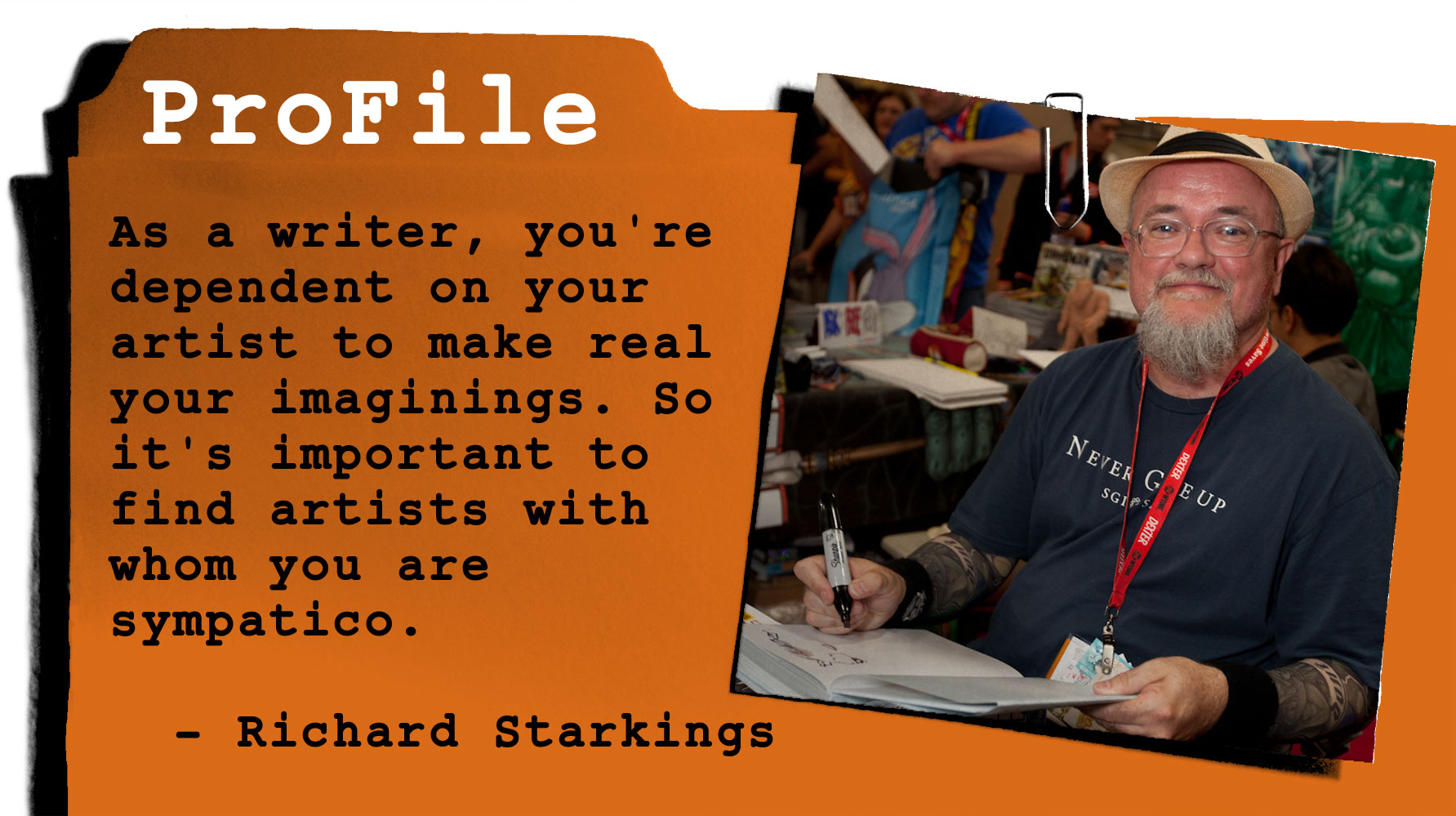
ProFile-Richard-StarkingsRichard Starkings is the creator and writer of HIP FLASK and ELEPHANTMEN. Born and raised in England, Starkings worked for five years at Marvel UK’s London offices as editor, designer and occasional writer of ZOIDS, GHOSTBUSTERS, TRANSFORMERS and the DOCTOR WHO comic strip. He is perhaps best known for his work with the award-winning Comicraft design and lettering studio, which he founded in 1992 with John ‘JG’ Roshell. Starkings & Roshell also co-authored the best-selling books COMIC BOOK LETTERING THE COMICRAFT WAY and TIM SALE: BLACK AND WHITE.

What made you decide to work in the medium of comics?

I always loved comics — at the age of 9 I started reading a comic called COUNTDOWN featuring strips based on TV shows like DOCTOR WHO, UFO and THE PERSUADERS. In some ways I preferred them to the TV shows they were based on. That comic inspired me to draw comics and cartoon strips myself and from that young age I started identifying the artists and styles I liked.

Years later, I remember reading an article in Dez Skinn’s WARRIOR magazine in the 80’s about breaking into comics. I was on a train from Weymouth to London and I kind of realized at that moment that it was possible to get a job in comics and committed myself to that goal. I never seriously considered anything else.

What part of the process is the most challenging or frustrating to you?

As a writer, you’re dependent on your artist to make real your imaginings. So it’s important to find artists with whom you are sympatico. Finding those creators can be very rewarding and challenging all at the same time.

If you could give one piece of advice to an aspiring comics creator, what would that be?

Write! Draw! ALL the time. Write about life, draw from life.

More about Richard Starkings and Elephantmen on hipflask.com

Filed Under: Pro Tips, ProFile Tagged With: career, collaboration, comics, comics industry, COUNTDOWN, creativity, DOCTOR WHO, Elephantmen, GHOSTBUSTERS, HIP FLASK, lettering, pro tips, Richard Starkings, TIM SALE: BLACK AND WHITE, Transformers, writing for comics, ZOIDS

Writing tips for scatterbrains

by Palle Schmidt 3 Comments

Working on five things at once can be good for creativity!

What is the best method for working on a story? Digging in and camly solving every problem as you come upon them? Or just jump to the next project and find energy in the constant creative flow?

For many years I suffered from the delussion that “real” writers worked from page 1 until the book was finished. This resulted in many a stranded story for me. When I finally gave myself permission to go ahead and skip to the ending or the middle, if I had an idea for that, my creative juices really started flowing.

These days I’ve also allowed myself the luxury of jumping from one project to the other, and I find it works the same way for me. Instead of standing still, I go in another direction, keeping the forward momentum.

Every project is a learning experience, every story brings new ideas. I can skip from one story to another, using what I just learned for something else, perhaps as a way to get unstuck on a story problem or motivational issue.

The downside of working on multiple things at once, is that you can get the feeling you’re not going anywhere. That you are just spinning wheels when in fact you are moving forward.

The need to focus in certain phases can be neccessary

Jumping around is fun, but to finish something, you need some crunch time. I always seem to forget that stories and projects don’t push themselves into my work day. I have to put them there, block out time to work on them. If I wait until I get some free time or get “inspired”, I will take all these projects with me to my grave. Unfinished.

As Stephen King once says in his book On Writing:

Amateurs sit and wait for inspiration, the rest of us just get up and go to work.

My method of jumping from one project to another might not be for you. But as long as you finish them eventually, (see this post on finishing) I see no problem with working on five things at once. It might just spark that creative energy that keeps the creativity flowing instead of running dry…

Do you work best with one thing at a time or are you a scatterbrain like me? Let’s hear your story!

Filed Under: News, Pro Tips Tagged With: creativity, learning, mind hack, pro tip, pro tips, productivity, storytelling, tips for making comics, workflow, writer's block, Writing

  • « Go to Previous Page
  • Page 1
  • Interim pages omitted …
  • Page 5
  • Page 6
  • Page 7
  • Page 8
  • Page 9
  • Interim pages omitted …
  • Page 15
  • Go to Next Page »

Primary Sidebar

Hours of Premium Content

ComicsCrashCourse

Try the FREE 7-day Comics Course

Creator Profiles

Interviews with Creators

The CFB Podcasts

Find them here.

Comic Creators eBook

The Comic Creators eBook

Footer

Check out more resources

Bundles of quality content available, check how to write comics and how to make your comic book artwork look great or find tips and tricks on the blog.

Latest from the blog

  • Video: How to get Story Ideas
  • Video: The Benefit of Being a Nobody
  • Video: Why Creatives Hear Voices
  • Digital Tools for 2021
  • The Most Badass Tools for Inking Comics
  • Why Creative Restrictions are Good for You!
  • How to Write a Great Story – and Stick the Landing

Contact us

If you have questions or issues please contact us.

Official mail: mail(at)comicsforbeginners.com

Feel free to connect on Twitter and/or Facebook.

Copyright © 2026 · ComicsForBeginners by Palle Schmidt Log in