• Skip to main content
  • Skip to secondary navigation
  • Skip to primary sidebar
  • Skip to footer

Comics for Beginners

How to Write & Draw Comics

  • Contact
  • About
  • Faqs
  • Log In
  • Resources
  • Podcasts
  • Comics Crash Course
  • Blog
  • Videos

storytelling

Colorful sex with Jason Little – Comics for Beginners Podcast episode 20

by Palle Schmidt Leave a Comment

Jason Little is a Brooklyn-based indie comics creator, most famous for his Bee books, such as Shutterbug Follies. Although his style is colorful and uses clean lines, the books are NOT for kids – something the US audience seems to disagree with. Besides having the most impressive sideburns I’ve ever seen, Jason is extremely talented and eloquent speaking. Take a listen and see if you agree, and check out Jason’s work at http://www.beecomix.com and on his blog http://beecomix.blogspot.com.

Also in this podcast: news and more news! For tutorial videos and more on how to write and draw comics, go to https://www.comicsforbeginners.com/
bee-jason-little

Filed Under: News, Podcast, Pro Tips Tagged With: art, career, comic books, comics, comics artist, creativity, how to, improving as an artist, Jason Little, making comics, storytelling, writing for comics

Art tutorial: 5 hacks for drawing backgrounds quicker

by Palle Schmidt 8 Comments

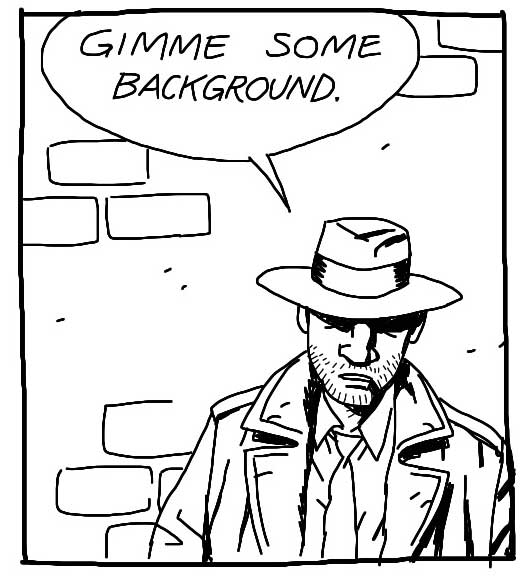
Do you have to draw backgrounds on every panel? The short answer is no. If you start with a good establishing shot and learn these 5 hacks, you can get away with very little background drawing!

1: Structure

If you place your characters against a wall or another big surface (like the sky!), a few rightly placed lines will give the illusion that we’re still in the place you showed us in the establishing shot (usually a wide shot in the first frame to establish the room or setting we are in, who is present, where the door is, stuff like that).structure-background

2: Silhouette

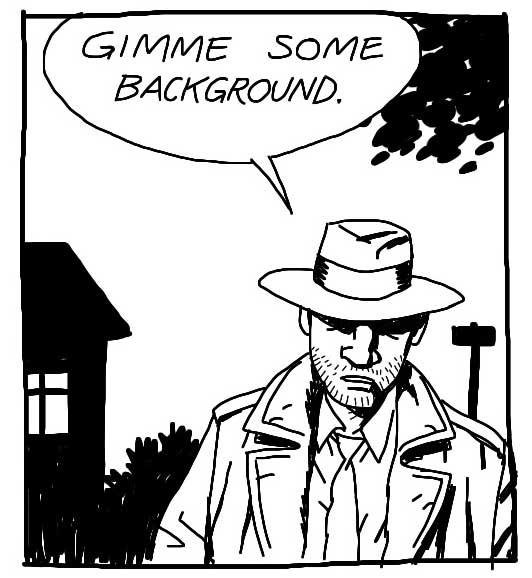
The outline of whatever is behind your characters can be quite enough – and a LOT quicker to draw! So if the scene takes place in a living room, just black out the shape of the lamp and a couch, if it takes place in the woods, black out tree trunks and leaves.

Pro tip: If you let elements poke in from the sides it lets us know there is more outside the frame. It’s a cheap trick but it works every time! Hint or show part of an object or shape and our minds will fill out the rest.

silhouette-background

3: Shadow

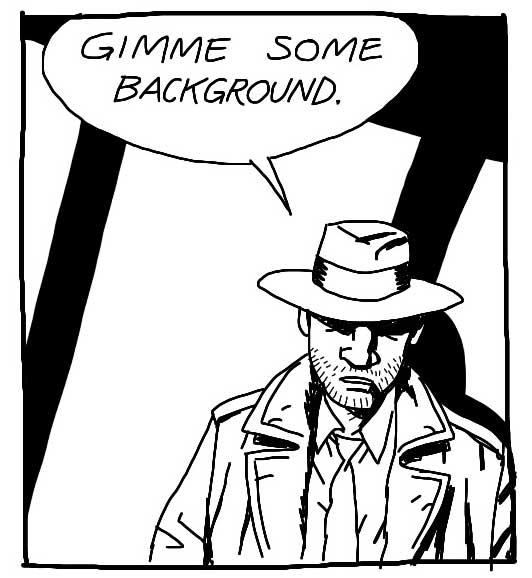
Some shadows – from a window, a tree or other objects nearby – is a great way of showing us what is outside the frame while avoiding to draw it all together. Don’t try to think realistically of where the light would be coming from or how the perspective would look, just treat it as a nice shape to liven up your drawing.

shadow-background

4: Gradient

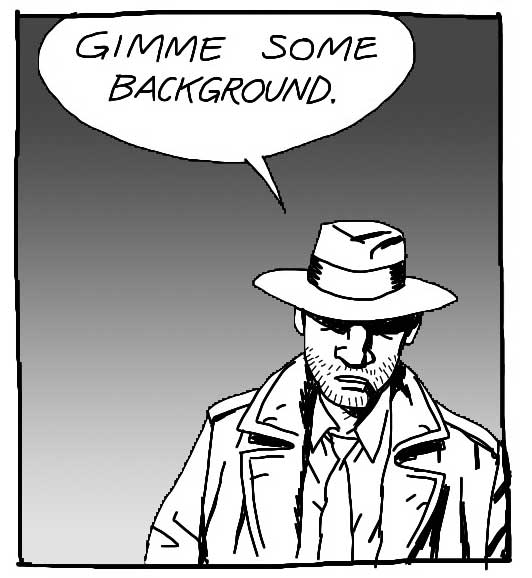
A color gradient – or in this case just a grayscale one – can sometimes make it out for an actual background. It’s perhaps not the most sophisticated solution, but it makes the character “pop” and that’s often all you need.

gradient-background

5:  Riff

A “riff” is a graphic shortcut. Every artist has her own. Sometimes a riff is just some shapes/lines, not a realistic rendering of anything. Make your own riff or copy from another artist whose style resembles yours. I think I lifted this one from Mike Mignola, a brilliant background artist to steal from – because he rarely draws much and has a superb sense of graphic storytelling.

riff-background

Again, you need some background, at least in one or two frames per page, so the readers know where the characters are. But once you’ve established the world around your characters, it’s OK to cheat a little on the rest of the page. And now you know how!

—

If you want to know more about background drawing and perspective, check out this episode of the Comics for Beginners course.

Filed Under: Pro Tips Tagged With: art hacks, Art Tutorial, artwork, backgrounds, comics, drawing, how to, learning how to draw, making comics, pro tips, storytelling

ProFile: Vince Hernandez

by Palle Schmidt Leave a Comment

Vince Hernandez has worked in the comic book industry for over fifteen years and is currently the Editor-in-Chief for Aspen Comics. He has created and written the comic book series Charismagic, Trish Out of Water and the upcoming Damsels in Excess. He also has worked as a writer for Electronic Arts, Def Jam Entertainment and Marvel Comics.

What made you decide to work in the medium of comics?

Actually, working in comics happened rather coincidentally for myself. When I was eighteen years old, I was looking to take on a second job and my brother mentioned a position that was available with the comic book publisher, Top Cow. Since he was already employed there, I certainly had a great start and after interviewing there, I became the assistant to the Director of Marketing, Kate Sherwood. I worked at Top Cow for four years before I took the position with Aspen where I’ve been Editor-in-Chief for the past decade. It’s not the usual route to get into comics but I certainly think I’ve made the most of the opportunities I’ve been presented with.

What part of the process is the most challenging or frustrating to you?

Editing comics in general is a very demanding and oftentimes frustrating position. It encompasses scheduling, talent management and crisis control while also maintaining a professional level of creativity necessary to make a product fans will enjoy. I think if I had to pinpoint one aspect which usually ends up more frustrating than any other, it’s dealing with talent’s schedules and their understanding of meeting a deadline. I can literally name off the small list of creatives that understand this process. The more frequent response I get from artists is that the quality of their work will suffer if they rush, which I have found is little more than an excuse because they can’t meet a deadline.

If you could give one piece of advice to an aspiring comics creator, what would that be?

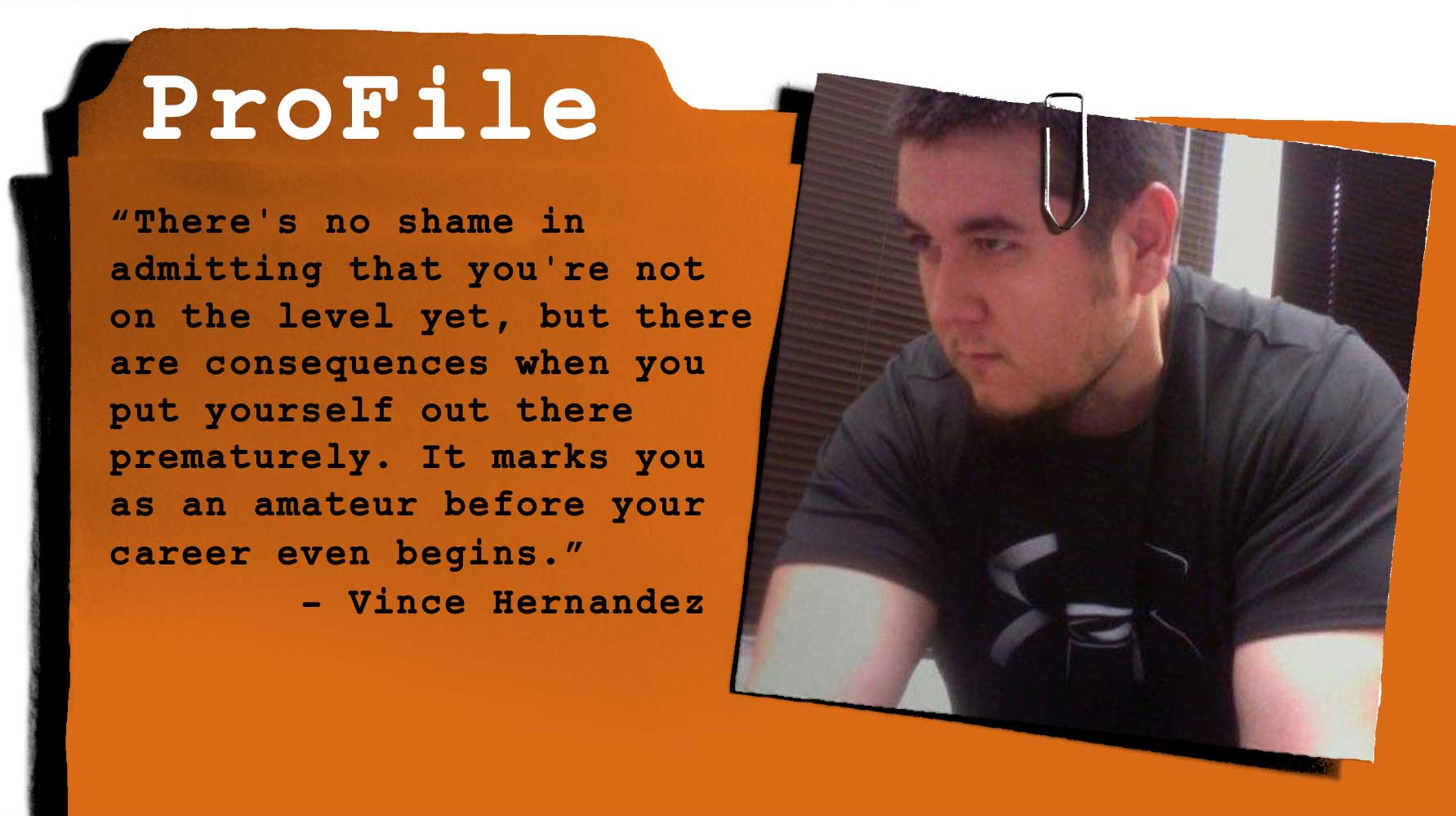
One thing I would tell aspiring comics creators is to be realistic with their work. This is a broad tip of advice, but it’s something that a lot of aspiring artists and writers haven’t yet learned. Realistically look at what professionals are doing and judge your work accordingly. There’s no shame in admitting that you’re not on the level yet, but there are consequences when you put yourself out there prematurely. It marks you as an amateur before your career even begins.

http://www.aspencomics.com/

Filed Under: Pro Tips, ProFile Tagged With: Aspen Comics, Charismagic, comics, Damsels in ExcessMarvel Comics, deadlines, Def Jam Entertainment, Def Jam Entertainment anMarvel Comics, Electronic Arts, learning, making comics, productivity, storytelling, tips for making comics, Trish Out of Water, working with artists

ProFile: Aaron Alexovich

by Palle Schmidt Leave a Comment

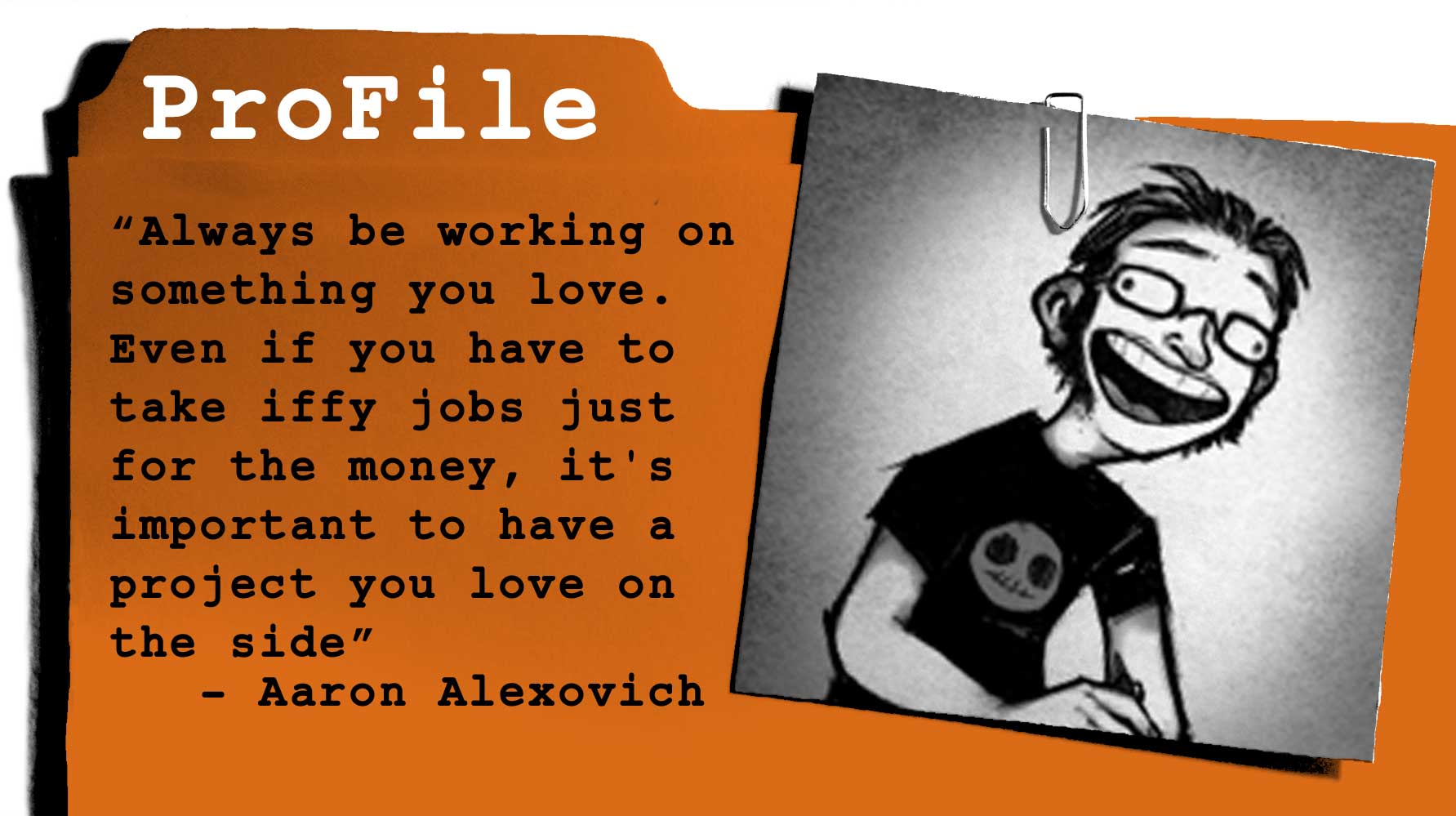
ProFile-Aaron-Alexovich

AARON ALEXOVICH’S first professional art job was drawing deformed children on Nickelodeon’s Invader Zim. Since then he’s been deforming children for various animation and comic projects, including Avatar: The Last Airbender, SLG’s Haunted Mansion, DC’s Fables, Kimmie66, Confessions of a Blabbermouth, and three volumes of his own horror/comedy witch series, Serenity Rose. Aaron currently lives in Southern California, where the bright light makes him sneeze
for mysterious reasons.

What made you decide to work in the medium of comics?

There’s something incredibly personal about making comics, you know? It’s just you sitting there alone building a whole world up on a page. Almost like making an entire feature film single-handedly. Not every art form can compete with that kind of control. I love it. Kind of feels like dreaming when I’m really into it.

What part of the process is the most challenging or frustrating to you?

Every part feels frustrating most of the time. I sort of live for those little moments when things seem to come together. If I had to pick one especially tough part I’d have to choose inking. Still trying to find a way to ink stuff without killing all the energy in my roughs…

If you could give one piece of advice to an aspiring comics creator, what would that be?

Always be working on something you love. Even if you have to take iffy jobs just for the money, it’s important to have a project you love on the side. Otherwise you’ll forget why you got into comics in the first place!

Aaron Alexovich’s site is heartshapedskull.com

Filed Under: Pro Tips, ProFile Tagged With: Avatar: The Last Airbender, Confessions of a Blabbermouth, creativity, DC comics, drawing, Fables, Haunted Mansion, inking, Invader Zim, Kimmie66, making comics, Serenity Rose, SLG, storytelling, Writing

Seth Kushner and Nathan Schreiber – Comics for Beginners podcast episode 18

by Palle Schmidt Leave a Comment

Seth Kushner (http://www.sethkushner.com/) is a photographer and writer, known for his awesome portraits in Leaping Tall Buildings: The Origins of American Comics and his Schmuck series and photocomics on Trip City. Nathan Schreiber (http://www.nathanschreiber.com/) is an Eisner and Harvey Awards nominated artist, whose own book Power Out won a Xeric award in 2009.

I talked to both Seth and Nathan about the art and craft while I was in New York this fall, only later realizing what a great double feature the two interviews would make, as they worked together on Seth Kushners Schmuck! Their collaboration on the Schmuck series can be found at http://welcometotripcity.com/2013/10/schmuck-14-size-11/

Seth Kushner and Nathan Schreiber's collaboration on Schmuck : Size 11
Seth Kushner and Nathan Schreiber’s collaboration on Schmuck : Size 11

Filed Under: Podcast, Pro Tips Tagged With: Brooklyn, career, collaboration, comics, comics industry, creativity, Dean Haspiel, drawing, Frank Santoro, Hang Dai Editions, Hang Dai Studios, how to, improving as an artist, Leaping Tall Buildings: The Origins of American Comics, learning, making comics, Nathan Schreiber, obscure, photocomics, pro tips, Schmuck, Seth Kushner, storytelling, Trip City, workflow, Writing, writing for comics

ProFile: Gabriel Bautista

by Palle Schmidt Leave a Comment

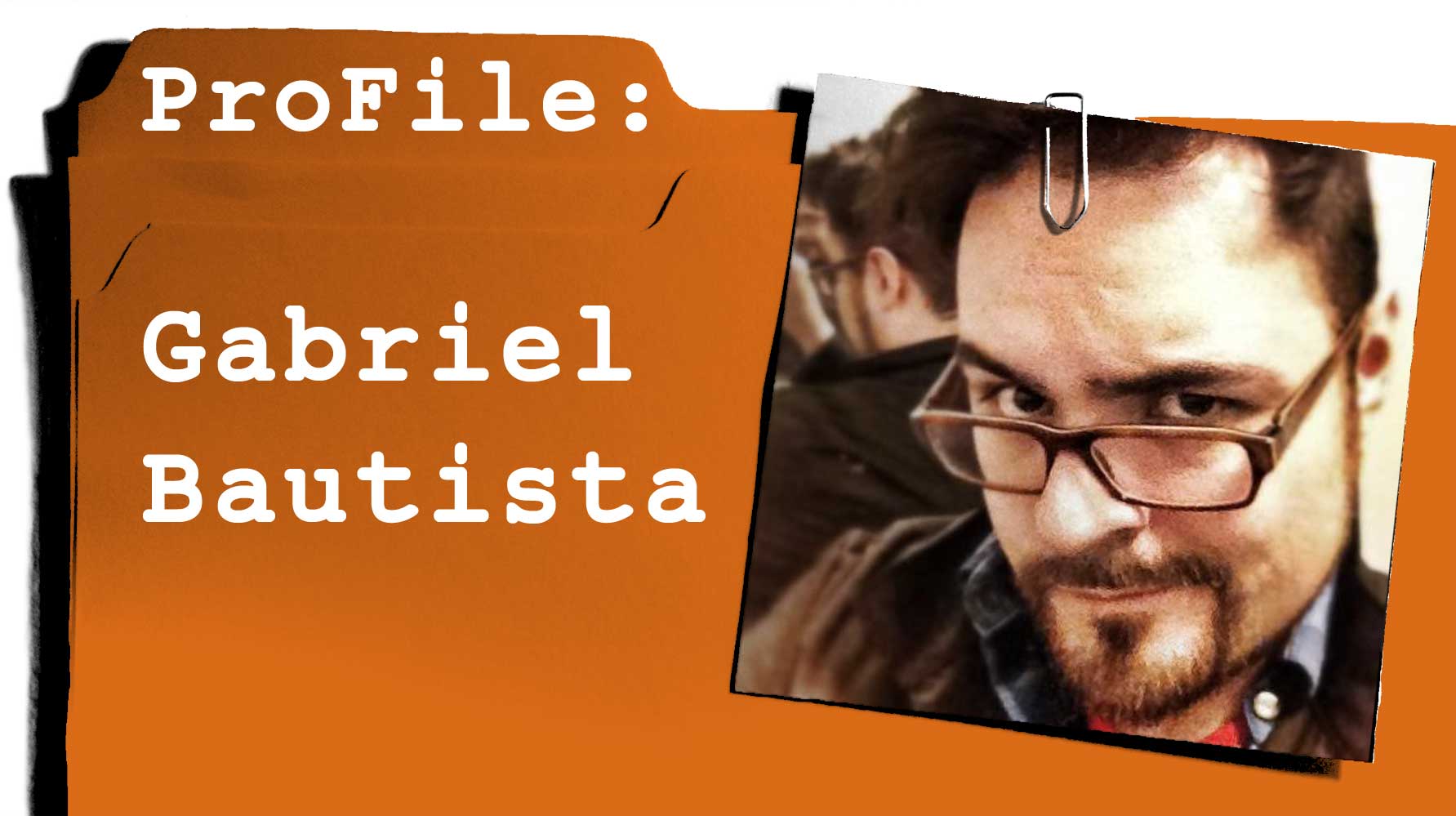
ProFile-Gabriel-Bautista

GABO is an illustrator based out of Chicago. He’s worked for DC Comics, Image Comics, Oni Press and Thrillbent. He is an Eisner and Harvey Award winning colorist. http://yogabogabo.com

What made you decide to work in the medium of comics?

Speed. I’ve always loved telling stories, building new worlds with only a pencil, paper and the thoughts in my head. I had always imagined myself working in animation, creating cartoons to tell the stories I wanted to share, but as I got older I started to realize that animation, even though it’s an amazing medium, it was just way too time consuming. The idea that I could sit in a cramped corner of my little room and just draw an entire story in just a few days on paper was sheer brilliance to me, and then being able to share this new world with others by making photocopies of each, well I was sold.

What part of the process is the most challenging or frustrating to you?

FRUSTRATION = FLATTING. GOD I HATE FLATTING. (Flatting for those who don’t know is the first step in coloring where you lay down the basic colors on the page before adding shadows, tones, lighting, effects etc.) It is so time consuming, and well you know how much I love speed – I just need this thing to be done so I can present it to the world! So when I can, I find someone to do that for me.

The most challenging part of comics I feel is layouts. Figuring out how to put down on paper what the writer wants to see, and doing it in fresh and innovative ways. Layouts are the foundation of any comic. There have been times when I don’t draw them out first, but they still exist in my mind, you can’t get away from it!

If you could give one piece of advice to an aspiring comics creator, what would that be?

You can’t be a comic book artist if you don’t make comics. And you WILL NOT GET BETTER if you don’t do them. Learn to live with your work, the things you draw in 5-10 years will look so much better than most of the work you do now, so just have fun! LET GO OF PERFECTION. JUST DO.

Filed Under: Pro Tips, ProFile Tagged With: animation, career, coloring, creativity, DC comics, drawing, Eisner awards, Elephantmen, flatting, Gabo, Gabriel Bautista, Harvey Awards, illustartion, Image Comics, improving as an artist, layouts, Oni Press, storytelling, Thrillbent, tips for making comics, workflow

  • « Go to Previous Page
  • Page 1
  • Page 2
  • Page 3
  • Page 4
  • Page 5
  • Page 6
  • Go to Next Page »

Primary Sidebar

Hours of Premium Content

ComicsCrashCourse

Try the FREE 7-day Comics Course

Creator Profiles

Interviews with Creators

The CFB Podcasts

Find them here.

Comic Creators eBook

The Comic Creators eBook

Footer

Check out more resources

Bundles of quality content available, check how to write comics and how to make your comic book artwork look great or find tips and tricks on the blog.

Latest from the blog

  • Video: How to get Story Ideas
  • Video: The Benefit of Being a Nobody
  • Video: Why Creatives Hear Voices
  • Digital Tools for 2021
  • The Most Badass Tools for Inking Comics
  • Why Creative Restrictions are Good for You!
  • How to Write a Great Story – and Stick the Landing

Contact us

If you have questions or issues please contact us.

Official mail: mail(at)comicsforbeginners.com

Feel free to connect on Twitter and/or Facebook.

Copyright © 2026 · ComicsForBeginners by Palle Schmidt Log in