• Skip to main content
  • Skip to secondary navigation
  • Skip to primary sidebar
  • Skip to footer

Comics for Beginners

How to Write & Draw Comics

  • Contact
  • About
  • Faqs
  • Log In
  • Resources
  • Podcasts
  • Comics Crash Course
  • Blog
  • Videos

pro tips

Art tutorial: 5 hacks for drawing backgrounds quicker

by Palle Schmidt 8 Comments

Do you have to draw backgrounds on every panel? The short answer is no. If you start with a good establishing shot and learn these 5 hacks, you can get away with very little background drawing!

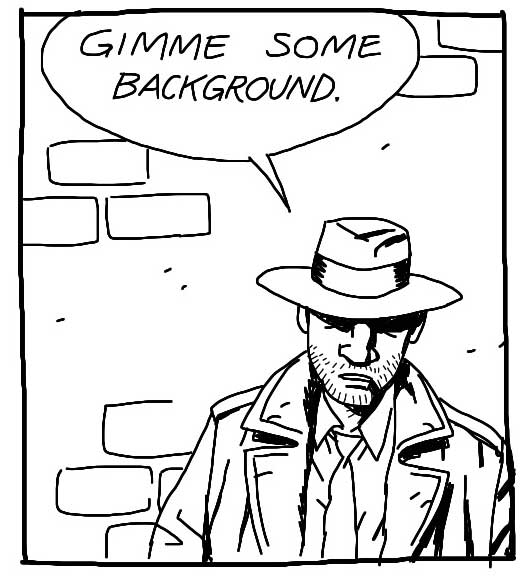
1: Structure

If you place your characters against a wall or another big surface (like the sky!), a few rightly placed lines will give the illusion that we’re still in the place you showed us in the establishing shot (usually a wide shot in the first frame to establish the room or setting we are in, who is present, where the door is, stuff like that).structure-background
2: Silhouette

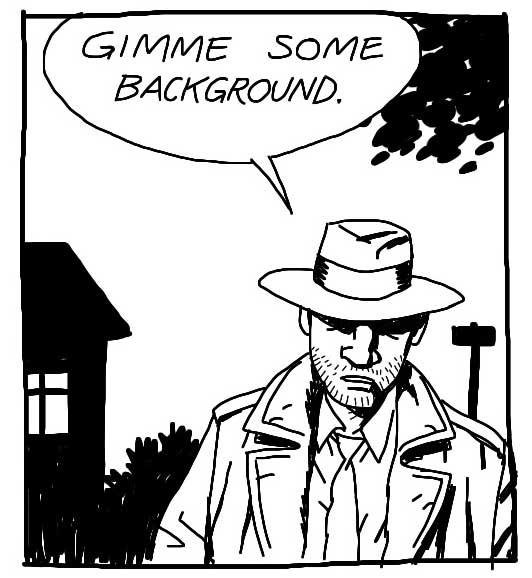
The outline of whatever is behind your characters can be quite enough – and a LOT quicker to draw! So if the scene takes place in a living room, just black out the shape of the lamp and a couch, if it takes place in the woods, black out tree trunks and leaves.

Pro tip: If you let elements poke in from the sides it lets us know there is more outside the frame. It’s a cheap trick but it works every time! Hint or show part of an object or shape and our minds will fill out the rest.
silhouette-background

3: Shadow

Some shadows – from a window, a tree or other objects nearby – is a great way of showing us what is outside the frame while avoiding to draw it all together. Don’t try to think realistically of where the light would be coming from or how the perspective would look, just treat it as a nice shape to liven up your drawing.
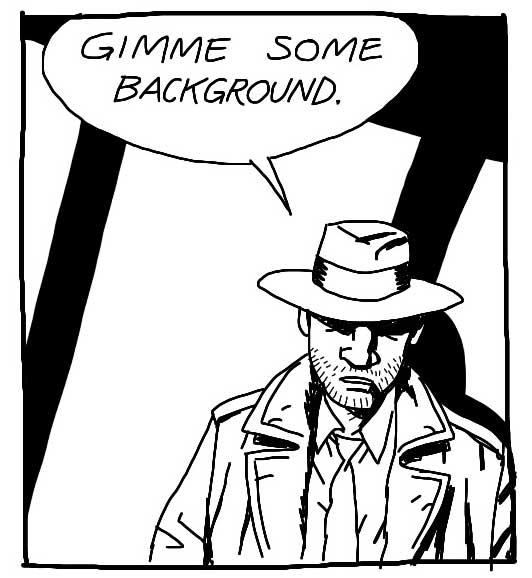
shadow-background

4: Gradient

A color gradient – or in this case just a grayscale one – can sometimes make it out for an actual background. It’s perhaps not the most sophisticated solution, but it makes the character “pop” and that’s often all you need.
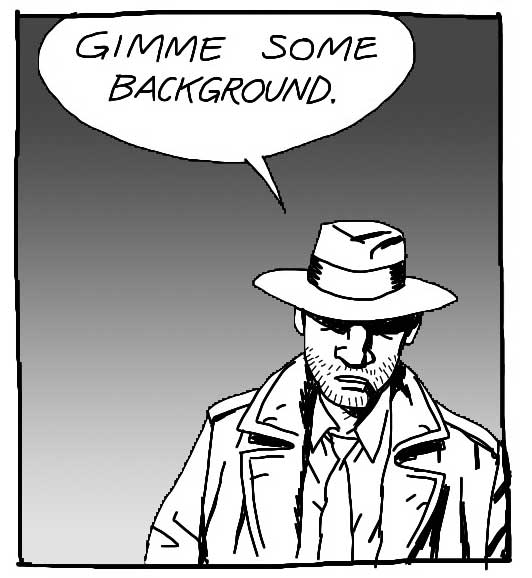
gradient-background

5:  Riff

A “riff” is a graphic shortcut. Every artist has her own. Sometimes a riff is just some shapes/lines, not a realistic rendering of anything. Make your own riff or copy from another artist whose style resembles yours. I think I lifted this one from Mike Mignola, a brilliant background artist to steal from – because he rarely draws much and has a superb sense of graphic storytelling.

riff-background

Again, you need some background, at least in one or two frames per page, so the readers know where the characters are. But once you’ve established the world around your characters, it’s OK to cheat a little on the rest of the page. And now you know how!

—

If you want to know more about background drawing and perspective, check out this episode of the Comics for Beginners course.
Filed Under: Pro Tips Tagged With: art hacks, Art Tutorial, artwork, backgrounds, comics, drawing, how to, learning how to draw, making comics, pro tips, storytelling

What if I can’t afford a studio space?

by Palle Schmidt Leave a Comment

TAW-students-making-comics

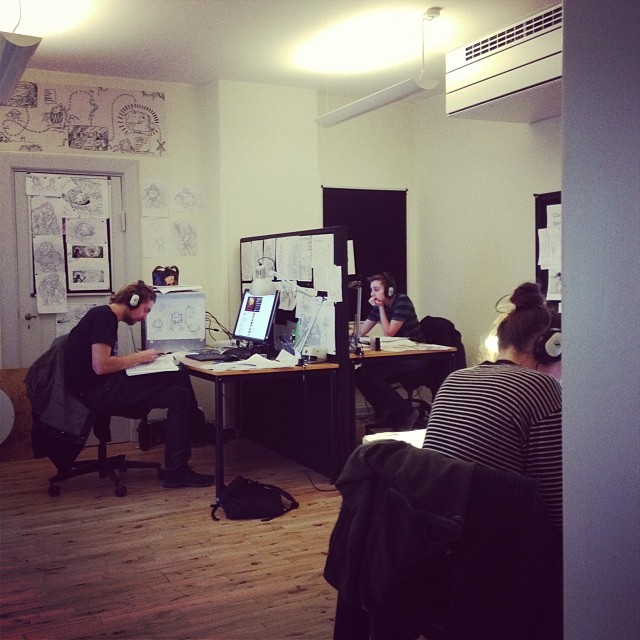
I often give aspiring artist the advice to get a studio space with peers, to help boost your creative skills and work ethic. But an office in town is pricey and what if you live in a place where there aren’t really any studios that fit the bill?

Sitting in a room full of people working, is a great way to ensure you get some work done too. And an inspiring work environment with people who are better than you, will certainly make you up your game!

Investing in a studio space is actually an investment in your skills and your productivity, not to mention the network of other artist who may become your job entry. I personally think going all in on a studio space I couldn’t afford at the time absolutely made my career. And remember: it’s tax deductable!

If a studio is still out of reach, see if you can’t find some peers to connect with online. Commiting to post a certain number of pages each week or check in every Friday with a report of your progress and next week’s goals, can easily make up for lack of an actual studio spot. Hold each other accountable and try to be constructive in your critiques.

An online peer group should not be too big or to ambitous in terms of tech solutions. A Facebook group or a Skype call should suffice. Find just a handful of talented and dedicated peers with a common interest and start from there.

A lot of creators make good use of coffee shops or the local library for working, especially in the writing phase. But you can also do rough sketches or character designs in a cafe or the like. For some, the noisy public space is where they do their best work. And experts will tell you, that changing location is a proven way to kick your creative brain into gear.

Hope these few tips to beat the procrastination and gain some momentum without the actual studio space. But if you CAN get a spot, even just for a week or a month, give it a try and see if it doesn’t boost morale and skills tremendously. I know it did for me!

Related podcast: Working from home

Filed Under: Pro Tips Tagged With: career, collaboration, comics, creativity, improving as an artist, learning, office space, pro tips, productivity, studio, studio space, workflow

Working from home – Comics for Beginners podcast episode 19

by Palle Schmidt 4 Comments

Working out of your house can be tough – especially if you have a demanding family with little or no respect for your need to be drawing comics all the time. In this episode I offer some tips how to make it work, and some ideas how to get out of the house if it doesn’t.

Related post: What if I can’t afford a studio space?

cfb-podcast-art-1200x1200

Filed Under: Podcast, Pro Tips Tagged With: comics, creativity, family, making comics, mind hacks, pro tips, productivity, studio, workflow, working from home, Writing

Seth Kushner and Nathan Schreiber – Comics for Beginners podcast episode 18

by Palle Schmidt Leave a Comment

Seth Kushner (http://www.sethkushner.com/) is a photographer and writer, known for his awesome portraits in Leaping Tall Buildings: The Origins of American Comics and his Schmuck series and photocomics on Trip City. Nathan Schreiber (http://www.nathanschreiber.com/) is an Eisner and Harvey Awards nominated artist, whose own book Power Out won a Xeric award in 2009.

I talked to both Seth and Nathan about the art and craft while I was in New York this fall, only later realizing what a great double feature the two interviews would make, as they worked together on Seth Kushners Schmuck! Their collaboration on the Schmuck series can be found at http://welcometotripcity.com/2013/10/schmuck-14-size-11/

Seth Kushner and Nathan Schreiber's collaboration on Schmuck : Size 11
Seth Kushner and Nathan Schreiber’s collaboration on Schmuck : Size 11

Filed Under: Podcast, Pro Tips Tagged With: Brooklyn, career, collaboration, comics, comics industry, creativity, Dean Haspiel, drawing, Frank Santoro, Hang Dai Editions, Hang Dai Studios, how to, improving as an artist, Leaping Tall Buildings: The Origins of American Comics, learning, making comics, Nathan Schreiber, obscure, photocomics, pro tips, Schmuck, Seth Kushner, storytelling, Trip City, workflow, Writing, writing for comics

How to become a better artist

by Palle Schmidt 6 Comments

getting-better-as-an-artist

Do you think top athletes just decide one day to go and win the olympics? Well, maybe they do, but they don’t get there without a lot of work.

Getting to be good at anything, requires a lot of training. Ideally, you should do it every day.

It’s hard to give advice on how to get better at drawing or writing. But there are exercises, just as in sports, that you can use to develop the skillset and dicipline you need in your work.

My first tip is to set achievable goals. Don’t set out to write 5 pages a day, set out to write one. Just one. You increase your chance of succeeding, and thereby building confidence. Chances are you will even write more than you plan for, adding an extra feeling of success to your daily routine.

Getting in the habit of doing something every day can take some time, but it can be done. Start by just doing SOMETHING on your comic every day. Even if it’s just pencilling one panel.

Slow still get’s you there.

Find a peer group that can hold you accountable and help up your game. Playing against someone better than you, makes you a better player.

If there’s no one in you immediate circles who you can count on for inspiration and encouragement, use the internet as a way of connecting to peers. All it takes is a couple of people who are remotely interested in your progress, and you’re a lot more likely to improve your skills.

Putting up a daily strip or a weekly page can be a motivation – as long as you see it as a learning process and not a career. Careers tend to bring in some money and one cannot live on Facebook likes alone.

If you want to improve your drawing skills, take some lessons or draw from life. Be sure to force yourself to draw the stuff you are NOT good at. Over and over and over again. Also be sure to keep the drawings you make on file, however horrible they seem to you! It can be very hard to see progress when you’re in the middle of it. Looking back at earlier works will show you have improved, urging you to go further, get even better.

And to get better, you need to do it every day.

Filed Under: Pro Tips Tagged With: career, critique, drawing, how to, improving as an artist, mindhacks, pro tips, productivity, tips for making comics, Writing

5 great apps for freelance artists

by Palle Schmidt Leave a Comment

Apps

Life as an artist is not always easy. But parts of it have gotten way easier, with the arrival of mobile technology. Here are 5 awesome iPhone apps that will boost your workflow, all free and super easy to use.

Instagram

Sharing your artwork on social media has never been easier. Take a shot of whatever is on your art table, hashtag it or write a sentence describing it and click share. You can even hook it up with your Facebook and Twitter, and get a wider reach instantly.

Learning curve: 5 minutes. 10 out of 10.

Tripit

Go to conventions often? Get the free version of Tripit and keep all your travel info in one place. Go to Tripit.com to set up your account. Book your flight however you choose and ust forward your ticket email to plans@tripit.com and your info will be in the easily accesible app in mere seconds. SO much cooler than print outs or scrooling through your inbox for a flight number.

Learning curve: None. 8 out of 10.

Dropbox

This is hardly news, but the Dropbox app is absolutely awesome and essential for artists. Save all the documents you need, like your portfolio, a pdf of your graphic novel or sample pages and have access to them everywhere, anytime. The app allows for easy sharing, so you can email a link to files of any size to people you meet – on the spot. Another great feature is the photo upload that you can enable for on-the-go back up of your photo library, so you can clear more space on your phone without plugging in to anything. The free version of Dropbox gives you 2 GB of storage, the pricing for more is reasonable not to mention tax deductable.

Learning curve: 2 minutes. 10 out of 10.

PocketCasts

Why not get smarter while you’re working on your art? Drawing usually only requires a part of your brain to pay attention, you can easily listen to podcasts while you’re sketching and inking. PocketCasts allows you to add your favorite podcasts and stream or download episodes individually. The free version let’s you only add a handful of podcasts, so get the paid one, it’s cheap.

Learning curve: 3 minutes. 7 out of 10.

WordPress

If you have a blog, it’s probably WordPress. But did you know they have an awesome app that let’s you manage several blogs, write posts and add pictures on the go, approve and reply to comments without ever opening a browser? Well, you know now.

Learning curve: 8-10 minutes. 9 out of 10.

—

Hope these tips help you get more done on the road and makes life easier for you! Got any apps I should know about? Please comment below!

Filed Under: Pro Tips Tagged With: apps, comics, Dropbox, easy, Facebook, freelance, instagram, Iphone apps, mobile, on-the-go, PocketCasts, pro tips, productivity, social media, technology, Tripit, Twitter, Wordpress, workflow

  • « Go to Previous Page
  • Page 1
  • Interim pages omitted …
  • Page 7
  • Page 8
  • Page 9
  • Page 10
  • Page 11
  • Interim pages omitted …
  • Page 13
  • Go to Next Page »

Primary Sidebar

Hours of Premium Content

ComicsCrashCourse

Try the FREE 7-day Comics Course

Creator Profiles

Interviews with Creators

The CFB Podcasts

Find them here.

Comic Creators eBook

The Comic Creators eBook

Footer

Check out more resources

Bundles of quality content available, check how to write comics and how to make your comic book artwork look great or find tips and tricks on the blog.

Latest from the blog

  • Video: How to get Story Ideas
  • Video: The Benefit of Being a Nobody
  • Video: Why Creatives Hear Voices
  • Digital Tools for 2021
  • The Most Badass Tools for Inking Comics
  • Why Creative Restrictions are Good for You!
  • How to Write a Great Story – and Stick the Landing

Contact us

If you have questions or issues please contact us.

Official mail: mail(at)comicsforbeginners.com

Feel free to connect on Twitter and/or Facebook.

Copyright © 2026 · ComicsForBeginners by Palle Schmidt Log in