• Skip to main content
  • Skip to secondary navigation
  • Skip to primary sidebar
  • Skip to footer

Comics for Beginners

How to Write & Draw Comics

  • Contact
  • About
  • Faqs
  • Log In
  • Resources
  • Podcasts
  • Comics Crash Course
  • Blog
  • Videos

comics industry

The Monthly Grind – Comics for Beginners podcast episode 21

by Palle Schmidt Leave a Comment


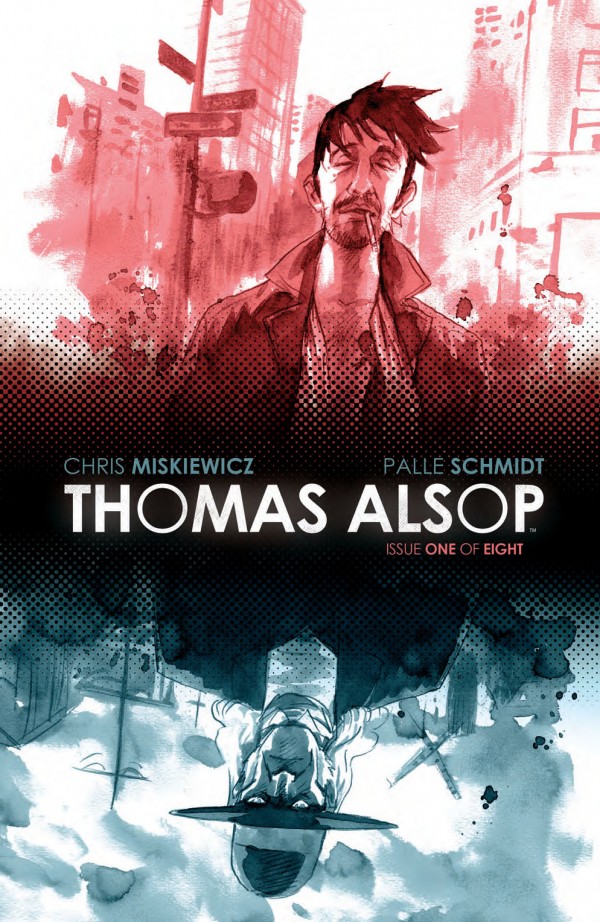
The rabbit is out of the hat! BOOM! Studios is releasing the first issue of creator-owned book Thomas Alsop in June 2014, an occult New York story, written by Chris Miskiewicz and drawn by yours truly. Bleeding Cool did a nice little write up here: http://www.bleedingcool.com/2014/03/12/are-you-missing-hellblazer-here-comes-thomas-alsop/. I’ve obviously known about this for a while, even recorded an interview with my friend and mentor Peter Snejbjerg (http://www.snejbjerg.com) on the topic of working on a monthly book. Listen for more details.

You can read a 12-page short featuring Thomas Alsop here: http://welcometotripcity.com/2013/05/thomas-alsop-the-case-of-dead-uncle/ and watch the live action promo at http://welcometotripcity.com/2013/05/thomas-alsop-the-hand-of-the-island-official-trailer/
Thomas_Alsop_Cover-600x922

Filed Under: News, Podcast, Pro Tips Tagged With: artist, BOOM! Studios, breaking news, career, Chris Miskiewicz, collaboration, comics, comics industry, comics market, creator-owned, improving as an artist, making comics, monthly, Palle Schmidt, Peter Snejbjerg, planning, podcast, pro tips, productivity, Saint-Malo, Thomas Alsop, US

ProFile: Kody Chamberlain

by Palle Schmidt 2 Comments

ProFile-Kody-Chamberlain

Kody Chamberlain spends most of his time creating comic books and graphic novels, but also works in film, animation, video games, and television. Credits include DC Comics, HarperCollins, IDW Publishing, Image Comics, LucasArts, Marvel Comics, MTV, MTV Comics, Mulholland Books, Sony Pictures, 12 Gauge Comics, Universal Pictures, and Warner Bros. In addition to his work in entertainment, Kody also an inspirational keynote speaker and consultant on the subject of creativity. Credits include CTN Animation Expo, HOW Design Live, INNOV8, Modbook, Macworld, iFest, Wizard World Comic Con, as well as AdFed groups and major universities throughout the United States.

You can find out more about Kody at his website: http://kodychamberlain.com.

His latest book SWEETS: A New Orleans Crime Story:

Print edition: http://tinyurl.com/amazonsweets

Digital edition: http://tinyurl.com/digitalsweets

What made you decide to work in the medium of comics?

As high school was wrapping up, I had no plan on what to do next. I was interested in a few different things but no real goals so I decided to go to college and figure it out along the way. I thought I might try engineering because I was doing very well in math so I signed up for an advanced math class that was part of the engineering program. I also signed up for a lot of the usual classes you have to take early in college including basic art classes. I was already doodling a bit here and there, so I thought the drawing classes would be fun.

I quickly realized that I hated the math class, and really enjoyed the drawing class. It was a dilemma because I was good at math and bad at drawing. I discovered graphic design somewhere along the way, thinking it might be a nice combination of the two and I picked it as my focus. After a few months in, I started hanging around with a few guys that were serious about comics and that’s what got me hooked.

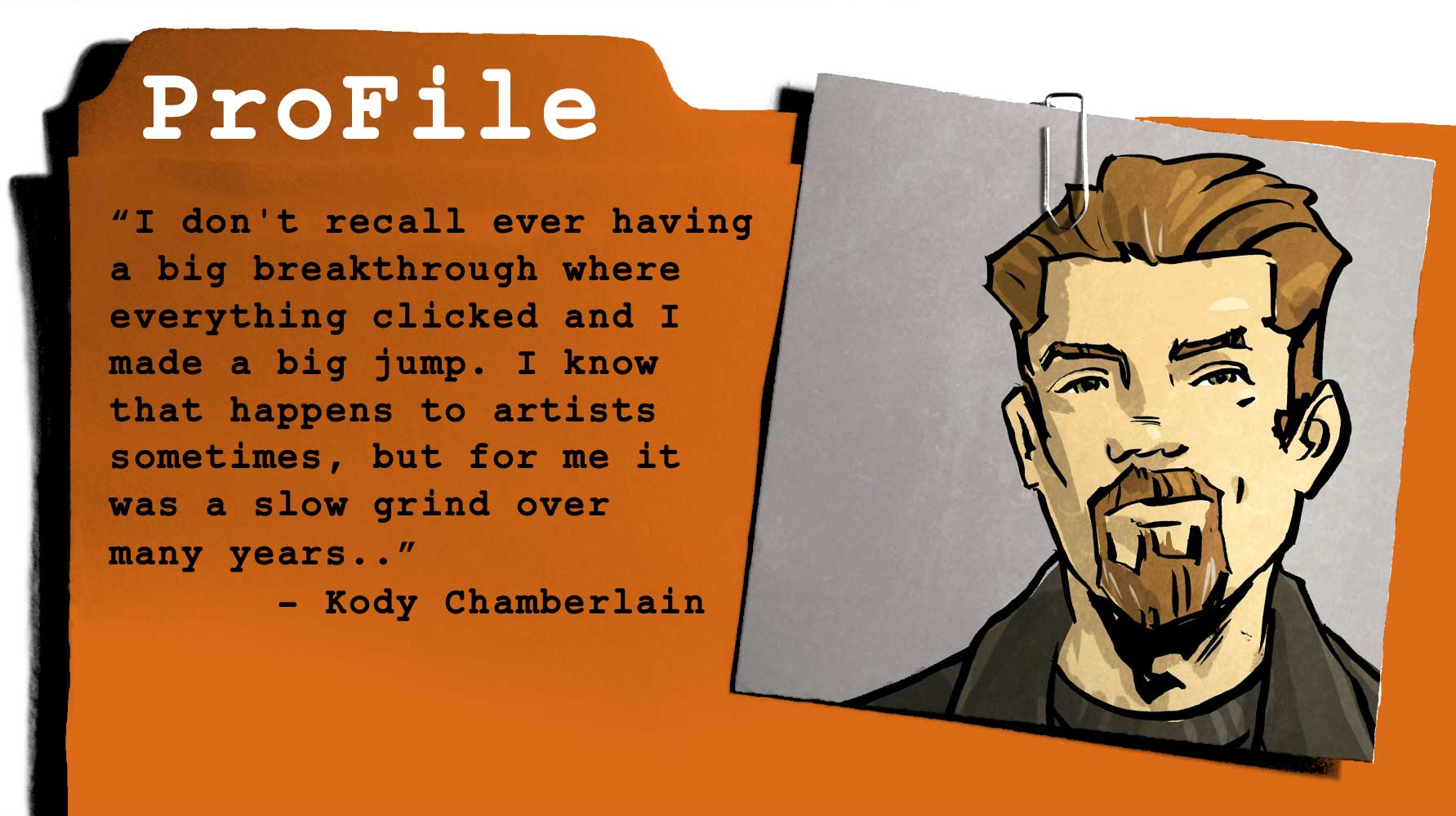
I was also writing a bit, and thought it’d be fun to try getting into comics. I sucked for a lot of years but I was making slight improvements here and there, and slowly, things got better. I don’t recall ever having a big breakthrough where everything clicked and I made a big jump. I know that happens to artists sometimes, but for me it was a slow grind over many years. I was having a lot of fun and I knew if I kept pushing forward I’d eventually get to a professional level, so I stuck with it.

I started drawing around 1990 or 1991 and started sending out submissions around 1994. In 2002 and 2003 I started to get favorable replies from publishers and editors and I got my first paid work in 2004. Basically, it took me about 15 years of practice to get paid work.

What part of the process is the most challenging or frustrating to you?

The toughest part for me is letting go. I have to constantly remind myself to stop and move on to the next thing. I’ve talked with enough people to know that it’s a very common problem, and I think it’s one of the main reasons many aspiring creators never actually become professionals. I know plenty of people that have been talking about a project for years and claim to have something done on it, but I have yet to actually see anything from it. They’re stuck in the “loop” of reworking material and they never get out. I’m able to work past it, but I’m always a little grumpy when I have to let something go. In reality, if I were to keep reworking it I know I would kill it. Letting go is a daily struggle, but after an issue of a comic hits the shelf, I always feel good about the work. A little distance solves most problems.

If you could give one piece of advice to an aspiring comics creator, what would that be?

Stop sending out scripts, drawing sample pages, and mailing out submissions. Make a comic. You don’t need a team or a publisher, just make it. Write it, create some artwork, letter it, and then put it out. Then do it again. Even if you don’t end up doing every job when you get into the industry, you’ll have a detailed understanding of the process, and that’s an asset. You don’t need permission from anyone to make a comic, and you don’t need much money. The cost of making comics versus film, animation, etc is incredibly low. Once you’ve made a comic you are now a comic book creator, not an aspiring comic creator. You’ll find the industry treats you differently.

Filed Under: Pro Tips, ProFile Tagged With: 12 Gauge Comics, comics, comics industry, creativity, criticism, CTN Animation Expo, DC comics, drawing, goals, HarperCollins, HOW Design Live, how to, IDW Publishing, iFest, Image Comics, improving as an artist, INNOV8, Kody Chamberlain, learning, LucasArts, Macworld, making comics, Marvel Comics, math, Modbook, MTV, MTV Comics, Mulholland Books, pro tips, Sony Pictures, Sweets: A New Orleans Crime Story, Universal Pictures, Warner Bros, Wizard World Comic Con, Writing

Video: The Wonders of the Internet

by Palle Schmidt Leave a Comment

This little video is an introduction to the new BONUS VIDEO format. Luckily the weather here has improved a bit since I recorded this! But you know what they say about bad weather: A good excuse to stay indoors and make comics.

Filed Under: Pro Tips, Video Tagged With: career, comics, comics industry, community, Copenhagen, creativity, learning, making comics, Palle Schmidt, peer group, peers

Seth Kushner and Nathan Schreiber – Comics for Beginners podcast episode 18

by Palle Schmidt Leave a Comment

Seth Kushner (http://www.sethkushner.com/) is a photographer and writer, known for his awesome portraits in Leaping Tall Buildings: The Origins of American Comics and his Schmuck series and photocomics on Trip City. Nathan Schreiber (http://www.nathanschreiber.com/) is an Eisner and Harvey Awards nominated artist, whose own book Power Out won a Xeric award in 2009.

I talked to both Seth and Nathan about the art and craft while I was in New York this fall, only later realizing what a great double feature the two interviews would make, as they worked together on Seth Kushners Schmuck! Their collaboration on the Schmuck series can be found at http://welcometotripcity.com/2013/10/schmuck-14-size-11/

Seth Kushner and Nathan Schreiber's collaboration on Schmuck : Size 11
Seth Kushner and Nathan Schreiber’s collaboration on Schmuck : Size 11

Filed Under: Podcast, Pro Tips Tagged With: Brooklyn, career, collaboration, comics, comics industry, creativity, Dean Haspiel, drawing, Frank Santoro, Hang Dai Editions, Hang Dai Studios, how to, improving as an artist, Leaping Tall Buildings: The Origins of American Comics, learning, making comics, Nathan Schreiber, obscure, photocomics, pro tips, Schmuck, Seth Kushner, storytelling, Trip City, workflow, Writing, writing for comics

Self publishing – print or digital?

by Palle Schmidt 3 Comments

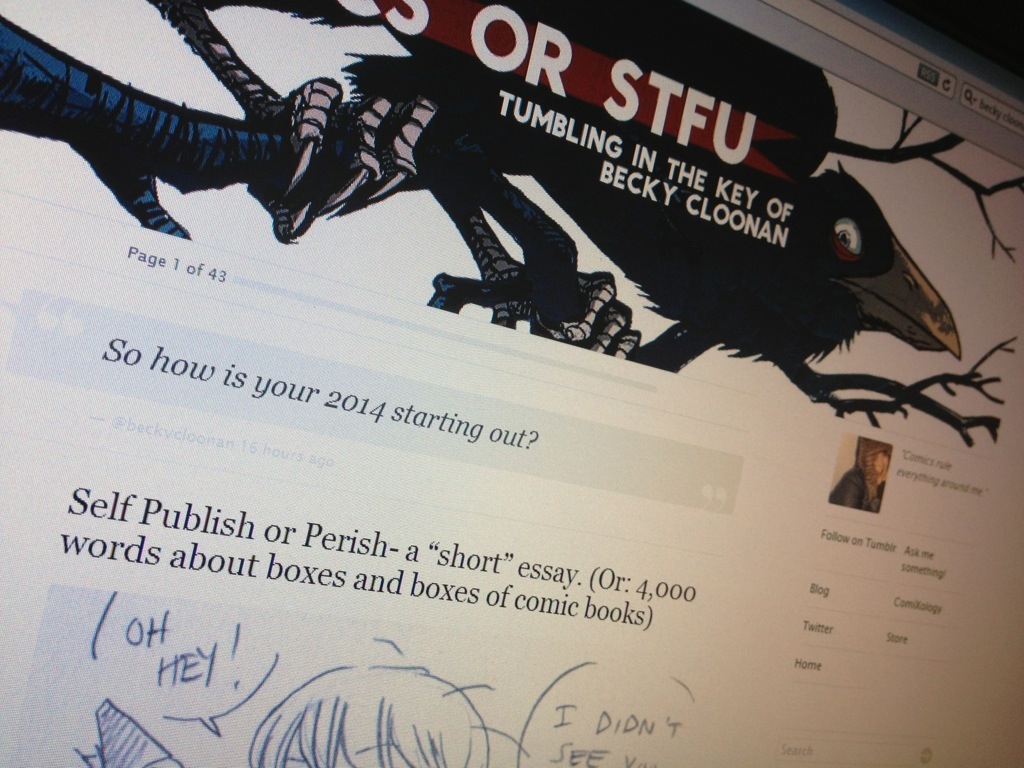
I’ve had several people ask me about self-publishing and the pros and cons of digital comics. I am by no means an expert here, but luckily the very talented Becky Cloonan just did a post on this very topic!

Cloonan is an Eisner-award winning artist and writer of creator-owned books such as Wolves and Demeter. In her recent post she breaks down her self-publishing experience, beginning with the toils of living with boxes of comics everywhere and constant runs to the post office:

The time it started taking out of my schedule was almost too much as well. One full day a week was spent filling orders, putting envelopes together, and mailing them out. I’d enlist my friends’ help carrying boxes to the post office. It got to be a bit much, and honestly I remember almost giving up a few times.

I did some self-publishing here in Denmark some years back and remember that state of constantly putting books in envelopes and orinting invoices. A luxury problem, for sure, but I hadn’t calculated shipping costs in my cover price, so it actually ended up costing me money every time I sent off a book! Between that and retailer discounts, I think I lost quite a bit of money on a fairly succesful book. I still have quite a few boxes in storage and no real plan to unload them. Putting money down for print and handling distribution is NOT something I feel like doing again any time soon.

Today I would definetely prefer digital over print, if I was to self-publish. The cost is lower and distribution is completely hassle free. Cloonan was lucky enough to get into the digital publishing platform Comixology, which makes it even easier and it’s still valuable to have a big player involved that can help handle logistics and marketing.

Cloonan continues to describe her experience with digital publishing:

DIGITAL COMICS! Yay, I have no idea what I’m doing! Submit was perfect for me, I got to choose the prices of my books, and they held my hand through the whole process. Now I know how to buy ISBNs like a boss, and format digital books. They did some great promotion for DEMETER too, and really pushed the book as part of the Submit launch! I have nothing but praise for ComiXology.

To read the rest of Cloonan’s run-down, go to her Tumblr. For me, the conclusion would be, if I can get digital distribution taken care of through another vendor, I wouldn’t mind digital publishing (Bonus info: You can buy my book, The Devil’s Concubine on Comixology as well. It’s not self-published, but I still get a cut, so… Appreciate it!), but I think just putting a book online as a web-comic and build the audience for a print or digital copy is really a better plan. I have way too much on my plate right now to bother with selling and shipping books.

What are your thoughts on self-publishing? Anyone have experience they want to share? Let’s hear it!

20140102-145005.jpg

Related post: Are printed books going away?


Filed Under: News Tagged With: Becky Cloonan, comics industry, comics market, Comixology, creativity, Demeter, digital, Eisner awards, print, self-publishing, The Devil's Concubine, Wolves

5 great online resources for comics creators

by Palle Schmidt Leave a Comment

online-comics-resources

You can spend hours, days, even months scouring the web for information or resources on how to make comics. Here are five good places to go (other than this site, of course!)

Jimzub.com

Comics writer Jim Zubkavich (Samurai Jack, Skullkickers) dishes out a ton of great advice for aspiring writers and artists, both on the craft and the business side of comics. I interviewed him for the podcast at New York Comic Con 2013 on why he creates these tutorials and gives away all this valuable information – and trust me, it’s gold.

Blambot.com

A good comics font can be hard to find – and even harder to create from scratch – but the folks at Blambot have done the hard work for you! Their fonts are not all free. Some are license, so you pay a one-time fee, usually $20-25. A good deal for something you could end up using daily.

iFanboy makecomics podcast

Short podcasts about the craft, featuring Andy Schmidt (no relation!) of Comics Experience. The podcast sound quality isn’t always great, but there’s a lot of food for thought for creators, both newbies and seasoned pros. I sat on a panel with Andy at this year’s SDCC and he was every bit as smart and nice in  person.

Remind blog

Writer/artist Jason Brubaker shares his experiences and tools for creating his comic reMIND. Brubaker started the site Making Comics as well, where I did a few guest posts, but I would recommend going to remindblog.com first and devouring all you can.

Posemanics

A great online resource for artists who don’t have access to life drawing classes is pose maniacs.com. There are tons of reference models on the site and a timer function for doing 30 second sketches from random images. There is even an app for it and the resource is FREE.

Filed Under: News, Resources Tagged With: comics industry, fonts, how to, making comics, online resources, pro tips, productivity, resources, workflow, writing for comics

  • « Go to Previous Page
  • Page 1
  • Interim pages omitted …
  • Page 3
  • Page 4
  • Page 5
  • Page 6
  • Go to Next Page »

Primary Sidebar

Hours of Premium Content

ComicsCrashCourse

Try the FREE 7-day Comics Course

Creator Profiles

Interviews with Creators

The CFB Podcasts

Find them here.

Comic Creators eBook

The Comic Creators eBook

Footer

Check out more resources

Bundles of quality content available, check how to write comics and how to make your comic book artwork look great or find tips and tricks on the blog.

Latest from the blog

  • Video: How to get Story Ideas
  • Video: The Benefit of Being a Nobody
  • Video: Why Creatives Hear Voices
  • Digital Tools for 2021
  • The Most Badass Tools for Inking Comics
  • Why Creative Restrictions are Good for You!
  • How to Write a Great Story – and Stick the Landing

Contact us

If you have questions or issues please contact us.

Official mail: mail(at)comicsforbeginners.com

Feel free to connect on Twitter and/or Facebook.

Copyright © 2026 · ComicsForBeginners by Palle Schmidt Log in