• Skip to main content
  • Skip to secondary navigation
  • Skip to primary sidebar
  • Skip to footer

Comics for Beginners

How to Write & Draw Comics

  • Contact
  • About
  • Faqs
  • Log In
  • Resources
  • Podcasts
  • Comics Crash Course
  • Blog
  • Videos

tips for making comics

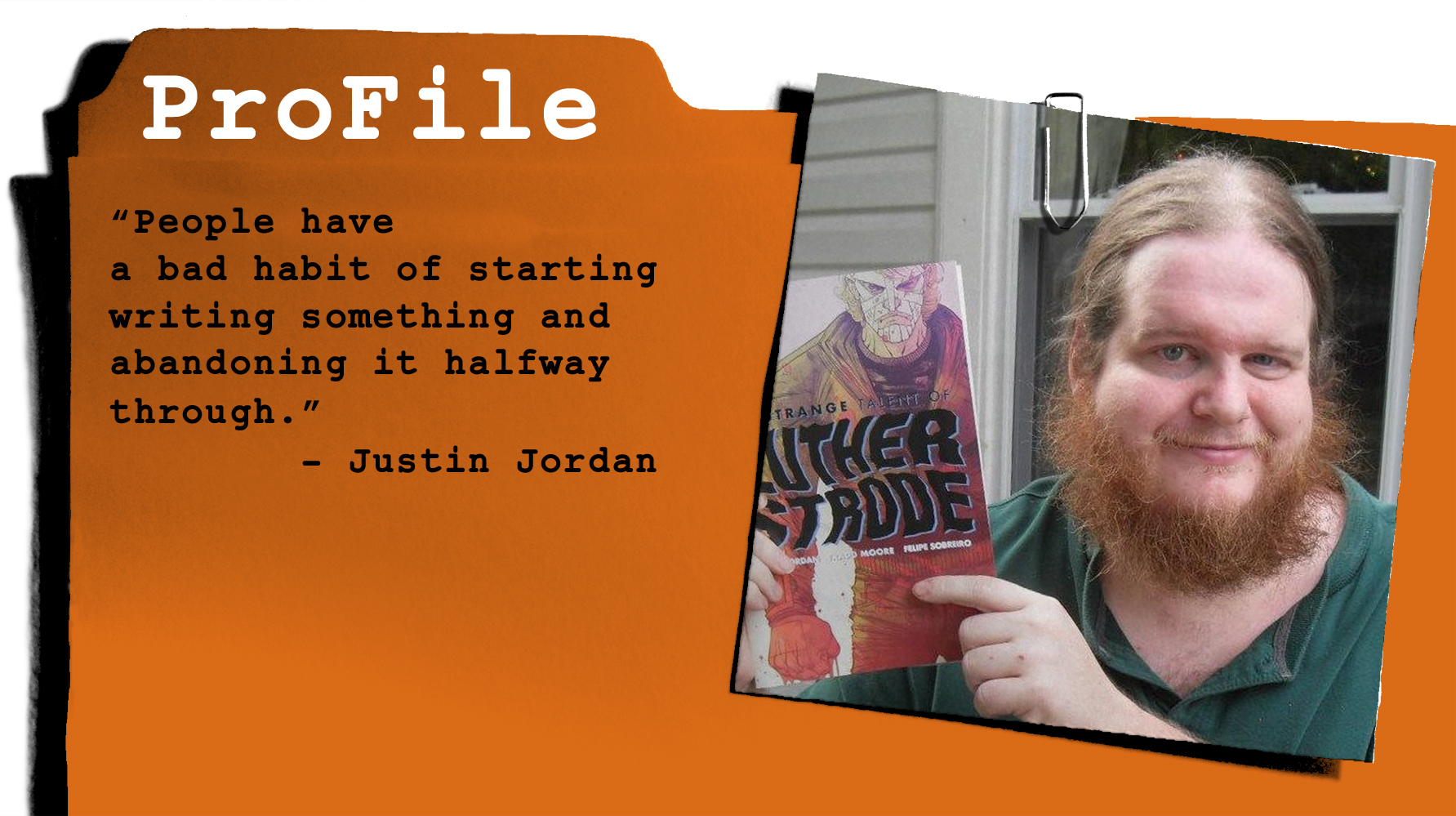
ProFile: Justin Jordan

by Palle Schmidt Leave a Comment

ProFile-Justin-Jordan

Justin Jordan is the writer and creator of The Strange Talent of Luther Strode. He has also worked on Shadowman, Deathstroke and Green Lantern for DC comics.

What made you decide to work in the medium of comics?

I’d always loved comics. And I really do mean always; my earliest memory is reading a Popeye comic when I was maybe three years old. Well, looking at it, anyway.

And I’ve always loved telling stories, so it became a pretty natural fit for me.

What part of the process is the most challenging or frustrating to you?

Probably getting everything to work to my satisfaction within a 20 pages per issue format. I’ve not yet done an OGN, so I have to make sure that each of the however many issues I am using to tell a story each have their own narrative arc and are satisfying in themselves.

Telling a story for me is a relatively easy, telling a story in six chunks with each chunk being something people want to read is a lot more challenging, kind of like writing poetry.

If you could give one piece of advice to an aspiring comics creator, what would that be?

Finish stuff. People have a bad habit of starting writing something and abandoning it halfway through. Heck, I do this. I have at least ten novels in various stages that I have never finished.

Finishing what you start obviously isn’t enough to build a career, but it IS something you need to be able to do.
Filed Under: Pro Tips, ProFile Tagged With: career, comics, comics format, comics industry, DC comics, Deathstroke, Green Lantern, Justin Jordan, making comics, Shadowman, storytelling, The Strange Talent of Luther Strode, tips for making comics, Writing, writing for comics

Going off the grid

by Palle Schmidt Leave a Comment

20140218-151818.jpg

The grid. Is it keeping the artist from expressing himself or are guidelines helpful? Let’s talk about the pros and cons!

First let’s talk about what a “grid” is: The grid is the arrangement of panels on the page in a predictable and similar manner. For instance, sticking to three rows of panels per page or even having the same number of panels, like the popular 9-panel grid.

While you don’t have to follow the exact same grid on every page, it’s certainly helpful to have some sort of guidelines – especially if you want to experiment on some pages! Tilted panels, A panel with no frame or a double-page spread has little effect if ALL of the comic is experimental.

The upsides to following a grid are many. The hard part of the storytelling is already done for you, the reading order is obvious. But as long as readers can find their way from one panel to the next in the right order, there is lots of room for experimenting with the page layouts in comics. Just remember, characters and objects sticking out of panels, borderless panels or big, fancy page layouts can be a lot more challenging to read, let alone create!

Even if you have an overall grid you use for a particular project, breaking it up can be a good idea. Keep those readers awake! The use of larger panels for emphasis can be a good variation. Just be aware, that larger panels tend to slow things down and smaller panels give off a more hectic feel. You can also experiment with panels that bleed all the way to the edge of the page or perhaps a figure in a panel with no frame. Variation in size and borders can be done without deviating too far from the underlying grid – but it should always be rooted in the story, in what you are trying to get across.

You may feel like you should be coming up with new and exciting ways to tell your story, but deviating to far away from the grid requires a mastery of the craft and may in fact hurt the storytelling. If people have to stop and think about reading order or what is going on, you’re not doing your story any favors.

If you’re unsure of wether the page reads right, try drawing the balloons and panels on a seperate sheet, see if the reading order makes sense without any pictures. Sometimes you can fix any problems just by moving a balloon to the top or bottom of a panel, to make the reading order perfectly clear. No need to redraw the entire page because of it!

My advice: Experiment within the grid and steer clear of wild panel arrangements until you know how to tell a story in a simple layout. Have faith in your story and focus on telling that story. Don’t try to impress readers with flashy, cool page layouts if it makes for a confusing read. Communication is key.


Filed Under: Pro Tips Tagged With: drawing, grid, how to, layouts, making comics, panel layout, reading order, storytelling, tips for making comics, writing for comics

Video: Tools of the Trade

by Palle Schmidt Leave a Comment

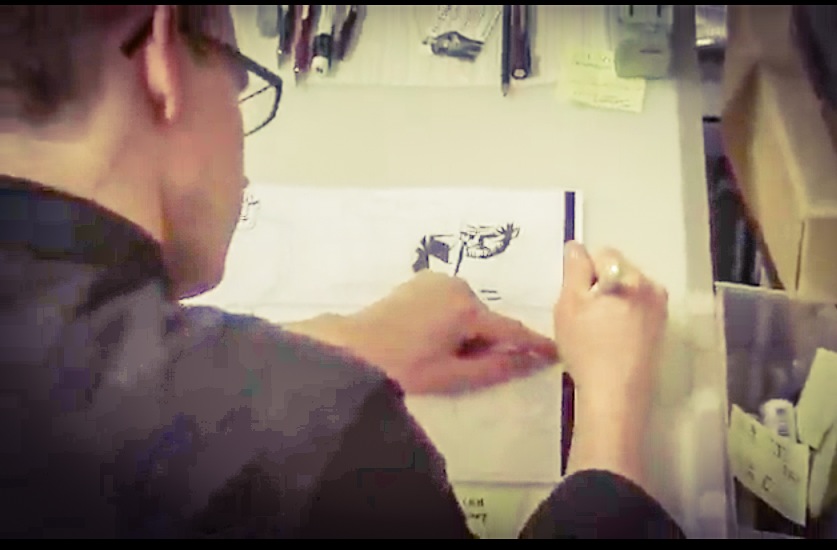
What are the “right” tools for making comics? Luckily there is no answer set in stone, you can use whatever tools you feel most comfortable with! In this video I demonstrate some of what I use – see if you can get some inspiration from that.Photo 07-02-14 21.07.32

Filed Under: Pro Tips, Video Tagged With: acrylic markers, art hacks, creativity, how to, inking, light box, making comics, mistakes, pencilling, pro tips, productivity, studio, tips for making comics

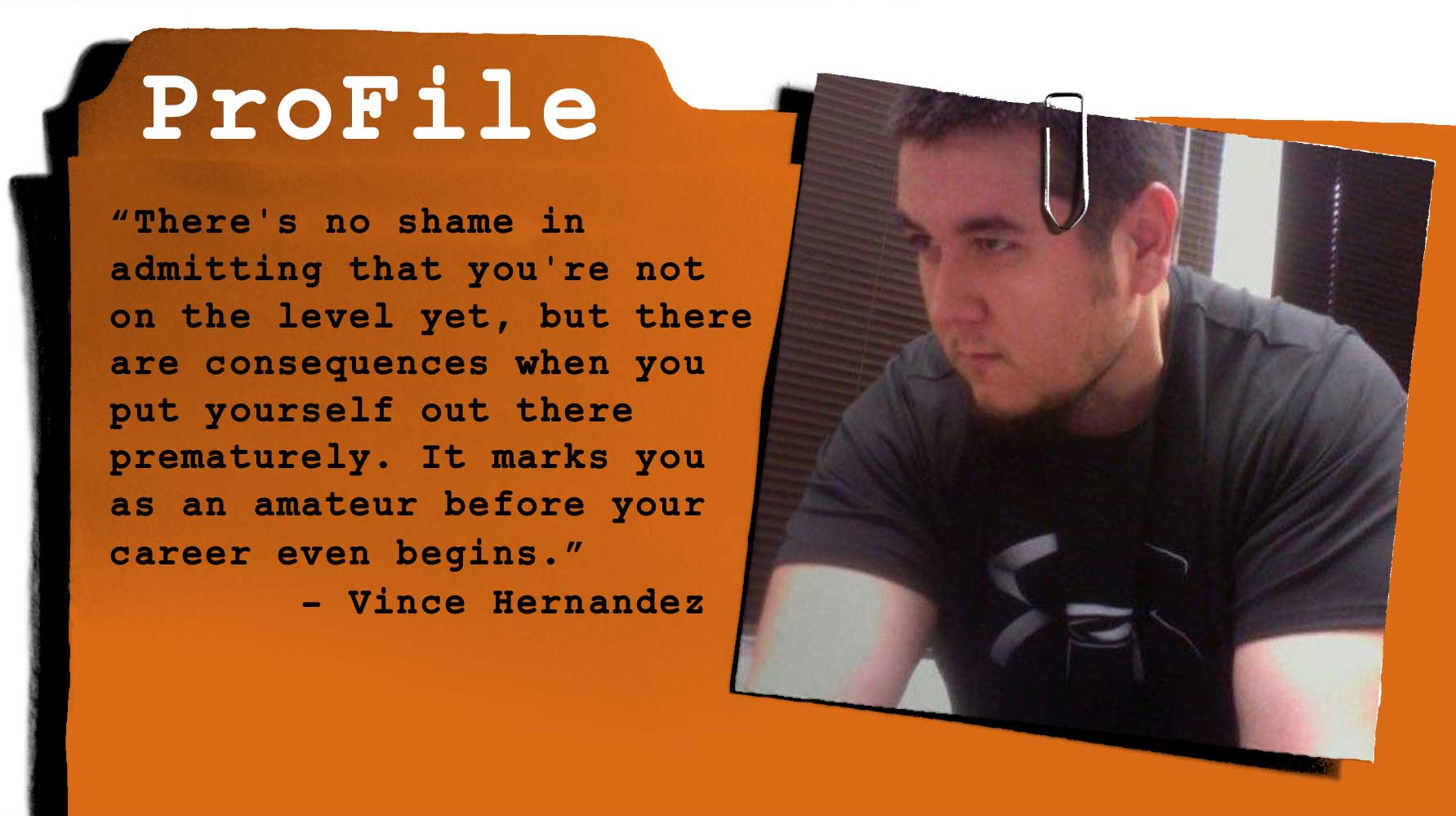
ProFile: Vince Hernandez

by Palle Schmidt Leave a Comment

Vince Hernandez has worked in the comic book industry for over fifteen years and is currently the Editor-in-Chief for Aspen Comics. He has created and written the comic book series Charismagic, Trish Out of Water and the upcoming Damsels in Excess. He also has worked as a writer for Electronic Arts, Def Jam Entertainment and Marvel Comics.

What made you decide to work in the medium of comics?

Actually, working in comics happened rather coincidentally for myself. When I was eighteen years old, I was looking to take on a second job and my brother mentioned a position that was available with the comic book publisher, Top Cow. Since he was already employed there, I certainly had a great start and after interviewing there, I became the assistant to the Director of Marketing, Kate Sherwood. I worked at Top Cow for four years before I took the position with Aspen where I’ve been Editor-in-Chief for the past decade. It’s not the usual route to get into comics but I certainly think I’ve made the most of the opportunities I’ve been presented with.

What part of the process is the most challenging or frustrating to you?

Editing comics in general is a very demanding and oftentimes frustrating position. It encompasses scheduling, talent management and crisis control while also maintaining a professional level of creativity necessary to make a product fans will enjoy. I think if I had to pinpoint one aspect which usually ends up more frustrating than any other, it’s dealing with talent’s schedules and their understanding of meeting a deadline. I can literally name off the small list of creatives that understand this process. The more frequent response I get from artists is that the quality of their work will suffer if they rush, which I have found is little more than an excuse because they can’t meet a deadline.

If you could give one piece of advice to an aspiring comics creator, what would that be?

One thing I would tell aspiring comics creators is to be realistic with their work. This is a broad tip of advice, but it’s something that a lot of aspiring artists and writers haven’t yet learned. Realistically look at what professionals are doing and judge your work accordingly. There’s no shame in admitting that you’re not on the level yet, but there are consequences when you put yourself out there prematurely. It marks you as an amateur before your career even begins.

http://www.aspencomics.com/

Filed Under: Pro Tips, ProFile Tagged With: Aspen Comics, Charismagic, comics, Damsels in ExcessMarvel Comics, deadlines, Def Jam Entertainment, Def Jam Entertainment anMarvel Comics, Electronic Arts, learning, making comics, productivity, storytelling, tips for making comics, Trish Out of Water, working with artists

How to become a better artist

by Palle Schmidt 6 Comments

getting-better-as-an-artist

Do you think top athletes just decide one day to go and win the olympics? Well, maybe they do, but they don’t get there without a lot of work.

Getting to be good at anything, requires a lot of training. Ideally, you should do it every day.

It’s hard to give advice on how to get better at drawing or writing. But there are exercises, just as in sports, that you can use to develop the skillset and dicipline you need in your work.

My first tip is to set achievable goals. Don’t set out to write 5 pages a day, set out to write one. Just one. You increase your chance of succeeding, and thereby building confidence. Chances are you will even write more than you plan for, adding an extra feeling of success to your daily routine.

Getting in the habit of doing something every day can take some time, but it can be done. Start by just doing SOMETHING on your comic every day. Even if it’s just pencilling one panel.

Slow still get’s you there.

Find a peer group that can hold you accountable and help up your game. Playing against someone better than you, makes you a better player.

If there’s no one in you immediate circles who you can count on for inspiration and encouragement, use the internet as a way of connecting to peers. All it takes is a couple of people who are remotely interested in your progress, and you’re a lot more likely to improve your skills.

Putting up a daily strip or a weekly page can be a motivation – as long as you see it as a learning process and not a career. Careers tend to bring in some money and one cannot live on Facebook likes alone.

If you want to improve your drawing skills, take some lessons or draw from life. Be sure to force yourself to draw the stuff you are NOT good at. Over and over and over again. Also be sure to keep the drawings you make on file, however horrible they seem to you! It can be very hard to see progress when you’re in the middle of it. Looking back at earlier works will show you have improved, urging you to go further, get even better.

And to get better, you need to do it every day.

Filed Under: Pro Tips Tagged With: career, critique, drawing, how to, improving as an artist, mindhacks, pro tips, productivity, tips for making comics, Writing

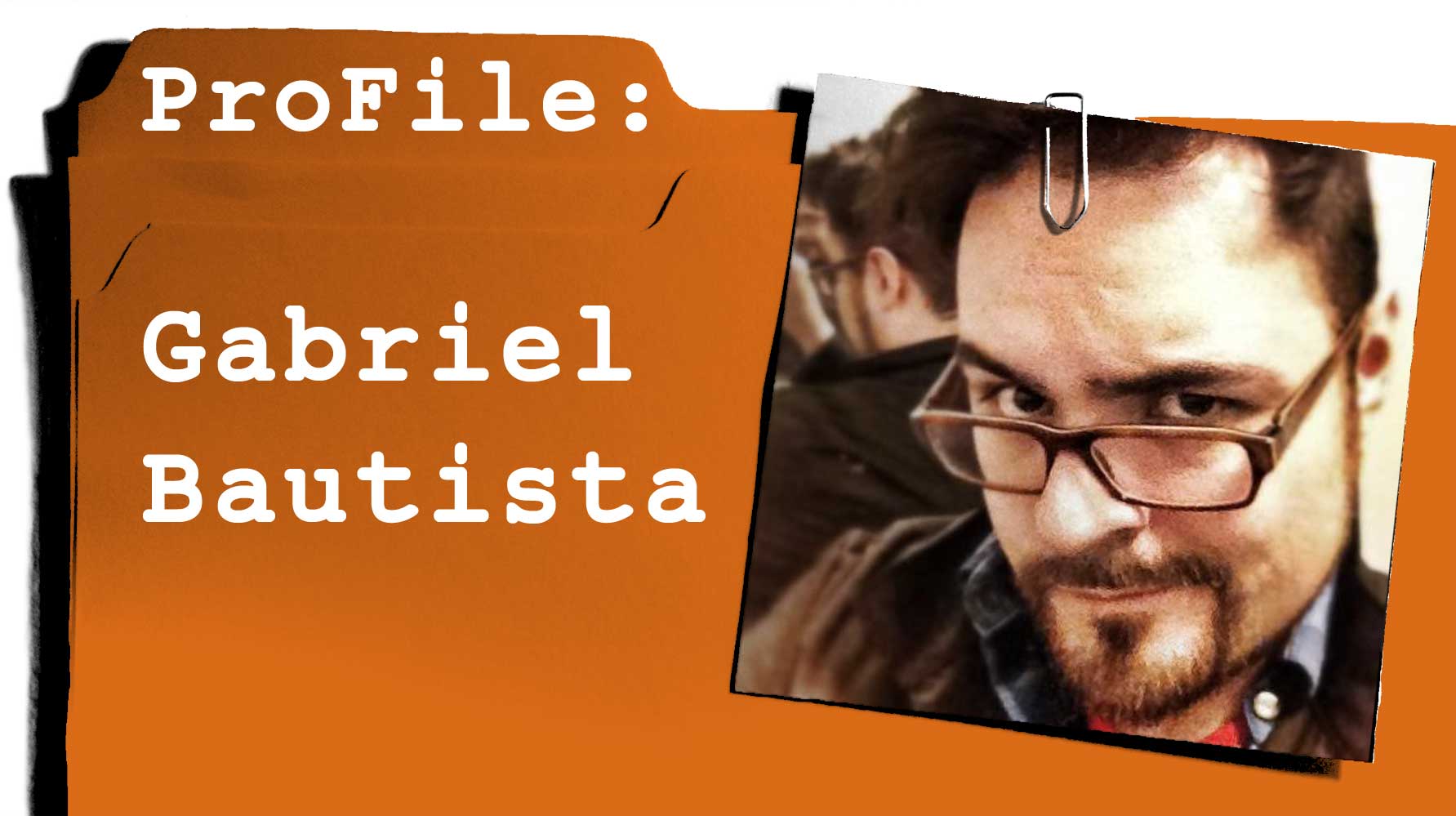
ProFile: Gabriel Bautista

by Palle Schmidt Leave a Comment

ProFile-Gabriel-Bautista

GABO is an illustrator based out of Chicago. He’s worked for DC Comics, Image Comics, Oni Press and Thrillbent. He is an Eisner and Harvey Award winning colorist. http://yogabogabo.com

What made you decide to work in the medium of comics?

Speed. I’ve always loved telling stories, building new worlds with only a pencil, paper and the thoughts in my head. I had always imagined myself working in animation, creating cartoons to tell the stories I wanted to share, but as I got older I started to realize that animation, even though it’s an amazing medium, it was just way too time consuming. The idea that I could sit in a cramped corner of my little room and just draw an entire story in just a few days on paper was sheer brilliance to me, and then being able to share this new world with others by making photocopies of each, well I was sold.

What part of the process is the most challenging or frustrating to you?

FRUSTRATION = FLATTING. GOD I HATE FLATTING. (Flatting for those who don’t know is the first step in coloring where you lay down the basic colors on the page before adding shadows, tones, lighting, effects etc.) It is so time consuming, and well you know how much I love speed – I just need this thing to be done so I can present it to the world! So when I can, I find someone to do that for me.

The most challenging part of comics I feel is layouts. Figuring out how to put down on paper what the writer wants to see, and doing it in fresh and innovative ways. Layouts are the foundation of any comic. There have been times when I don’t draw them out first, but they still exist in my mind, you can’t get away from it!

If you could give one piece of advice to an aspiring comics creator, what would that be?

You can’t be a comic book artist if you don’t make comics. And you WILL NOT GET BETTER if you don’t do them. Learn to live with your work, the things you draw in 5-10 years will look so much better than most of the work you do now, so just have fun! LET GO OF PERFECTION. JUST DO.

Filed Under: Pro Tips, ProFile Tagged With: animation, career, coloring, creativity, DC comics, drawing, Eisner awards, Elephantmen, flatting, Gabo, Gabriel Bautista, Harvey Awards, illustartion, Image Comics, improving as an artist, layouts, Oni Press, storytelling, Thrillbent, tips for making comics, workflow

  • « Go to Previous Page
  • Page 1
  • Page 2
  • Page 3
  • Page 4
  • Page 5
  • Page 6
  • Go to Next Page »

Primary Sidebar

Hours of Premium Content

ComicsCrashCourse

Try the FREE 7-day Comics Course

Creator Profiles

Interviews with Creators

The CFB Podcasts

Find them here.

Comic Creators eBook

The Comic Creators eBook

Footer

Check out more resources

Bundles of quality content available, check how to write comics and how to make your comic book artwork look great or find tips and tricks on the blog.

Latest from the blog

  • Video: How to get Story Ideas
  • Video: The Benefit of Being a Nobody
  • Video: Why Creatives Hear Voices
  • Digital Tools for 2021
  • The Most Badass Tools for Inking Comics
  • Why Creative Restrictions are Good for You!
  • How to Write a Great Story – and Stick the Landing

Contact us

If you have questions or issues please contact us.

Official mail: mail(at)comicsforbeginners.com

Feel free to connect on Twitter and/or Facebook.

Copyright © 2026 · ComicsForBeginners by Palle Schmidt Log in