• Skip to main content
  • Skip to secondary navigation
  • Skip to primary sidebar
  • Skip to footer

Comics for Beginners

How to Write & Draw Comics

  • Contact
  • About
  • Faqs
  • Log In
  • Resources
  • Podcasts
  • Comics Crash Course
  • Blog
  • Videos

News

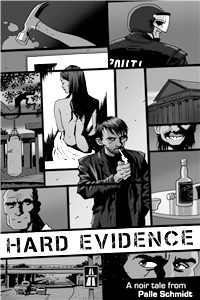
Case study: HARD EVIDENCE

by Palle Schmidt Leave a Comment

In the year 2000 my friend Malik Hyltoft and I published FUSION the roleplaying game, the first two books from a major Danish publisher and a third was self-published. This was not just a niche product, but a niche within a niche.

I’m super proud of what we put out there, but I found myself wanting to do something something a non-roleplayer could pick up and enjoy. But at the same time, I knew I had something of a fan base in the RPG underground. What to do?

I think it was at some convention a guy showed me a White Wolf comic, based on the Werewolf game, and encouraged me to do something similar with FUSION. I completely dismissed the idea (because I’m an idiot that way). And then changed my mind less than 24 hours later.

The plot for Hard Evidence (in Danish “Skyggen af bevis”) came from a roleplaying game session. Well, two actually. My friend Thomas Bjerregaard came up with the story of a man who seemingly murdered his wife, and a sinister conspiracy beneath it all. First time around, the setting was America in the 1950’s and the investigators FBI agents. I re-hashed the plot for our FUSION campaign, the setting now a near-future Copenhagen and private investigators on the case.

We took turns as game masters in our campaign, like different directors on a tv-show. My character, ex-con Hauge, wasn’t in the session as it played out, but took the stage for the graphic novel. I enjoyed playing this guy so much, I thought he could use his own show. I toned down his thick-headed personality and made him a bit more articulate for the graphic novel. I wanted the dialogue to be zinging and tough, like Raymond Chandler at his best.

In a way, this project was a stepping stone for me. It got me back into comics, when I thought it too hard. The Devil’s Concubine was scripted and thumbnailed and just laid there, like a mountain waiting to be climbed. Hard evidence seemed like a less daunting task. Drawing it got me back into shape and rebuilt my confidence. The story originally ran as a weekly web comic on the FUSION website, thus forcing me get the damn pages done in time. I can highly recommend this method. Only downside is that everyone has read the book before it comes out. I coerced a few of my peers into doing art for a pin-up gallery in the back, so byers would get something new for their money.

Lessons learned: 

Sometimes it’s a good idea to do a smaller project, almost like a throw-away thing rather than trying to tackle the most ambitious thing you can think of.


This post is an excerpt from my book SOLO – Survival Guide for Creative Freelancers – Get in now on Amazon.
Filed Under: News Tagged With: comic, crime noir, freelance life, Fusion, Hard Evidence, roleplaying, self-doubt, SOLO, webcomics, workflow

Copyright and IP

by Palle Schmidt Leave a Comment

Who owns the rights to a piece of art or a character? Can you sell the same story twice and what if someone steals your artwork?

In most cases and artist hired to do a specific job retains the IP (Intellectual Property) of their work. Creating a jingle, a op-ed illustration or a short story for a magazine doesn’t mean signing off ownership. It means you lease the work you did to a client for a specific purpose and/or time period. If there’s a contract involved this should specify exactly who owns what right but as a rule of thumb, it’s you as the creator. 

In comics, there is work-for-hire (in which case the publishing company owns all the rights) and creator-owned (in which case you bring the project to the publisher and sign off the publishing rights but retain the intellectual property). If you’ve been on retainer or creating something while working for Disney or Microsoft, you bet they will keep the IP – and trying to fight them on it will cause you a lot of time and headaches  and likely bankruptcy.

If on the other hand you were hired to design a poster and the company decides they want to use it for a banner ad or a free give-away sticker, you’ll likely be able to get more money or get them to cease and desist, since you still own the IP. Theoretically you could sell the same piece of work twice but you risk pissing off both clients, where they ever to find out. Comics artists do this all the time, selling original artwork that was printed in a book and I’m sure it’s similar in other industries.

If a client should present you with a waiver or contract leaving them with all the rights to your work for all use in all eternity and known universes, I’d be very wary of signing it. And if I did, I’d expect to be well compensated. Some clients will try to get all the rights but it’s usually negotiable if you push back. If you do sign off say publishing rights, make sure the rights revert back to you after a period of time – the standard is two to three years.

Some of my earlier clients have thought they just owned whatever they bought from me, to use for whatever. I’ve sometimes introduced the idea of rights and been able to charge a higher price for my work, by offering broad usage with no time limit – mostly in cases where I cared less about the artwork, and had no use for it myself. The client might find it more convenient to buy you out from the beginning instead of having to negotiate a new rate every time they find a new use for your jingle, illustration or whatever. And that’s totally fair, as long as they pay premium.

Copyright is another can of worms but basically no one is allowed to steal your work and present as their own or use it for commercial purposes without your explicit permission. There’s something called “fair use” which means if a blogger reviews my comic I can’t very well sue them for using an image from the book.

If you’re a semi-pro artist I’m sure you use stuff like Instagram to promote your art. Some artists are wary of putting their content on these platforms as it might get stolen or copied. And while it certainly happens, I wouldn’t worry about it too much. You can post work-in-progress or detail shots rather than finished artwork and your followers will be just as happy. Besides, the more loyal fans you have out there, the bigger the chance that they will let you know if your work shows up in weird places.

If you do find your work popping up somewhere online you can take two different approaches:

1. Let it go. Usually there’s no ill intent behind it, people just don’t realize that you can’t copy/paste whatever you find online. Or maybe they’re evil bastards (like the people who put my book The Devil’s Concubine on a torrent somewhere in China), who knows? But the chances of you getting them to cease and desist are slim at best.

Usually there’s no ill intent behind it, people just don’t realize that you can’t copy/paste whatever you find online. Or maybe they’re evil bastards (like the people who put my book The Devil’s Concubine on a torrent somewhere in China), who knows? But the chances of you getting them to cease and desist are slim at best.

2. Send a nice e-mail  to the owner of the site, asking them either to take it down or at least credit you – or simply send them a bill! I wouldn’t expect them to pay but it might help persuade them to remove your work from their page.


This post is an excerpt from my book SOLO – Survival Guide for Creative Freelancers – Pre-order now on Amazon.

Filed Under: News Tagged With: comics business, copyright, creative decisions, creator-owned, freelance life, IP, rights, SOLO, solopreneur, work for hire, working with clients

Con fatigue

by Palle Schmidt Leave a Comment

Whether you’re a writer, an artist, a musician or a film maker, there’s a good chance you have an introverted personality. I don’t think anyone would call me an introvert but I can tell you for a fact that being “on” for days on end really drains me. I need alone time to recharge.

In Angoulême in 2012, I wrote a blog post on the phenomenon I later started calling “con fatigue”. It was day 2 or 3 at the festival. Sure, I had a hangover. But the hangover was more of a psychological kind as I walked around the exhibition tents that were packed with comics fans in all ages and genders. I should have been thrilled to see all this interest for my field. I should have been enthused at looking at all this great art and inspired by the spirit of the festival. Instead, it all felt overwhelming and my own role in all this seemed completely redundant.

I don’t know everything about how the creative brain works but it does seem to reach a point sometimes where it cannot process any more information and just wants to shut down. Where you can’t look at any more art or meet any more interesting people. It creates a sinking feeling that I suppose is not unlike depression. I say this here, because we need to know it happens – and that it is okay. It’s part of the human condition.

So there I was in Angoulême, feeling sorry for myself, just wanting to go home and hug my kids. I felt like no one was even remotely interested in looking at my work and I completely understood why. It’s useless! Look at all this other stuff! How can I compete, why even try? In other words, I was being a self-centered little cry-baby. Frustrated, I went into a crowded lunchtime café and got a soda at the bar, tried to check my e-mail but couldn’t log on to their wi-fi. Off course.

Then in the door walks Brian Azzerello. 

I’ve been a fan of Azarello’s since his early work on Hellblazer, that was so scorchingly cynical and hardcore I’d never read anything like it. I was working on the layouts for The Devil’s Concubine when 100 Bullets started coming out, and Azzarello’s stark writing and Eduardo Risso’s slick line art blew me away. The pages were so perfectly balanced, the blackness bled across panels and the colors were vibrant and bloody awesome. It looked exactly like my book! It was like they had plugged into my brain and pulled out the look and style that I was unable to put down on paper. Looking at Bullets, I knew how my book should be done. I tried putting it away and I tried to create my own style, but the damned thing had etched itself in my mind so permanently that The Devil’s Concubine in certain places looks like – let’s be brutally honest here – a rip-off.

Bumping into Azzarello like that, I had to shake his hand and thank him. I was able to fumble a book from my bag and give it to him, along with my sincere apologies. I said it with a smile and I hope he took the fact that I was so inspired by his work as a compliment. We had a nice little chat but I didn’t want to outstay my welcome. I just felt honored and privileged to be able to give something back.

As I left the café, I left my inner cry-baby behind.

Later I met writer Joe Keatinge whom I’d recently met in New York, and he was nice enough to introduce me to a couple of French editors he knew. Suddenly my visit at the festival seemed to make sense again. You can’t plan things like these. But if you’re not there, they certainly don’t happen.

Later on in the evening I ended up at dinner with a bunch of comics guys. We discussed the topic of hitting the wall. Feeling so small and useless in a sea of talent, that you just want to pack up and go home. I don’t know if we broke a tabu but it seemed Danes and Americans alike lit up at the reveal that we all at one point or another had shared the same experience. When you hit that wall, you just have to wait for the sensation to pass through you. And it will.


This post is an excerpt from my book SOLO – Survival Guide for Creative Freelancers – Get in now on Amazon.
Filed Under: News Tagged With: 100 Bullets, Brian Azzarello, Comics conventions, comics industry, con fatigue, freelance life, introvert, Joe Keatinge, self-employed, self-examination, setbacks, SOLO, The Devil's Concubine

The Art of Stealing

by Palle Schmidt Leave a Comment

I have a friend who has the habit of taking things apart to see how they work. Anything from a radio to a vending machine. To me this is the ultimate approach to art.

Find something that works – a film, a novel, a painting – analyze it, break it down, take it apart and figure out why. This is how Raymond Chandler started writing short pulp fiction stories. He took a story from Black Mask, dissected it and identified the various element and then created a new story by replacing each piece with his own. 

You can become a great artist by copying what you love about another artist. This will teach you a lot. Then after a while, you can bring in other influences and start adding your own voice, thereby creating something new. If you look at my early drawings, you’ll definitely see a Mike Mignola phase, a Frank Miller phase and a Sean Phillips phase (which you could argue is not over yet).

My first 48-page comic that was published in Denmark in 1999, was the result of sitting next to Peter Snejbjerg. Peter was a master of the quill (the kind of metal-tipped pen you dip in ink) and all the “real” comics artist all used it. So of course this young whipper-snapper had to try and copy the technique, with pretty disastrous results. I learned a lot of lessons by sticking it through for 48 pages – the most important being I shouldn’t be using a quill. I learned later, that I could use a soft-tipped marker to almost the same effect and that my hand liked working with that way better. Nowadays I listen more to my hand than I listen to my brain.

As an artist it’s important to stretch your muscles, draw the things you have a hard time drawing rather than sticking to the things you nail every time. Again, it’s a great strategy to just copy. Drawing from life or recreating works from other artists is a crucial way to get better at the craft.


This post is an excerpt from my book SOLO – Survival Guide for Creative Freelancers – Pre-order now on Amazon.

Filed Under: News Tagged With: artist, artistic influence, copying, Frank Miller, improving as an artist, Peter Snejbjerg, Raymond Chandler, self-employed, SOLO, stealing

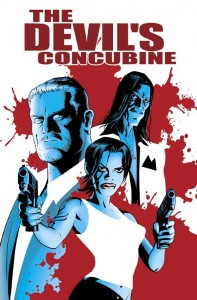
Case study: THE DEVIL’S CONCUBINE

by Palle Schmidt Leave a Comment

This book was over ten years in the making, a perhaps overly ambitious project designed to kick down the door to the US market. 

I wanted the book to be look like a music video and be as stock full of gratuitous violence as an early John Woo action movie. I wanted to create a book that my 13-year old self would find it impossible not to pick up. I had a dogma that no matter where you opened the book, there should be someone getting shot, something blowing up or someone taking their clothes off.

For years I tried the traditional route of mailing test pages (this was almost before the internet!) to US publishers, getting rejection slips or no reply at all for years. I tried publishers in France and the UK as well, getting close to a deal a couple of times but never anything set in stone. The industry seemed far away and interests were slim. I knew it would take years (with no incoming salary) to finish the book and was almost ready to give up. It just seemed like it would never happen. Then one night out drinking with a bunch of comics guys in Copenhagen, I got to chatting with small press editor Paw Mathiassen of Fahrenheit. He asked what I was working on and I told him the woeful story of The Devil’s Concubine. I’m sure this dead-end project of mine was a joke among my peers at this point but apparently Paw hadn’t heard it. “Send it to me,” he said and as it turned out that slight interest from an editor was enough to kick me back into work mode.

I translated the script to Danish (it was originally written in English) and rough sketched the entire book in a few months, so I at least would have something readable to present. Paw agreed to publish the book and although it was a back end deal that never made me any money as far as I recall, I could now see the finish line and was able to drag myself out of the ditch and finish the race. I worked on the book any chance I got for the next year or so and The Devil’s Concubine was finally published in Denmark in 2009 – more than a decade after I came up with the initial premise and main characters.

With the book finished, I was now able to present to US publishers with a little more confidence. Time and technology had worked in my favor because now most publishers could be reached via email and I was able to send a full PDF with links to a cool trailer a friend of mine had made in after effects and both a Danish and and English version of a website (created by another friend, still available at devilsconcubine.com). IDW showed interest and we reached an agreement after about a year of going back and forth. The book finally came out in the US in 2011.

Lessons learned: 

Ambition is great, finishing something is better. It’s also a whole lot easier to sell a finished project than an idea. If you want to create something, do it for your own sake in your style rather than trying to cater to any market.


This post is an excerpt from my book SOLO – Survival Guide for Creative Freelancers – Pre-order now on Amazon.

Filed Under: News Tagged With: behind-the-scenes, case study, creator-owned, graphic novel, IDW Publishing, making comics, Peter Snejbjerg, pro tips, process, SOLO, The Devil's Concubine, working with editors, Writing

Working from Home versus Getting a Studio

by Palle Schmidt Leave a Comment

As I’ve mentioned before, I wouldn’t have had the career I have today, if it wasn’t for my time at Gimle Studios. This is where I learned from the best, grew my network and got the jobs that laid the foundation for my business. Most importantly, being surrounded by other hard working professionals was how I built my work ethic and self-confidence as an artist.

Later on I got a spot at the larger co-op Republikken, which was as far from what Gimle was as I could get. I needed to shake things up a bit and sitting with designers, photographers and other types of creatives as well as entrepreneurs certainly helped me get a new perspective. This is where I came up with ComicsForBeginners.com and where I started to really focus on my own projects. 

After working out of my house for a year while I studied at Film School (yet another way I started to think outside the box) I’m not back at a studio space. I have my own room which is perfect for when I’m writing and need to concentrate, when I have people over for podcast interviews or I’m doing videos. In hindsight, I would probably have benefitted from isolating like this sooner, as I tend to get involved in conversations if I’m in an open office environment. I love having an office in town as it helps my focus to have a dedicated workspace and just a good reason to get out of the house every morning.

If you want to work from your house, an office space or the local coffee shop is up to you. Of course it depends on what you do, what area you live in and what your economic options are  – and what kind of set-up your work requires. I’m sure an opera singer will have a harder time working from a café than a blogger.

Pros and cons

To help you decide where to work from, here’s a list of some of the advantages and disadvantages.

Home office pros:

  • A pretty quiet work environment, no office chatter or ringing phones besides your own
  • No extra rent (and maybe even a tax deduction – check with your relevant authorities)
  • You always have all your tools and files at hand and can work anytime – even after the kids are put to bed
  • Speaking of kids, you may find it convenient to be able to take care of your young ones at home, while you’re running your business
  • Speaking of kids, you may find it convenient to be able to take care of your young ones at home, while you’re running your business

Home office cons:

  • Lonely lunch hours and probably nothing interesting in the fridge
  • Work habits can be hard to maintain and things can start to slide
  • Working alone no one will notice your procrastination

Office space pros:

  • Getting away from your house chores can do wonders for your productivity
  • You can take longer days and not be interrupted when the kids come home
  • Your friends tend to leave you alone and not lure you out for drinks if you’re in an office
  • No obligation to do dishes or laundry, you can focus on the work
  • Procrastination is harder to fall into when everyone around you is working
  • You have a support group of peers handy if you get stuck creatively or run out of work

Office space cons:

  • Commute
  • Rent
  • Other freelancers can be noisy and/or lazy too
  • Water cooler chatter can eat up your days

Alternative working spaces

More and more business hotels and co-ops are popping up, where you don’t have to have a desk but rather just plop down where ever is available. A lot of freelancers take their laptops to the local library or set up office at the Starbucks. Some people find it hard to work with a noisy espresso machine going on in the background, others find the buzz of people inspiring and appreciate the constant supply of coffee availabe. The coffee isn’t free though. You could end up spending more money on lattes than you would on an office space – and gain twenty pounds!

If getting a spot at a studio or a co-op is out of reach, try finding a peer group online that you can check in with on a regular basis. Committing to a weekly hangout or uploading new art every Wednesday can help you stay on track and keep you motivated. Accountability and moral support is solid gold for a struggling, self-doubting creative.


This post is an excerpt from my book SOLO – Survival Guide for Creative Freelancers – Pre-order now on Amazon.

Filed Under: News Tagged With: creativity, Gimle studios, Hang Dai Studios, office space, Periscope Studio, procrastination, productivity, SOLO, solopreneur, studio, work space, workflow, working from home

  • « Go to Previous Page
  • Page 1
  • Page 2
  • Page 3
  • Page 4
  • Page 5
  • Page 6
  • Interim pages omitted …
  • Page 13
  • Go to Next Page »

Primary Sidebar

Hours of Premium Content

ComicsCrashCourse

Try the FREE 7-day Comics Course

Creator Profiles

Interviews with Creators

The CFB Podcasts

Find them here.

Comic Creators eBook

The Comic Creators eBook

Footer

Check out more resources

Bundles of quality content available, check how to write comics and how to make your comic book artwork look great or find tips and tricks on the blog.

Latest from the blog

  • Video: How to get Story Ideas
  • Video: The Benefit of Being a Nobody
  • Video: Why Creatives Hear Voices
  • Digital Tools for 2021
  • The Most Badass Tools for Inking Comics
  • Why Creative Restrictions are Good for You!
  • How to Write a Great Story – and Stick the Landing

Contact us

If you have questions or issues please contact us.

Official mail: mail(at)comicsforbeginners.com

Feel free to connect on Twitter and/or Facebook.

Copyright © 2026 · ComicsForBeginners by Palle Schmidt Log in