• Skip to main content
  • Skip to secondary navigation
  • Skip to primary sidebar
  • Skip to footer

Comics for Beginners

How to Write & Draw Comics

  • Contact
  • About
  • Faqs
  • Log In
  • Resources
  • Podcasts
  • Comics Crash Course
  • Blog
  • Videos

writing for comics

ProFile: Richard Starkings

by Palle Schmidt Leave a Comment

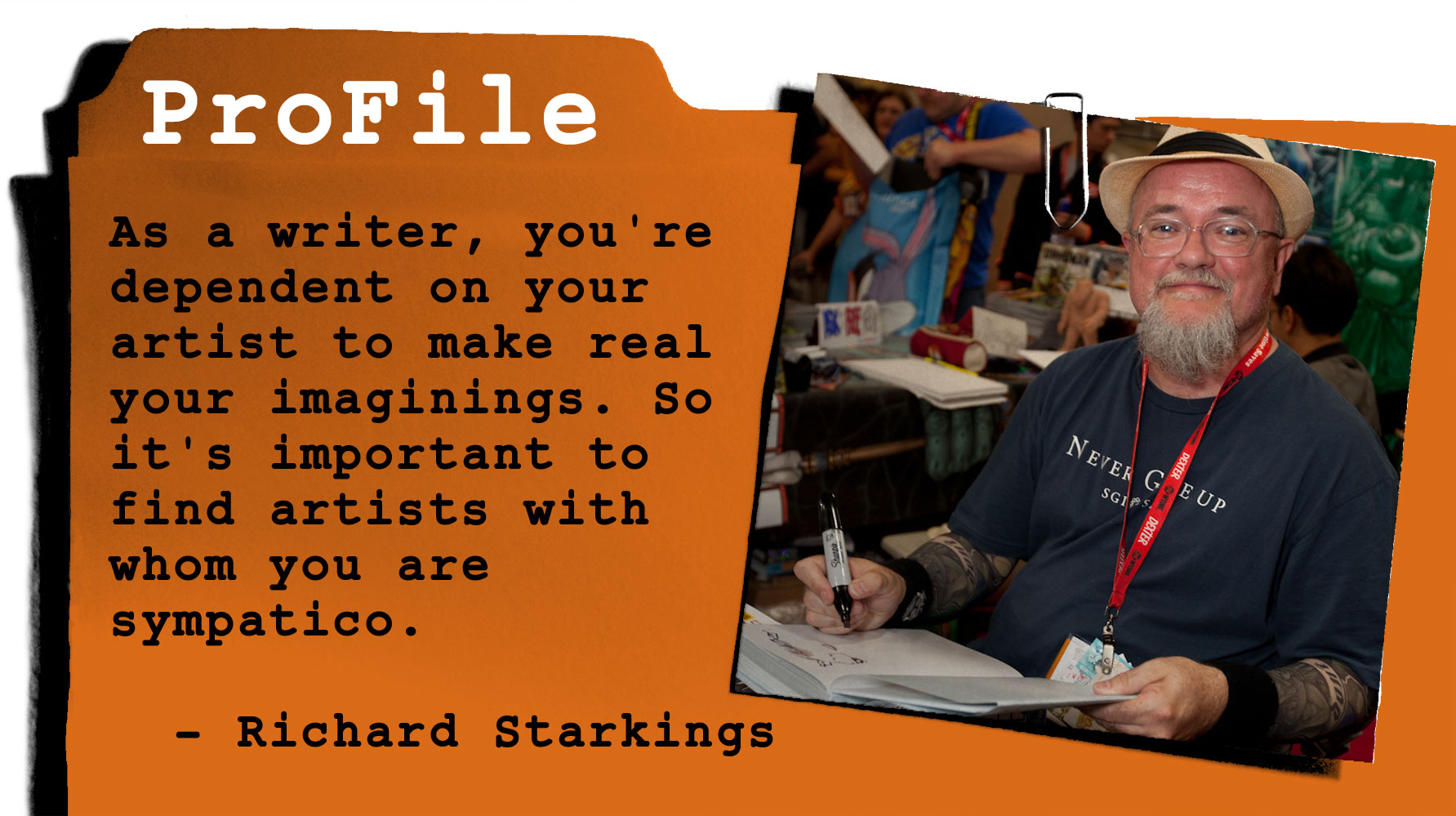
ProFile-Richard-StarkingsRichard Starkings is the creator and writer of HIP FLASK and ELEPHANTMEN. Born and raised in England, Starkings worked for five years at Marvel UK’s London offices as editor, designer and occasional writer of ZOIDS, GHOSTBUSTERS, TRANSFORMERS and the DOCTOR WHO comic strip. He is perhaps best known for his work with the award-winning Comicraft design and lettering studio, which he founded in 1992 with John ‘JG’ Roshell. Starkings & Roshell also co-authored the best-selling books COMIC BOOK LETTERING THE COMICRAFT WAY and TIM SALE: BLACK AND WHITE.
What made you decide to work in the medium of comics?

I always loved comics — at the age of 9 I started reading a comic called COUNTDOWN featuring strips based on TV shows like DOCTOR WHO, UFO and THE PERSUADERS. In some ways I preferred them to the TV shows they were based on. That comic inspired me to draw comics and cartoon strips myself and from that young age I started identifying the artists and styles I liked.

Years later, I remember reading an article in Dez Skinn’s WARRIOR magazine in the 80’s about breaking into comics. I was on a train from Weymouth to London and I kind of realized at that moment that it was possible to get a job in comics and committed myself to that goal. I never seriously considered anything else.

What part of the process is the most challenging or frustrating to you?

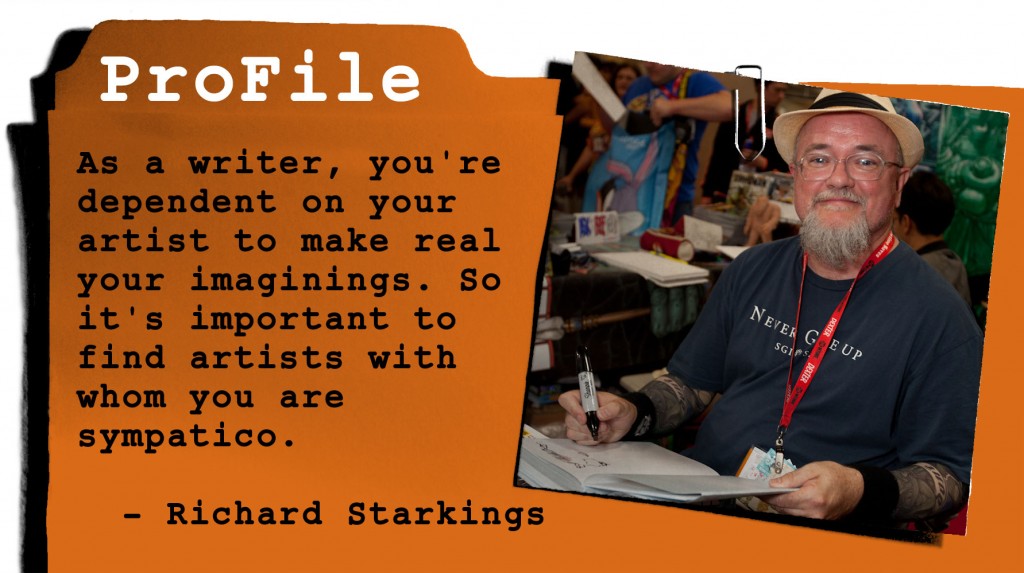
As a writer, you’re dependent on your artist to make real your imaginings. So it’s important to find artists with whom you are sympatico. Finding those creators can be very rewarding and challenging all at the same time.

If you could give one piece of advice to an aspiring comics creator, what would that be?

Write! Draw! ALL the time. Write about life, draw from life.

More about Richard Starkings and Elephantmen on hipflask.com
Filed Under: Pro Tips, ProFile Tagged With: career, collaboration, comics, comics industry, COUNTDOWN, creativity, DOCTOR WHO, Elephantmen, GHOSTBUSTERS, HIP FLASK, lettering, pro tips, Richard Starkings, TIM SALE: BLACK AND WHITE, Transformers, writing for comics, ZOIDS

ProFile: David Lloyd

by Palle Schmidt Leave a Comment

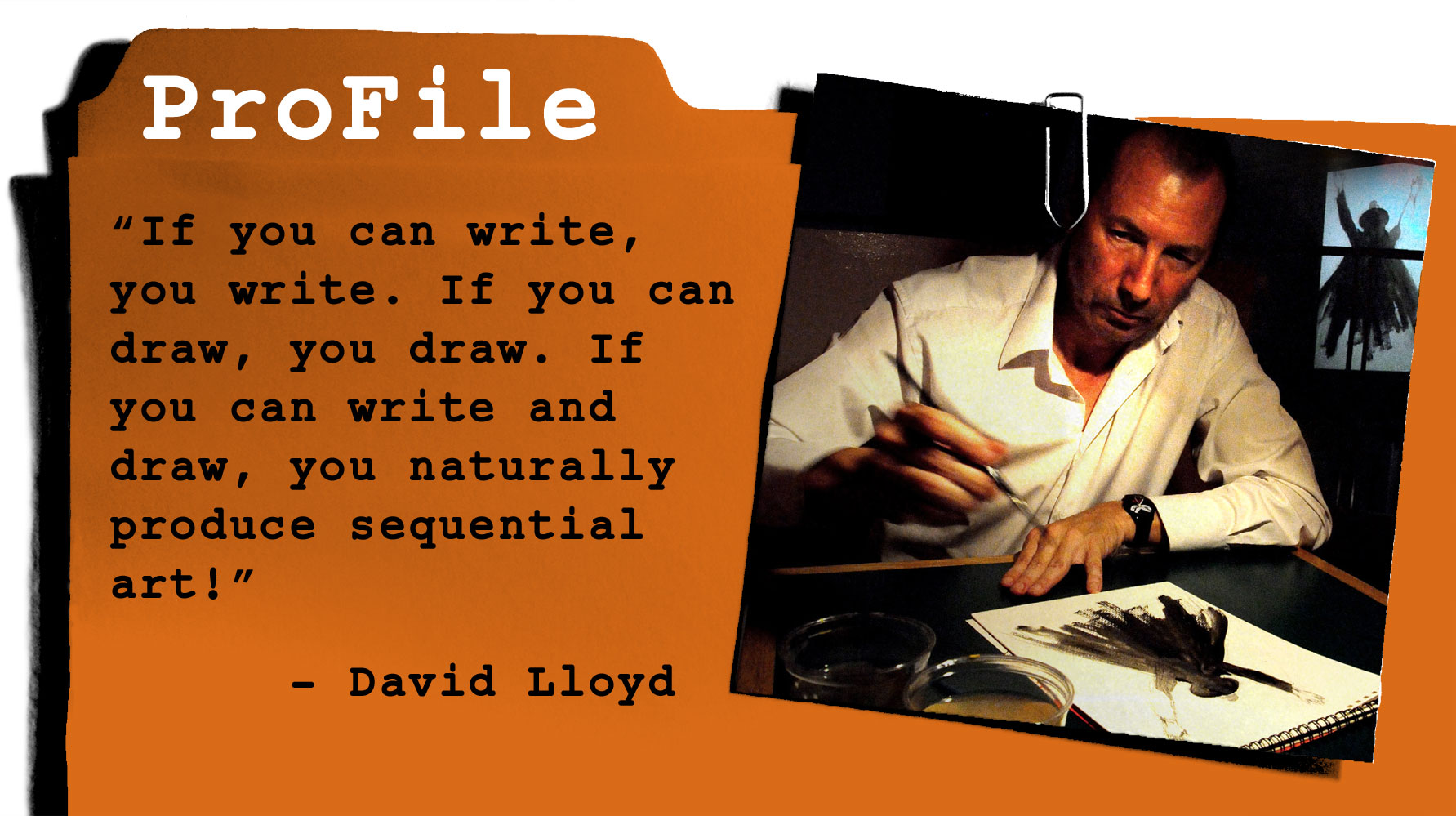
ProFile-David-LloydDAVID LLOYD is the well-known illustrator and co-creator of the globally successful, V For Vendetta, who’s also worked on the Hellblazer series, Aliens, Global Frequency, War Stories, and many other projects.  His acclaimed crime graphic novel, Kickback, is now available as an app with all kinds of extras including a commentary. He’s collaborated on an Asterix collection ; produced his first limited-edition print,‘ The Prizefighter ‘; and written and drawn a book on Sao Paulo.  His most recent work in print is a retrospective collection of short stories – Materia Oscura – which was published in Italy and Spain. He also helps manage the educational website, Cartoon Classroom,  which aims to centralize all information available on the study of cartooning and sequential art in Britain and Ireland. His current occupation is editing and publishing an exclusively digital comic art magazine, Aces Weekly, which features top talent from around the world.

More information on David’s past and present projects can be found via www.lforlloyd.com,  on Deviantart.com, and on his Facebook page.

What made you decide to work in the medium of comics?

I was good at it, loved telling stories and expressing myself that way – in the same way that any artist has to paint, I had to create these things once I realized that I could – and had seen how effective they could be! If you can write, you write. If you can draw, you draw. If you can write and draw, you naturally produce sequential art! If you want to.

What part of the process is the most challenging or frustrating to you?

None of it. Damn publishers sometimes not selling it or printing it badly is the only challenging and frustrating part of it.

If you could give one piece of advice to an aspiring comics creator, what would that be?

Work hard to be the best you can be at it.

Filed Under: Pro Tips, ProFile Tagged With: Aces Weekly, Aliens, Asterix, career, Cartoon Classroom, comics, comics industry, creativity, David Lloyd, Global Frequency, Hellblazer, making comics, Materia Oscura, pro tips, sequential art, The Prizefighter, V For Vendetta, War Stories, writing for comics

Bonus Video: Three Great Books on Storytelling

by Palle Schmidt 2 Comments

A quick recommendation of three books to read for a better grasp on storytelling, structure and sequential art.

Filed Under: Pro Tips, Video Tagged With: comics, creativity, James Scott Bell, learning, making comics, mind hacks, plot, pro tips, Robert McKee, sequential art, Story, storytelling, structure, tips for making comics, Writing, writing for comics

ProFile: Joshua Dysart

by Palle Schmidt Leave a Comment

ProFile-Joshua-Dysart

Joshua Dysart is a multiple Eisner Award nominated, Glyph award-winning, New York Times Bestselling comic book writer and graphic novelist whose work has been reviewed and discussed by the BBC, CNBC Africa, The New York Times, the Huffington Post and elsewhere. He has collaborated with Mike Mignola, Richard Corben, John Totleben, Igor Kordey, Enrique Breccia, Rick Veitch, Fábio Moon & Gabriel Bá and Eric Powell, among others. He wrote a two year stint of the legendary Swamp Thing and has also worked on Conan, Hellboy and the Hellboy spinoff, B.P.R.D. He’s currently writing the relaunch of Harbinger for Valiant Entertainment and has been called one of the key architects of their universe.

From 2008 to 2010 he wrote a revamp of The Unknown Soldier for Vertigo. The storyline took place in Acholiland, Uganda in 2002 during the war between the Lord’s Resistance Army and the Ugandan People’s Defence Force. Dysart spent a month in Northern Uganda conducting interviews with child soldiers and others affected by the war to research the book.

What made you decide to work in the medium of comics?

It started out as an accident, sort of. I mean, I’ve always loved and read comics. They have always spoken to me. But I never thought of a career in them save for a few attempts at a young age to con artist friends into doing books with me. If I’d been really driven to do it at a young age, I imagine I would’ve also been driven to learn how to draw as well. As it stands my lack of artistic skill is my greatest flaw as a comic book writer. So it was life that made this happen, not me.

I’d done some script supervising work for a very small, struggling movie production company in Los Angeles in my early twenties. The company was run by a friend of mine, Jan Utstien. A few years after I’d stepped down from that gig and gone back to writing for myself (unpublished short stories, poetry, essays, etc.) she phoned me and said that she had fallen in love with a comic book artist. They wanted to self-publish something together but they needed a writer. I wasn’t very enamored with the first pitch they sent my way, so I ended up going to Mexico for a little under a year. Just to knock around down there, check out the Chiapas revolution, go to Guatemala and Belize, that sort of thing. When I got back I was flat broke and really needed something to dig in to. I went back to waiting tables and working in book stores and in my spare time I worked on this comic for Jan and, by then, her husband Bill O’Neal. That book ended up being a black and white self-published book called Violent Messiahs.

This was 1997 and the comics industry was crashing fast. Thousands of stores were closing a year. It was a terrible time to self publish a black and white. But, inversely, the Hollywood gold rush on comics was really starting to escalate. For better or for worse, they saved the comics industry by subsidizing us through that era. Anyway, that very first issue (there was never an issue #2) got passed around LA and I kept flying out from Texas to go to meetings. In 1998 I just figured I should make a go of it. I didn’t really have anything else going on in my life. So I moved to LA and slept on Jan and Bill’s couch and we republish Violent Messiahs in color with a different artist, Tone Rodriguez, at Image. It was here in LA, creating comics everyday all day and being dead, dead broke as I approached thirty, that I started to fall in love with idea of becoming as good as I possibly could at making comics. I spent the next four years sleeping on couches, refusing day jobs (save for the very brief and rare exceptions) living hand-to-mouth and making, mostly shitty, comics every single day. I’ve spent the rest of my life since struggling to understand how to create a great comic. I’ve succeeded a few times, but not as much as I would like.

What part of the process is the most challenging or frustrating to you?

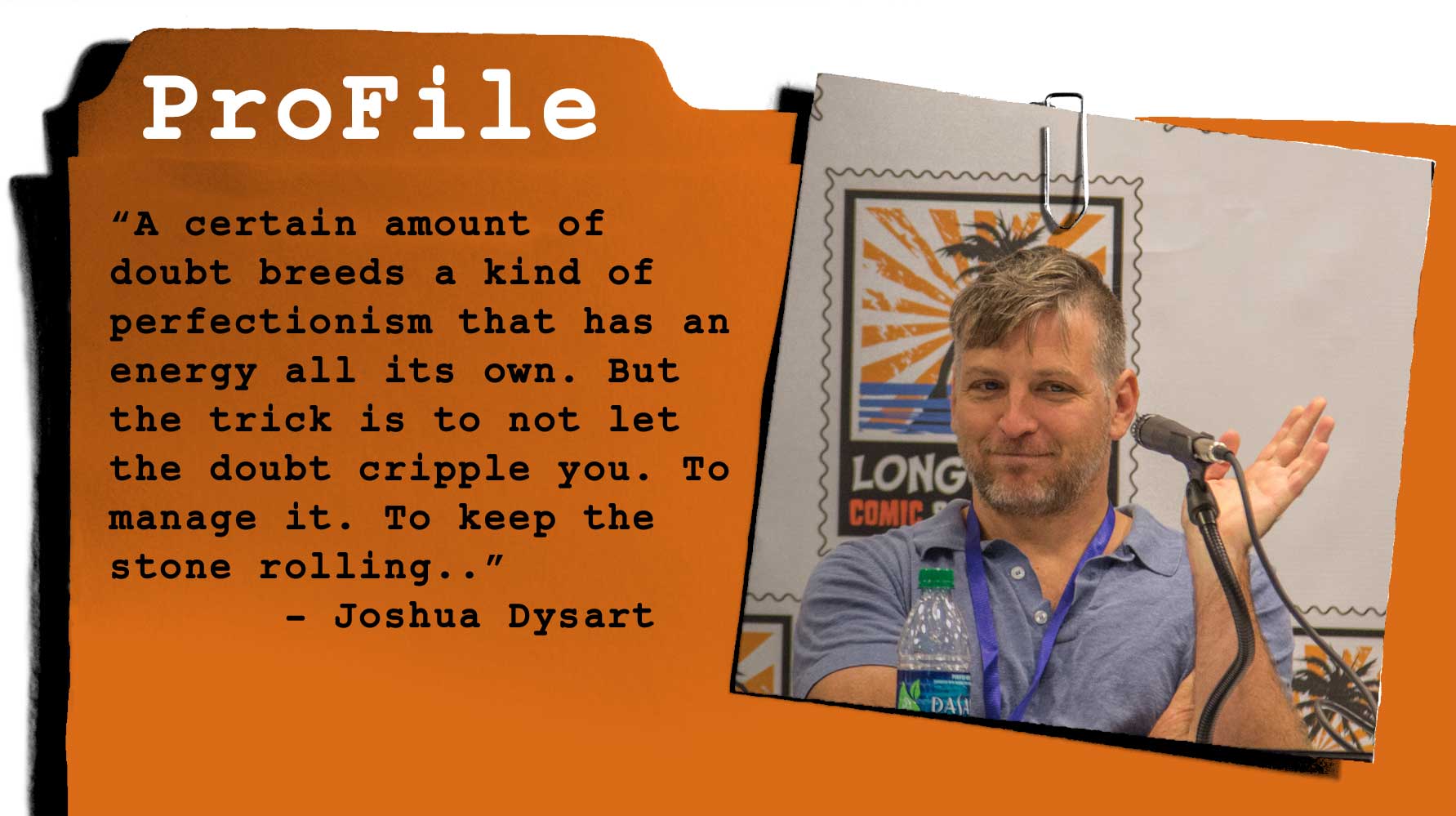
Believing in myself. Writing is a Sisyphean struggle, and Sisyphus knows that you’ve got to get some momentum, some traction on a project, before that stone starts to move. But when you’re at the base of the mountain, only personal faith in yourself will get the stone going. Belief that the ideas will come, that your voice matters, that there’s a reason why you do this awesome job and others don’t, that’s the only thing that’s going to get you started. And you have to find that belief at the start of every single new project. It’s gotten easier over the years for me, of course. Success breeds faith in yourself, but that doubt has never really gone away, and it makes the inception moment of any project extremely difficult. Hell, even just the inception of any single issue comic is pretty hard for me. I would also argue that a certain amount of doubt breeds a kind of perfectionism that has an energy all its own. But the trick is to not let the doubt cripple you. To manage it. To keep the stone rolling. Total faith in yourself will result in unexamined work and halt growth. But total lack of faith will resort in creative paralyses. As with all things, the middle path is the way.

Secondarily, I always have a problem picking my next project. I’m a person that can have a new idea every single day, and that breeds a kind of inactivity. That’s why you don’t see a lot of creator owned stuff from me. If I don’t have an editor to offer me a paycheck and tell me which project they want me to work on, I’ll do a million things at once and none will get done. I’m hoping to learn how to navigate that tendency soon though because I do feel like there’s something missing in my career, and that working on things that belong fully to me might be the missing piece. Of course “Violent Messiahs” was a creator-owned work, but I wrote that over seventeen years ago. I’m a much, much different writer and person now and I look back on that series and wince a little, despite how good it’s been to me all these years.

If you could give one piece of advice to an aspiring comics creator, what would that be?

The best advice I can offer any new comer is that they understand that comics, more than any other medium, is a small community. And you have to become part of that community before you can achieve the goals you have in mind for yourself. You have to make comics and get them out in the world. You have to go to shows. You have to make friends with people in the industry and those at your professional level so that you all lift each other up. You have to invest in yourself. That’s easier than ever now that we have the internet, but it also increasing the amount of noise that’s out there. But that’s okay. Ask yourself, if I never got paid to make comics would I still make them? If the answer is yes, then blaze your trail and make your own work.

www.joshuadysart.com

Filed Under: Pro Tips, ProFile Tagged With: B.P.R.D, career, collaboration, Comic Con, comics, Comics conventions, comics industry, creativity, critique, Enrique Breccia, Eric Powell, Fábio Moon & Gabriel Bá, Igor Kordey, John Totleben, making comics, Mike Mignola, pro tips, Richard Corben, Rick Veitch, storytelling, The Unknown Soldier, Ugandan People’s Defence Force, Vertigo, Violent Messiahs, Writing, writing for comics

ProFile: Justin Jordan

by Palle Schmidt Leave a Comment

ProFile-Justin-Jordan

Justin Jordan is the writer and creator of The Strange Talent of Luther Strode. He has also worked on Shadowman, Deathstroke and Green Lantern for DC comics.

What made you decide to work in the medium of comics?

I’d always loved comics. And I really do mean always; my earliest memory is reading a Popeye comic when I was maybe three years old. Well, looking at it, anyway.

And I’ve always loved telling stories, so it became a pretty natural fit for me.

What part of the process is the most challenging or frustrating to you?

Probably getting everything to work to my satisfaction within a 20 pages per issue format. I’ve not yet done an OGN, so I have to make sure that each of the however many issues I am using to tell a story each have their own narrative arc and are satisfying in themselves.

Telling a story for me is a relatively easy, telling a story in six chunks with each chunk being something people want to read is a lot more challenging, kind of like writing poetry.

If you could give one piece of advice to an aspiring comics creator, what would that be?

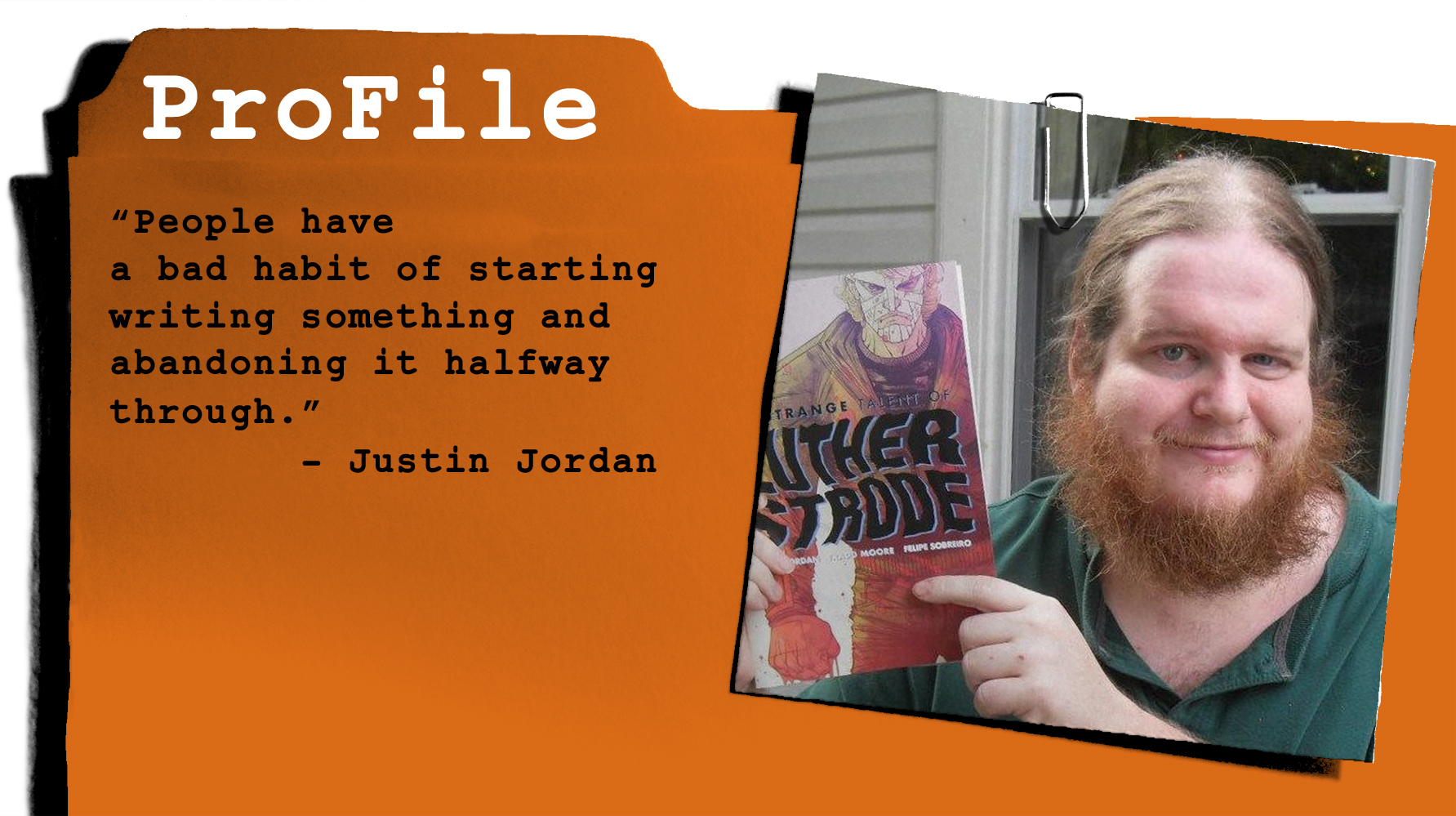
Finish stuff. People have a bad habit of starting writing something and abandoning it halfway through. Heck, I do this. I have at least ten novels in various stages that I have never finished.

Finishing what you start obviously isn’t enough to build a career, but it IS something you need to be able to do.

Filed Under: Pro Tips, ProFile Tagged With: career, comics, comics format, comics industry, DC comics, Deathstroke, Green Lantern, Justin Jordan, making comics, Shadowman, storytelling, The Strange Talent of Luther Strode, tips for making comics, Writing, writing for comics

Going off the grid

by Palle Schmidt Leave a Comment

20140218-151818.jpg

The grid. Is it keeping the artist from expressing himself or are guidelines helpful? Let’s talk about the pros and cons!

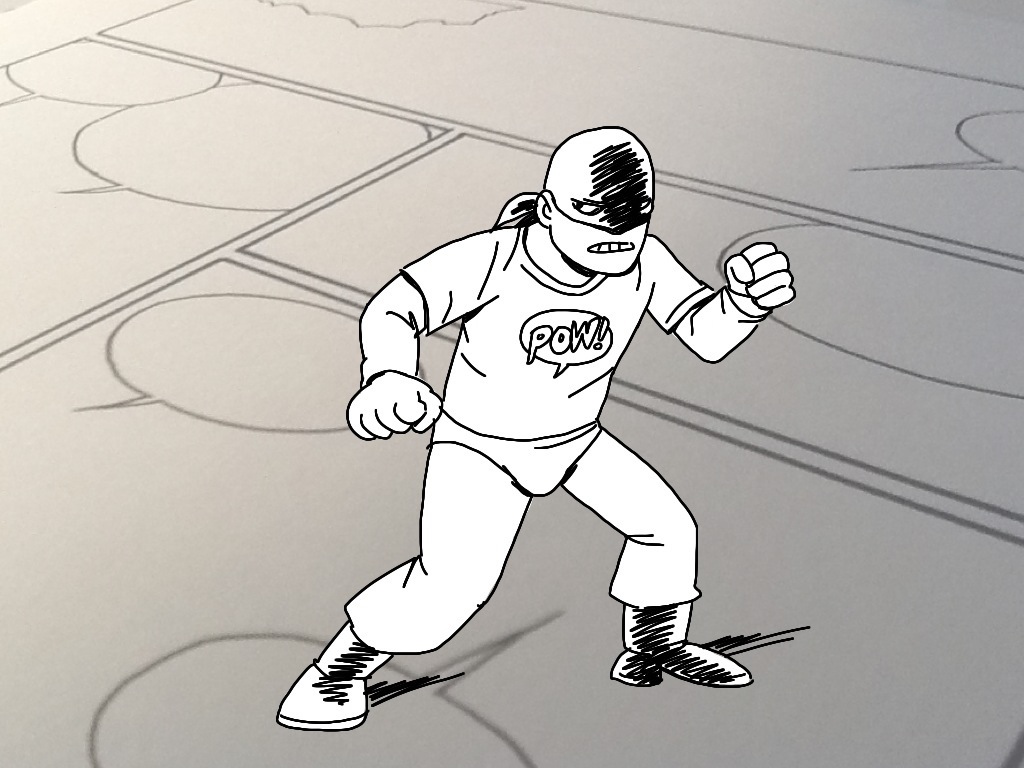
First let’s talk about what a “grid” is: The grid is the arrangement of panels on the page in a predictable and similar manner. For instance, sticking to three rows of panels per page or even having the same number of panels, like the popular 9-panel grid.

While you don’t have to follow the exact same grid on every page, it’s certainly helpful to have some sort of guidelines – especially if you want to experiment on some pages! Tilted panels, A panel with no frame or a double-page spread has little effect if ALL of the comic is experimental.

The upsides to following a grid are many. The hard part of the storytelling is already done for you, the reading order is obvious. But as long as readers can find their way from one panel to the next in the right order, there is lots of room for experimenting with the page layouts in comics. Just remember, characters and objects sticking out of panels, borderless panels or big, fancy page layouts can be a lot more challenging to read, let alone create!

Even if you have an overall grid you use for a particular project, breaking it up can be a good idea. Keep those readers awake! The use of larger panels for emphasis can be a good variation. Just be aware, that larger panels tend to slow things down and smaller panels give off a more hectic feel. You can also experiment with panels that bleed all the way to the edge of the page or perhaps a figure in a panel with no frame. Variation in size and borders can be done without deviating too far from the underlying grid – but it should always be rooted in the story, in what you are trying to get across.

You may feel like you should be coming up with new and exciting ways to tell your story, but deviating to far away from the grid requires a mastery of the craft and may in fact hurt the storytelling. If people have to stop and think about reading order or what is going on, you’re not doing your story any favors.

If you’re unsure of wether the page reads right, try drawing the balloons and panels on a seperate sheet, see if the reading order makes sense without any pictures. Sometimes you can fix any problems just by moving a balloon to the top or bottom of a panel, to make the reading order perfectly clear. No need to redraw the entire page because of it!

My advice: Experiment within the grid and steer clear of wild panel arrangements until you know how to tell a story in a simple layout. Have faith in your story and focus on telling that story. Don’t try to impress readers with flashy, cool page layouts if it makes for a confusing read. Communication is key.


Filed Under: Pro Tips Tagged With: drawing, grid, how to, layouts, making comics, panel layout, reading order, storytelling, tips for making comics, writing for comics

  • « Go to Previous Page
  • Page 1
  • Page 2
  • Page 3
  • Go to Next Page »

Primary Sidebar

Hours of Premium Content

ComicsCrashCourse

Try the FREE 7-day Comics Course

Creator Profiles

Interviews with Creators

The CFB Podcasts

Find them here.

Comic Creators eBook

The Comic Creators eBook

Footer

Check out more resources

Bundles of quality content available, check how to write comics and how to make your comic book artwork look great or find tips and tricks on the blog.

Latest from the blog

  • Video: How to get Story Ideas
  • Video: The Benefit of Being a Nobody
  • Video: Why Creatives Hear Voices
  • Digital Tools for 2021
  • The Most Badass Tools for Inking Comics
  • Why Creative Restrictions are Good for You!
  • How to Write a Great Story – and Stick the Landing

Contact us

If you have questions or issues please contact us.

Official mail: mail(at)comicsforbeginners.com

Feel free to connect on Twitter and/or Facebook.

Copyright © 2026 · ComicsForBeginners by Palle Schmidt Log in