• Skip to main content
  • Skip to secondary navigation
  • Skip to primary sidebar
  • Skip to footer

Comics for Beginners

How to Write & Draw Comics

  • Contact
  • About
  • Faqs
  • Log In
  • Resources
  • Podcasts
  • Comics Crash Course
  • Blog
  • Videos

drawing

Q & A at TAW

by Palle Schmidt Leave a Comment

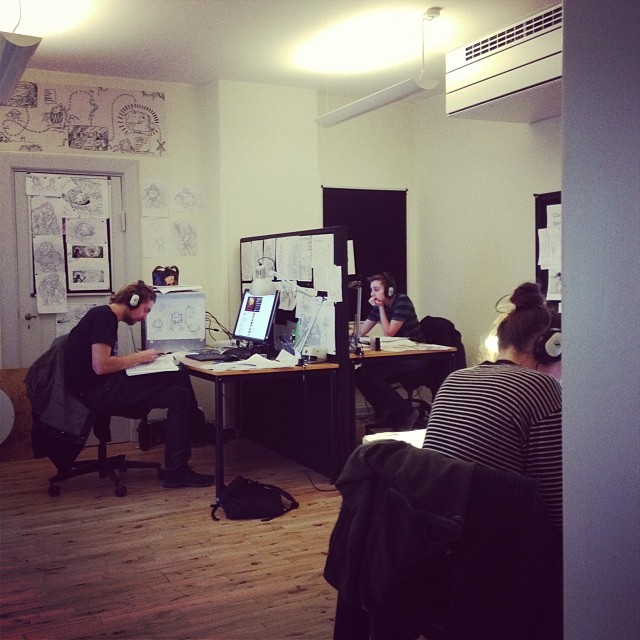
TAW-students-making-comics

As you may know, I taught a comics course at the Animation Workshop in Viborg, Denmark last week. I’m planning a podcast about the course, that will probably go up later this week, but I also got some questions from students that I thought I would answer here. Perhaps there is some value in it for the Comics for Beginners community.

Q: When you’re working on a comic, don’t you ever want to change or ditch your story completely?

A: Yes, absolutely! Every time. But if I listened to the voice inside my head that tells me it’s not good enough, chances are I’ll never finish anything. I may decide NEVER to use this pen again or NEVER to make that same story mistake, but rarely do I change horses in the middle of the stream. That doesn’t mean I have no sense of self critique (at least I hope not), I just try to act like a pro and get it done. And whatever I learn, I take with me to the NEXT project.

I talked a bit about my collaboration with writer Chris Miskiewicz. I feel very fortunate to have met Chris and we get along very well creatively, with complete respect for each other’s work and a common goal to make the end result even better. When I described our working relationship, I got this question:

Q: How do you find a partner like that?

A: It’s probably different for everybody. First off, you don’t meet anybody if you just stay at home at your drawing board. You have to get out there. I met Chris at the MoCCA Festival in New York and we got along instantly. AND I liked the work he did. He lured me in with a smaller project, a short comic for his Everywhere! anthology on Act-I-Vate. Doing a little something together is probably a good idea to see if you’re on the same page. Test the waters. Meeting in person (and getting drunk together) is also something I would very much recommend, as it just takes the relationship to a whole other level than an online friendship. It frees up the communication.

Another question that was asked was about making a living as an artist and starting out:

Q: When did you decide to become an artist?

A: I didn’t, really. For a looong time I didn’t even ALLOW myself to think it was possible. I didn’t know anybody who made a living drawing, and my parents certainly didn’t either. So like the good parents they were, they persuaded me to get an education and/or a REAL job. Well, I botched thatcompletely. Never got a degree, but was working on illustration, comics, fanzine production while pretending to be a good student at the university and later the school of architecture here in Copenhagen, Denmark.  It wasn’t until I met Peter Snejbjerg (artist of Books of Magic, Starman, Preacher and numerous other US books), that I realized being an artist could be a profession and not just a hobby. Starting at Gimle Studios alongside Peter and a bunch of other pros made me what I am today. If not for them, I probably would have given up. So finding a peer group and a studio spot was key for me. AND running out of money, so I HAD to make it work!

It was a great experience to meet all the talented young  people in Viborg. Thanks to Aske, Fie, Kristian, Muir, Bob, Maria, Emil, Cathrin, Siri, Jacob, Eydi, Jam, Albert, Mathilde, Line, Clara, Julie, Nilas, Mette and Sofie for the opportunity to offer some guidance. Soon I’ll be asking YOU for advice!
 

Filed Under: News, Pro Tips Tagged With: career, Chris Miskiewicz, collaboration, comics, creativity, criticism, drawing, how to, learning, making comics, meeting people, mind hacks, mistakes, MoCCA, New York, TAW-Denmark, teaching, The Animation Workshop, Viborg, workflow

Get Critizised, Get Better

by Palle Schmidt 1 Comment

getting-critique-on-your-coHow do you get better at making comics? Well, hard work and pratice, obviously. But getting feedback can be crucial to understanding how your work impacts other people. And that’s what it is all about!

Getting the right readers is not easy. You reach out to the person closest to you, you end up getting criticism from you Mom or your girlfriend. Not always a great idea! You need someone you can trust to give their honest opinion. And someone who will not completely destroy your ambitions and self confidence in the process.

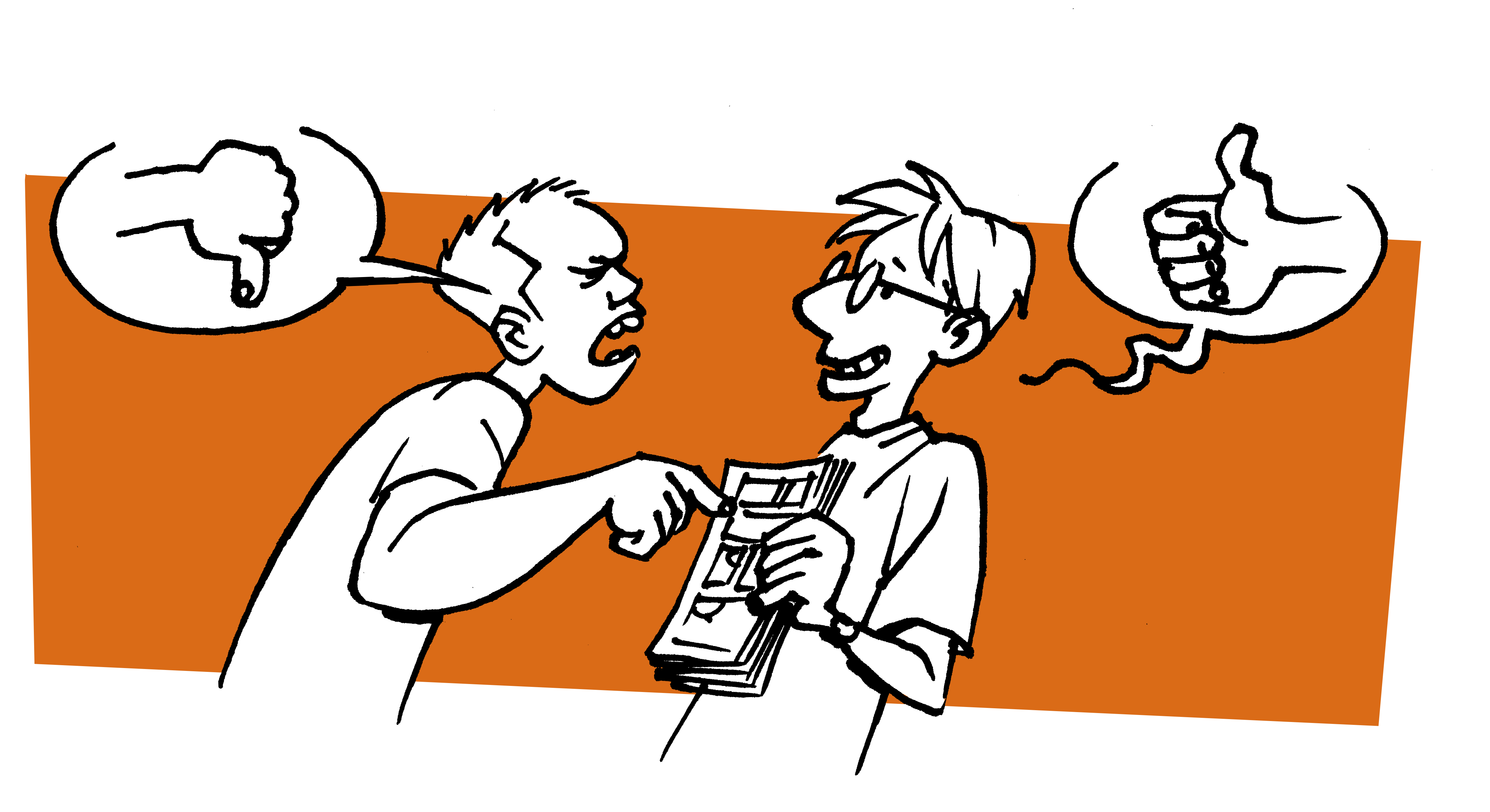
Set some ground rules before you have someone read your script or look at sketches. Be specific in what kind of feedback you are looking for. Have them ask questions like “What are you trying to achieve in this panel?” rather than tell you what they like and don’t like. You want their opinion, sure, but you must have some sort of idea what it is YOU want to do. It’s YOUR story, not theirs!

When you ask someone to look at your work and give feedback, be aware that you are asking them to spend their time trying to help you. So the most important thing during their feedback is to listen. You don’t have to agree with everything, but have the courtesy to take notes and ask questions, resisting the urge to defend or explain.

Lastly, you need to understand that whatever feedback you get, is not an assault on you. You are not your story. Don’t take it personally. And getting feedback from the people closest to you, is a surefire way of making it personal. Ask a stranger on the bus before asking your Mom! Ask several different people for feedback, knowing you will get several different answers! People are not confirmation machines. They will tell you stuff you don’t like, some of it helpful, some of it not.

Listen, take notes, think about what they said. And then get back to work.

And remember: you’re the boss.

Related video: Episode 2: How to write your own comic

Filed Under: Pro Tips Tagged With: criticism, critique, drawing, improving as an artist, learning, pro tips, Writing

A Simple Trick for Drawing Hands and Faces

by Palle Schmidt Leave a Comment

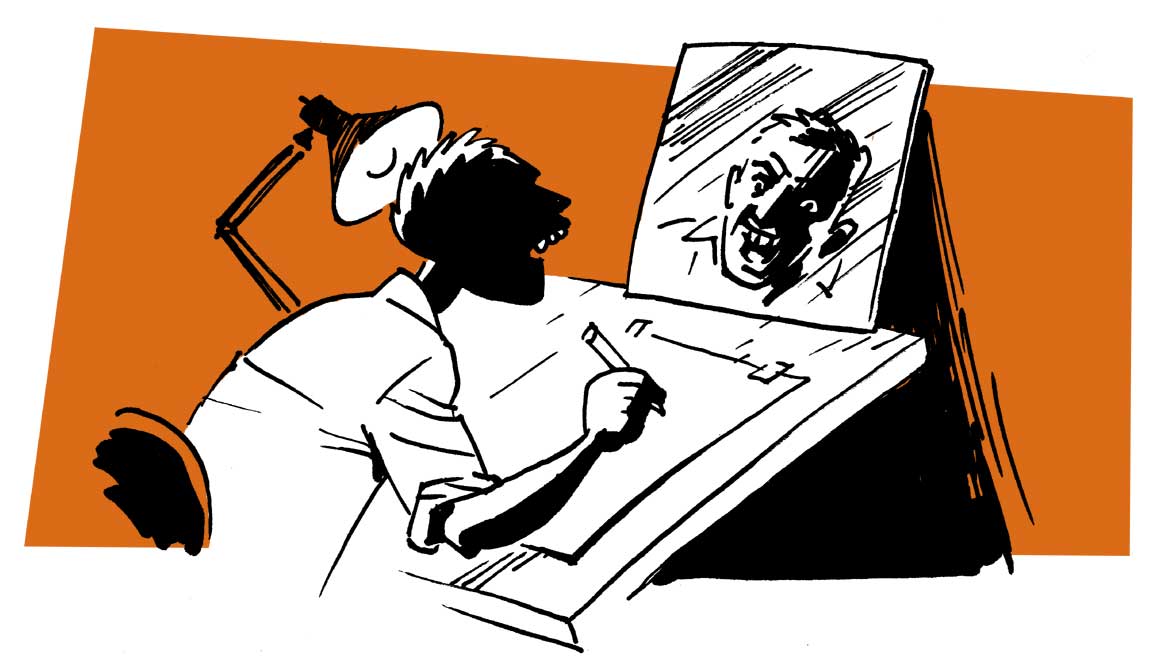
Use a mirror when drawing hands and faces

How to use the tools at hand, to better your drawing skills!

When you are telling a story in the comics medium, it is important to be able to convey emotion and expression in your characters. More important than cars, cityscapes, menacing monsters and cool costumes, is how the characters interact. How they express themselves.

A superhero might express himself in a striking pose. A seductive witch may use her body in another fashion. But the face is what ultimately draws you in to a character and into the story.

As a cartoonist, you can get away with a whole lot, if you can just learn to draw two things well: hands and faces. Those are the two things we human beings use the most to express ourselves. And luckily, most of us have those things attached to our own body!

Since Google Images, it seems effortless to find any sort of reference you need. While that may be true, I think we sometimes spend too much time surfing for a specific pose or expression, when we could just as easily pull up a gadget that has been around for centuries: A mirror.

Of course you shouldn’t draw yourself in every panel. But it is a good idea to study your own face (you could also use me as a reference) for clues as to how the mouth curls when you are sad or how you quizically raise your eyebrows or frown . Apply the same facial expression to your characters, and you have a great way of conveying the same emotion on the page.

If, like me, you have a desk lamp that can be adjusted, it is also very easy to find a reference for dramatic lighting on a face. The darker the room, the better.

I recommend sitting down and drawing your own hands as well, even just for practice. The more you master this, the better a visual storyteller you will be. Just remember that we don’t all look alike, so change the features to suit the character you are drawing.

You want to learn how to draw facial expressions and hand gestures? Put the comics away, turn off Google and pull out a mirror.

Filed Under: Pro Tips Tagged With: conveying emotion in comics, drawing, drawing character expressions, faces, hands, how to draw, learning how to draw, making comics, mirror, references

  • « Go to Previous Page
  • Page 1
  • Interim pages omitted …
  • Page 5
  • Page 6
  • Page 7

Primary Sidebar

Hours of Premium Content

ComicsCrashCourse

Try the FREE 7-day Comics Course

Creator Profiles

Interviews with Creators

The CFB Podcasts

Find them here.

Comic Creators eBook

The Comic Creators eBook

Footer

Check out more resources

Bundles of quality content available, check how to write comics and how to make your comic book artwork look great or find tips and tricks on the blog.

Latest from the blog

  • Video: How to get Story Ideas
  • Video: The Benefit of Being a Nobody
  • Video: Why Creatives Hear Voices
  • Digital Tools for 2021
  • The Most Badass Tools for Inking Comics
  • Why Creative Restrictions are Good for You!
  • How to Write a Great Story – and Stick the Landing

Contact us

If you have questions or issues please contact us.

Official mail: mail(at)comicsforbeginners.com

Feel free to connect on Twitter and/or Facebook.

Copyright © 2026 · ComicsForBeginners by Palle Schmidt Log in